
High-Efficiency Flow Control Valve Solutions
Explore industrial valves manufactured for leak-free integrity, low torque operation, and superior pressure containment.
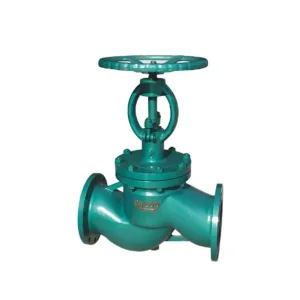
Engineering Realities of Ammonia Refrigeration Globe Valves
A technical review of mechanical design, fugitive emission prevention, and metallurgy requirements in high-integrity R717 cooling circuits.
Dual-Stem Sealing Architecture
Ammonia (R717) presents toxicity and low-temperature flammability risks. Our globe valves utilize spring-energized PTFE V-rings coupled with secondary graphite packing and back-seating arrangements, enabling packing inspection and replacement while the system remains pressurized.
Cryogenic Impact Toughness
Cast iron suffers catastrophic embrittlement in ultra-low temperatures. Top Valve strictly standardizes on low-temperature ductile iron (QT400-18L) and ASTM A352 LCB/LCC cast steel, guaranteed down to -50°C with Charpy V-notch impact validation exceeding international standards.
Regulating & Throttling Disc Cones
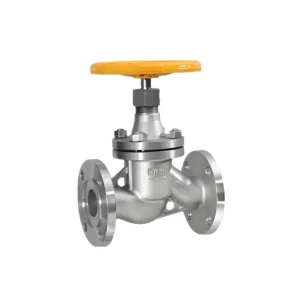
Unlike standard on/off valves, our straight-through and angle patterns feature parabolic throttle plugs. These provide linear flow characteristics, eliminating cavitation, reducing pressure drops, and preventing hydraulic shock across liquid suction and expansion loops.
Emerging Trends & Procurement Demands in Industrial Cooling
How regulatory shifts toward natural refrigerants drive structural demand for heavy-duty industrial refrigeration valves.
The Global F-Gas Phaseout
Global environmental mandates (EU F-Gas Regulation, US AIM Act, and the Kigali Amendment) are forcing accelerated phaseouts of high-GWP synthetic HFCs. As ammonia (GWP = 0, ODP = 0) expands across cold logistics and food processing, procurement of heavy-duty industrial valves continues to outpace conventional commercial HVAC fittings.
Low-Charge Ammonia (NH3) Architecture
Modern engineering projects seek to minimize total ammonia charge for worker safety. This demands tight dimensional tolerances, welded valve connections (butt-weld / socket-weld), and minimal internal dead volume to ensure zero refrigerant pooling and maximized thermal coefficient performance.
Digital Traceability & MTR Compliance
Global engineering, procurement, and construction (EPC) contractors require full EN 10204 3.1 material test certificates, chemical analysis, hydrostatic test charts, and non-destructive examination (NDE) records to meet stringent safety audits by OSHA, IIAR, and EN 378 compliance bodies.
China Factory 4.0: Supply Chain Agility & Vertical Integration
Tianjin Top Valve's vertically managed production campus eradicates multi-tiered markups and delivers verified engineering continuity.
Autonomous In-House Foundry
By casting valve bodies in-house via spectrographic-controlled metallurgy, raw material composition is guaranteed prior to machining, preventing subsurface porosity and casting micro-fissures.
Proprietary Elastomer Compounding
Founded on rubber manufacturing expertise since 1987, all PTFE, EPDM, and NBR seals are compounded on-site, offering controlled compression set and chemical resistance in corrosive environments.
Precision CNC Tooling
Multi-axis horizontal machining cells execute single-setup bore machining, disc profiling, and threading, securing sub-millimeter tolerances for uniform seating torque and zero seat deformation.
End-to-End Stress Verification
Every single ammonia valve undergoes pneumatic shell testing, high-pressure hydrostatic testing, and precision seat leakage analysis in accordance with ISO 5208 and API 598 benchmarks.
System Valve Selection: Engineering Operating Matrix
A reference guide for plant design engineers, technical consultants, and utility project leads.
| Valve Architecture | Primary Role | Working Pressure | Temperature Envelope | Key Sealing Structure | Optimum Duty Loop |
|---|---|---|---|---|---|
| Straight Ammonia Globe Valve | Precision Throttling & Shut-off | PN25 - PN40 | -50°C to +150°C | PTFE / Babbit Metal + Backseat | Compressor manifolds, liquid separators, receiver outlets |
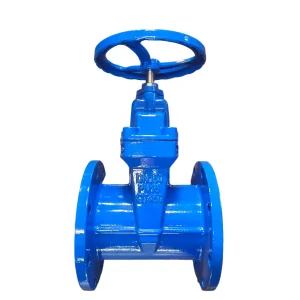
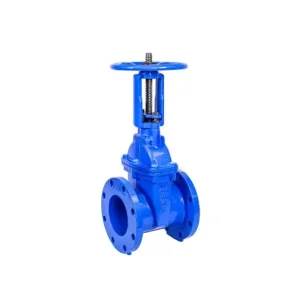
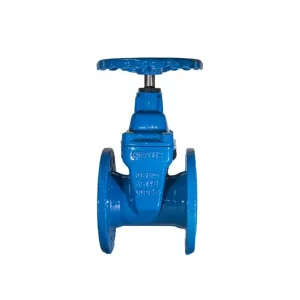
| Resilient Seated Gate Valve | Full-Bore Pipeline Isolation | PN10 - PN16 | -10°C to +80°C | Bonded EPDM Wedge Core | Chilled water distribution, secondary cooling loops |
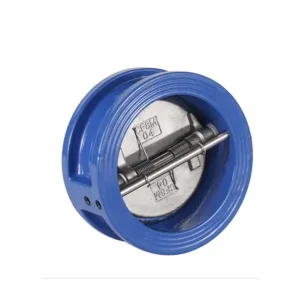
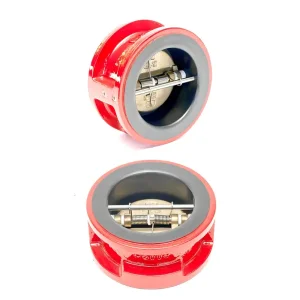
| Dual Plate Wafer Check Valve | Non-Return Anti-Backflow | PN16 - PN40 | -20°C to +120°C | Dual Torsion Spring + Resilient Seal | Pump discharge lines, cold condenser supply headers |
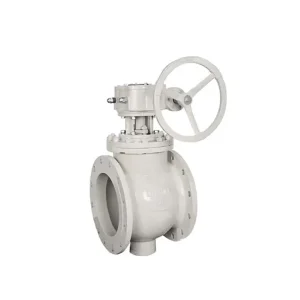
| Eccentric Plug Valve | Abrasive Fluid Throttling | Class 150 - 300 | -29°C to +180°C | Welded Nickel Seat Overlay | Brine recirculation, heavy industrial thermal fluids |
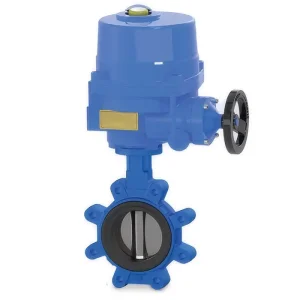
| PTFE-Lined Butterfly Valve | Chemical Corrosive Isolation | PN10 - PN16 | -20°C to +180°C | High-Density Virgin PTFE Seat | Glycol circuits, secondary brines, cooling towers |
Engineering Inquiries & Specification Guidance
Detailed technical responses addressing the core questions asked by EPC engineers, distributors, and procurement teams.
Why is brass or copper strictly prohibited in ammonia refrigeration valves?
Ammonia chemically reacts with copper, zinc, brass, and related alloys to form cuprammonium complex ions, inducing rapid corrosion and stress-corrosion cracking. Top Valve manufactures all internal wetted parts—such as discs, stems, and body castings—from specialized ductile iron, cast steel, or 304/316 stainless steel to eliminate chemical degradation.
What testing routines verify zero leakage on ammonia refrigeration globe valves?
Every valve unit undergoes a multi-tier factory acceptance test: 1.5× design pressure shell hydrostatic testing, followed by dry nitrogen or helium pneumatic seat testing at 1.1× design rating. For high-spec low-charge systems, mass spectrometer helium leak detection is deployed to achieve zero fugitive emission standards.
How does the valve design permit in-service stem repacking?
Our straight-through and angle globe valves incorporate an integrated precision-machined backseat on the upper stem collar. When fully opened, the collar seats against the bonnet bore, mechanically isolating the stuffing box from line pressure so technicians can replace packing rings without system shutdown.
Can Top Valve customize end connections for different international codes?
Yes. We engineer valves to international standards including EN 1092-1, ASME B16.5, DIN 2501, and JIS B2220. Furthermore, we provide extended welding necks designed for socket weld (SW) and butt weld (BW) pipe specifications (ASTM A106, DIN 2448) to eliminate flange gaskets throughout cold system piping.
Commercial & Industrial Pipeline Control Valves
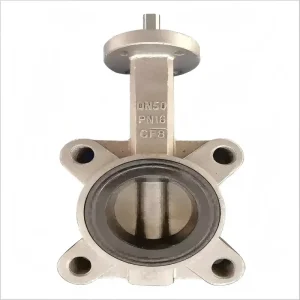
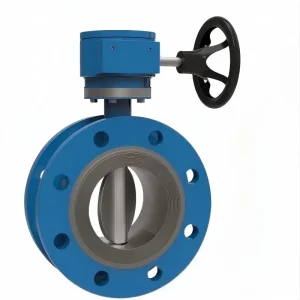
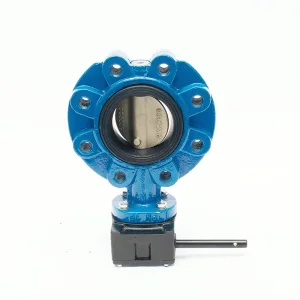
Integrated valve assemblies for clean utilities, wastewater treatment, vacuum isolation, and industrial automation.
Request Technical Datasheets & Factory-Direct Pricing
Connect directly with our engineering team for CAD drawings, EN 10204 3.1 material certificates, and wholesale pricing on ammonia and general industrial valves.
