
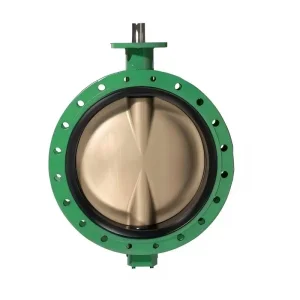
Featured Top-Tier Pipeline Products
Precision Flow Control & Heavy-Duty Valve Solutions
Explore high-performance butterfly, gate, and check valves engineered directly in our Tianjin integrated foundry and elastomer production center.
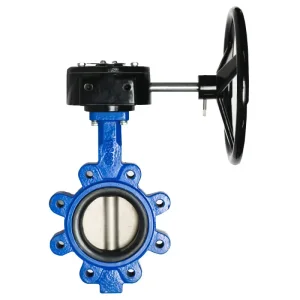
High-Quality Lug Type Butterfly Valve
Product Details →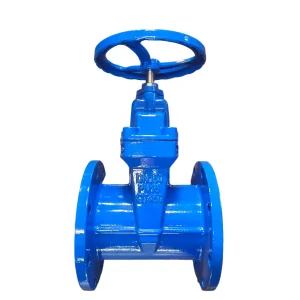
Wholesale High-Quality Resilient Gate Valve
Product Details →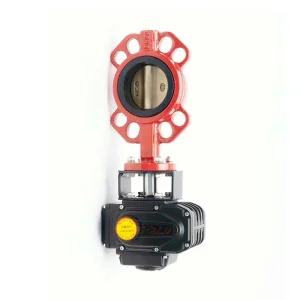
High-Quality Actuator Wafer Butterfly Valve
Product Details →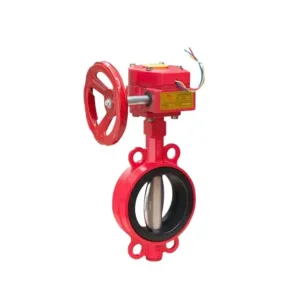
Wholesale Fire-Fighting Wafer Signal Butterfly Valve
Product Details →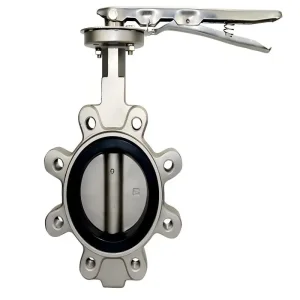
High-Quality LUG Stainless Steel Butterfly Valve
Product Details →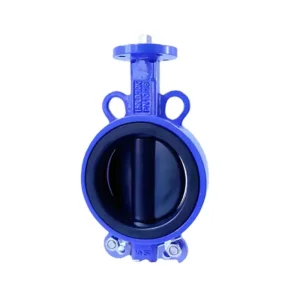
Wholesale Halar Lined Pinless Butterfly Valve
Product Details →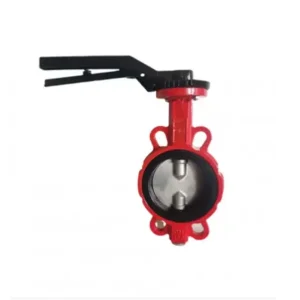
High-Quality Double Half Shaft Wafer Butterfly Valve
Product Details →
Industrial Landscape & Critical Dynamics
The Global Commercial Reality of Ammonia Tight-Shutoff Globe Valves
Anhydrous ammonia (NH3) serves as the backbone of modern thermodynamic refrigeration, sustainable agricultural fertilizers, and the emerging zero-carbon marine fuel vector. Ensuring hermetic shut-off is paramount for operational safety, worker health, and environmental compliance.
⚠
Severe Hazard Mitigation
Ammonia is both acutely toxic and corrosive to skin and respiratory tracts upon exposure. Traditional isolation valves experience stem micro-leakage and seat scouring over cyclic duty. Modern wholesale ammonia globe valves incorporate back-seating arrangements and multi-layer PTFE or bellows-sealed bonnets to completely isolate the fluid from atmospheric contact.
❄
Cryogenic Thermodynamic Duty
In low-temperature industrial chilling and flash freezing, operating temperatures routinely drop below -40°C. Standard ductile iron or cast materials exhibit severe cold brittleness. Our specialized ammonia globe valves utilize low-temperature carbon steels (ASTM A352 LCB/LCC) or precision cast stainless steel (CF8/CF8M) ensuring high charpy impact energy resistance and zero mechanical fatigue.
⚒
Tight-Shutoff (ANSI Class VI)
Achieving bubble-tight shut-off under fluctuating discharge pressures is critical. By pairing conical PTFE/babbitt-alloy discs with micro-finished stainless steel seats, our valves eliminate internal weeping, reducing compressor load spikes and providing reliable maintenance isolation across pressurized liquid and gaseous suction lines.
Vertical Integration & Manufacturing Efficiency
The Chinese Factory Advantage: From Raw Melt to Calibrated Testing
Tianjin Top Automation Equipment Co., Ltd. eliminates third-party supply-chain latency by operating independent group-owned foundries and specialized elastomer formulation centers under one rigorous quality umbrella.
♨
Independent In-House Foundry
Since 1996, our Tianjin foundry has executed precise spectroscopic melt inspections. Every melt of carbon steel, ductile iron, and low-temperature alloys is strictly monitored for chemical metallurgy before pouring, eliminating porosity risks.
🔬
Polymer & Seat Compounding
Operating Tianjin Dongfang Rubber Factory since 1987, we compound our proprietary virgin PTFE, EPDM, and NBR formulations in-house. This direct control ensures superior compression set resistance and exact durometer hardness for ammonia applications.
⚙
5-Axis CNC Precision Lathes
Disc profiles, conical plug seats, and valve stems are machined within micron tolerances on cutting-edge automated machining centers, maintaining concentricity to guarantee true Class VI shut-off with minimal operating handwheel torque.
☑
100% Dual-Stage Pressure QA
Every valve undergoes hydrostatic shell testing at 1.5x design pressure and high-pressure nitrogen/air seat leakage inspection at 1.1x rating. Units are traceable by cast number and certified under EN 10204 3.1 inspection protocols.
Engineering Specifications Matrix
Technical Specification & Material Selection Standards
A rigorous specification guide engineered for plant managers, EPC procurement directors, and piping engineers selecting tight-shutoff globe valves for hazardous fluids.
| Valve Component | Standard Ammonia Duty | Cryogenic / Marine Service | Corrosive / Wet Gas Duty |
|---|---|---|---|
| Body & Bonnet | ASTM A216 WCB / Cast Steel GS-C25 | ASTM A352 LCB / LCC Low-Temp Steel | ASTM A351 CF8M (316 SS) |
| Disc (Tight-Shutoff) | Cone-type with Reinforced PTFE Insert | Stellite-hardfaced 304/316 SS Disc | Solid 316L Stainless Steel Plug |
| Seat Facing | Micro-finished Stainless Steel (13Cr) | Overlay Welded Stellite Gr. 6 | Integral Precision Ground 316 SS |
| Stem Sealing | Pure Flexible Graphite + PTFE Rings | Multi-ply SS Bellows + Secondary O-Ring | Spring-Energized Virgin PTFE Chevrons |
| Pressure Rating | PN16, PN25, PN40 (Class 150/300) | PN25, PN40, PN64 (Class 300) | Class 150 / 300 / 600 |
| Design Standards | EN 13709 / ASME B16.34 / API 602 | EN 13709 / BS 1873 / ISO 15848-1 | ASME B16.34 / API 623 / NACE MR0175 |
Application Engineering
Mission-Critical Global Industrial Application Scenarios
Where bubble-tight shut-off and zero fugitive emissions are mandatory to maintain uninterrupted production and catastrophic failure prevention.
🚚
Cold Chain Warehousing & Food Processing
Large-scale distribution facilities utilize massive centralized ammonia refrigeration loops. Our tight-shutoff globe valves operate as isolation headers on high-pressure liquid receivers, low-pressure chillers, and defrost headers where any internal slip leads to ice build-up and pressure differentials.
⚗
Chemical & Synthetic Fertilizer Plants
From Haber-Bosch synthesis loops to nitric acid, urea, and ammonium nitrate plants, pipeline valves face continuous cyclic stress, vibration, and thermal shifts. Tianjin Top Valve manufactures globe valves designed for severe duty with extended packing glands to ensure safety in dense industrial zones.
⛵
Clean Marine Fuel & Decarbonization Hubs
As maritime shipping transitions toward green ammonia fuel bunkering, valves must meet strict marine classification requirements. Our valves offer high vibration dampening, low fugitive emissions according to ISO 15848-1, and blow-out proof stems for offshore vessels and fuel conditioning skids.
Industry Roadmap & Procurement Insights
Emerging Trends & What Global Enterprise Buyers Demand
The global fluid control landscape is experiencing significant technological and regulatory evolution. We align directly with international buyer mandates.
🌍
Fugitive Emission Directives (ESG)
Global environmental mandates, including EPA Clean Air regulations and EU Industrial Emissions Directives, enforce near-zero fugitive volatile and ammonia releases. Buyers now prioritize double-sealed bellows stems and live-loaded packing glands over conventional stuffing boxes to maintain operational compliance without unplanned outages.
📊
Intelligent Digital Monitoring
Smart processing systems demand real-time diagnostics. Our globe valves can be equipped with non-intrusive acoustic emission sensors and digital position transmitters to detect internal seat degradation, flow anomalies, and thermal migration early, enabling predictive maintenance schedules.
🚢
Supply Chain Resilience & Lead Times
EPC contractors cannot tolerate 30-week delivery cycles typical of legacy Western manufacturers. Our high-throughput integrated facility provides competitive manufacturing cycles, factory-direct wholesale pricing, and express ocean freight via nearby Tianjin Port to more than 50 countries.
Comprehensive Infrastructure Catalog
High-Performance Valves for Project Procurement
From CE-certified butterfly valves to dual plate check systems and German-standard resilient gate valves, browse our engineered selection.
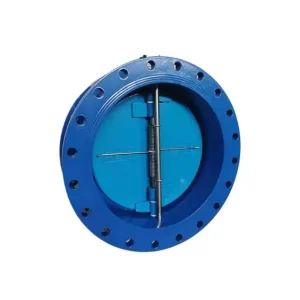
Wholesale Dual Plate Flange Type Check Valve
Product Details →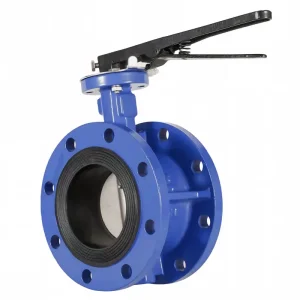
CE Flanged Butterfly Valve with Lever Actuator
Product Details →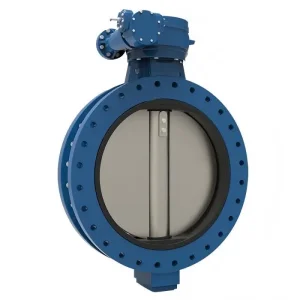
CE Flanged Butterfly Valve for Flow Control
Product Details →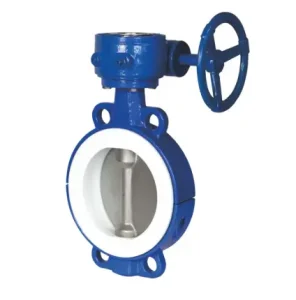
Wholesale PTFE Lined Butterfly Valve
Product Details →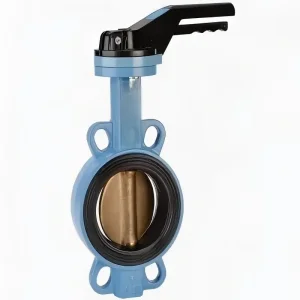
CE Bronze Disc Wafer Butterfly Valve
Product Details →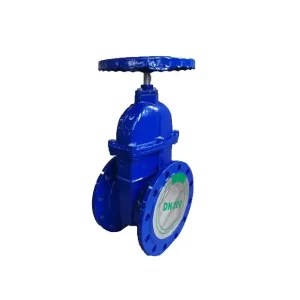
CE German Standard Elastic Seat Gate Valve
Product Details →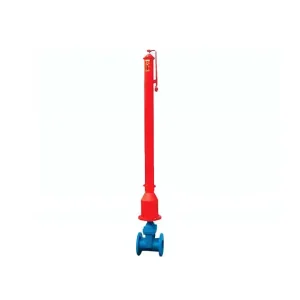
Buried Elastic Seat Gate Valve
Product Details →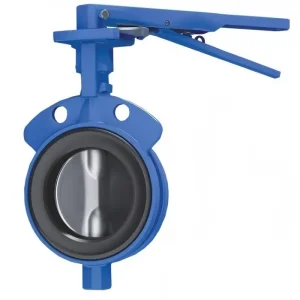
High-Quality EPDM Lining Butterfly Valve
Product Details →
Technical FAQ
Frequently Asked Questions on Ammonia Globe Valves
Direct engineering and commercial answers for project specification teams, distributors, and plant procurement managers.
What makes a globe valve specifically rated for ammonia "tight-shutoff" service?
An ammonia tight-shutoff globe valve features an engineered conical or parabolic plug disc equipped with a virgin or reinforced PTFE insert, mating precisely against a fine-ground stainless steel or Stellite seat. This hybrid soft-and-hard sealing interface guarantees zero visible leakage (ANSI Class VI / API 598 zero bubble rate). Additionally, the valve incorporates a back-seat design allowing secondary stem repacking under pressure, along with multi-ring PTFE chevron or bellows sealing to prevent toxic external leakage.
How does Tianjin Top Valve ensure zero porosity in cast steel ammonia valve bodies?
Because we operate our own independent foundry established in 1996, we monitor chemical metallurgy and degassing processes prior to pouring. We employ vacuum-assisted sand casting, continuous spectroscopic analysis, and non-destructive testing (radiographic and magnetic particle testing). Every raw casting undergoes strict dimensional inspection before CNC precision machining to prevent internal porosity or wall variations.
Which international flange drillings and certifications are supported for export?
We supply wholesale ammonia globe valves drilled according to EN 1092-1 (PN16/PN25/PN40), ASME/ANSI B16.5 (Class 150/300), and JIS standards. Our management systems comply with ISO 9001:2015, ISO 14001, ISO 45001, and EU CE marking directives. Full EN 10204 3.1 material test reports (MTRs) are provided with every shipping batch.
Can these valves handle sub-zero refrigeration conditions down to -50°C?
Yes. For sub-zero refrigeration environments, we manufacture globe valve bodies from ASTM A352 grade LCB/LCC low-temperature carbon steel or ASTM A351 CF8M austenitic stainless steel. Stems are constructed from high-tensile 304 or 316 stainless steel with specialized low-temperature PTFE packing to maintain resilience without embrittlement down to -50°C.
What is your production lead time and minimum order quantity (MOQ) for wholesale buyers?
As a factory-direct manufacturer, our standard delivery times range from 15 to 25 business days depending on volume and customization. We support flexible MOQs for project trial batches and long-term supply arrangements for engineering distributors, backed by swift shipment from Tianjin Port.
