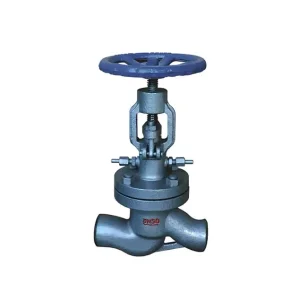
Precision Engineering Portfolio · Tier 1 Catalog
Certified Fluid Control Assemblies & Specialized Pipeline Units
Direct from our integrated Tianjin manufacturing complex: each production batch undergoes 100% shell hydrostatic and bidirectional zero-leakage seat verification under ISO 9001 quality supervision.
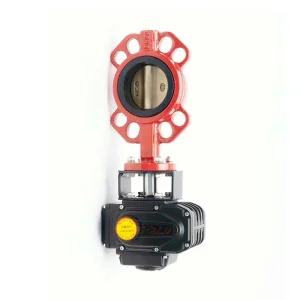
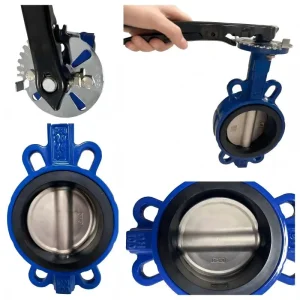
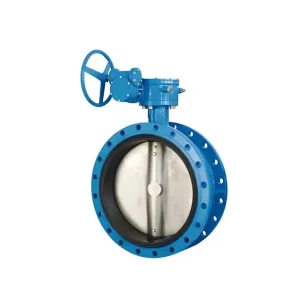
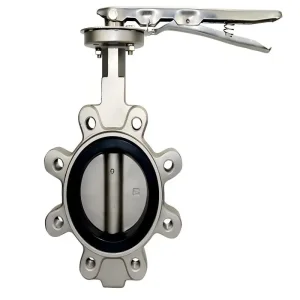
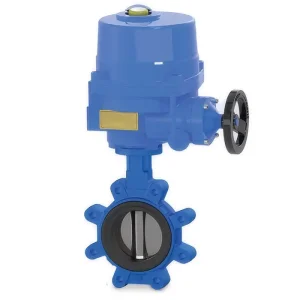
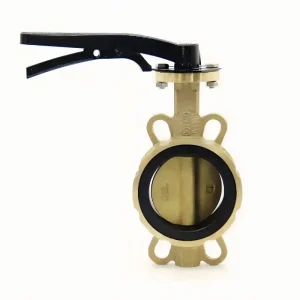
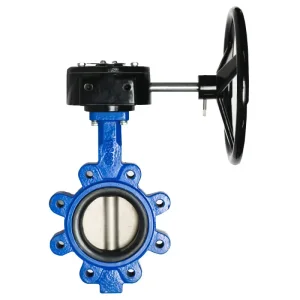
Technical Specification & Mechanics
Engineering Architecture: The OS&Y Rising Stem Solid Wedge Advantage
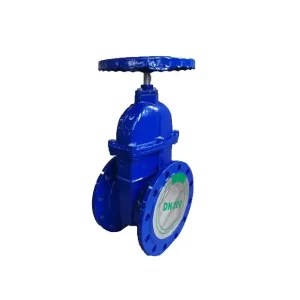
Rising Stem Outside Screw and Yoke (OS&Y) solid wedge gate valves represent the apex of linear shut-off reliability. Below is an engineering analysis of their operational superiority in harsh industrial fluid isolation.
External Thread Isolation
Unlike non-rising stem (NRS) designs where threads remain submerged in the process media, OS&Y rising stems position the actuating threads outside the valve body. This completely mitigates abrasive particle erosion, corrosive chemical degradation, and thread scaling caused by harsh process fluids.
Solid Wedge Structural Rigidity
The solid wedge is cast and machined as a monolithic structural component. It excels in turbulent flow conditions, pulsating pump discharges, and high-velocity piping, exhibiting zero mechanical chatter or vibration-induced fatigue compared to multi-piece flexible or split-wedge geometries.
Visual Plant Safety Indication
Stem elevation gives operations and safety personnel instantaneous visual confirmation of valve positioning from significant distances. This visual feedback is mandatory in critical fire protection mains (NFPA compliant), refinery battery limits, and boiler feedwater isolation stations.
| Engineering Parameter | Ductile Iron (EN-GJS-500-7 / ASTM A536) | Cast Carbon Steel (WCB / 1.0619) | Stainless Steel (CF8M / 1.4408) |
|---|---|---|---|
| Nominal Pressure Class | PN10, PN16, Class 150 | Class 150, Class 300, PN25, PN40 | Class 150, Class 300, Class 600 |
| Operating Temperature | -10°C to 120°C (EPDM / NBR bounded) | -29°C to 425°C (Stellite / 13Cr trim) | -196°C to 550°C (Integral Stellite Seats) |
| Applicable Design Standards | BS EN 1171, DIN 3352, AWWA C509/C515 | API 600, ASME B16.34, ISO 10434 | API 600, ASME B16.34, BS 1873 |
| Wedge Guiding Mechanism | Integral Body Rib Machined Guides | Hardened Welded Stellite Guides | Precision CNC Machined Full-Travel Slot |
| Primary Industrial Duty | Water Treatment, Desalination, Fire Loops | Hydrocarbon Refining, Steam Condensate | Petrochemical, Acid Handling, Marine LNG |
Macro-Industrial Dynamics & Infrastructure
Global Commercial Landscape & Fluid Grid Modernization
The worldwide valve market faces unprecedented demands: aging municipal grids, expanding petrochemical complexes, and rigorous fugitive emission controls. Rising stem solid wedge gate valves provide reliable service across diverse operational theaters.
Municipal Mega-Pumping
For high-head water distribution networks in the Middle East and Southeast Asia, our full-bore gate valves minimize friction loss (Cv maximum), dramatically lowering continuous kilowatt pump energy draw across multi-decade service cycles.
Hydrocarbon Upstream
In crude transport and primary fractionation units, thermal fluctuations cause wedge binding in inferior valves. Our proprietary solid wedge angle tolerances preserve bi-directional tight shut-off without mechanical seizure during cycling.
Thermal Power Generation
Supercritical and combined-cycle steam circuits require uncompromising metallurgical stability. High-integrity cast carbon and alloy steel gate assemblies handle rapid thermal transitions while maintaining stem packing integrity under vacuum and pressure.
Marine & Offshore Balance
Seawater cooling loops, ballast pumping, and FPSO processing modules depend on our aluminum bronze (C95800) and duplex stainless gate valves to withstand crevice corrosion, cavitation, and marine biological fouling.
1987
In-House Rubber Factory Foundation Date
1996
Industrial Valve Foundry Established
23,000 m²
Heavy Manufacturing Campus in Tianjin
50+
Global Export Sovereign Destinations
Audited Compliance & Engineering Trust
Localized Support Framework & Global Compliance Assurance
International EPC contractors require rapid engineering responsiveness, verified third-party metallurgical traceability, and compliance with local statutory codes. Our comprehensive governance framework is built for seamless plant integration.
EN 10204 3.1 Traceability
Every production run includes certified 3.1 chemical composition, mechanical elongation, Charpy V-notch impact, and Brinell hardness testing reports direct from our physical and chemical laboratory. Full heat-number casting traceability guarantees complete compliance.
Rapid Field Engineering Dispatch
Operating direct technical centers connected to major ports (Tianjin Hub), our valve engineers review isometric drawings, calculate water hammer risk curves, and supply custom CAD/3D STEP models within 24 hours of technical inquiry receipt.
Statutory Certification
Fully certified under CE-PED 2014/68/EU, ISO 9001:2015, ISO 14001:2015, and ISO 45001:2018. Selected water line butterfly and gate valves carry full WRAS certification, permitting instant municipal network sign-off across the UK, EU, and Commonwealth territories.
Field Deployment Case Studies
Engineered Field Scenarios: Real-World Performance
From freezing continental environments to coastal desalination networks, our rising stem solid wedge gate valves deliver reliable, bubble-tight performance across tough operating environments.
District Heating & Steam Header
Environment: Superheated hot water (180°C, 2.5 MPa) in a Northern European municipal district network.
Solution: Cast steel OS&Y gate valve with flexible graphite gland packing and Stellite No. 6 welded hard-faced seat rings. Achieved zero gland weeping across 4 heating seasons.
SWRO Desalination Intake
Environment: Raw seawater intake line with high chloride concentration and ambient temperatures reaching 48°C.
Solution: Nickel-Aluminum Bronze (ASTM B148 C95800) rising stem solid wedge valve. Provided complete resistance to biofouling pitting with verified Class VI zero shut-off leakage.
Slurry & Tailings Decant Lines
Environment: Abrasive copper tailings slurry transport with frequent throttling and shutdown cycles.
Solution: Solid wedge gate valve equipped with ceramic and tungsten carbide seat overlays, extending valve service intervals from 4 months to over 26 months.
R&D Horizons & Digital Valve Technology
Technology Roadmap: Intelligent Flow & Fugitive Emission Mitigation
Looking ahead, valve manufacturing is shifting toward smart actuation, ultra-low emission packing systems, and predictive digital twins. Here is how our engineering division is advancing valve performance.
ISO 15848-1 Low-E Packing
Addressing Scope 1 industrial greenhouse gas emissions, our next-generation rising stem stuffing boxes use cup-and-cone live-loaded virgin graphite sets that achieve leakage levels below 50 ppmv across 20,500 mechanical cycles without gland retightening.
IIoT Diagnostic Stems
Embedding micro-strain sensor collars directly below the stem yoke nut allows wireless transmission of operational thrust profiles. Plant SCADA systems can detect seat buildup, scale accumulation, or mechanical stress long before seal degradation occurs.
Additive Wedge Hard-Facing
Adopting laser powder bed fusion (LPBF) and automated plasma arc transfer, our foundry applies cobalt and nickel-based superalloys to wedge sealing faces with microscopic dilution, boosting erosion resistance in high-differential steam line bypass service.
Procurement & Engineering FAQ
Frequently Asked Technical Questions
Detailed answers to common engineering questions from pipeline operators, EPC estimators, and quality managers regarding rising stem solid wedge gate valves.
When should an engineer specify a solid wedge over a flexible wedge?
Solid wedges offer maximum mechanical strength and a simple single-piece casting profile. They are ideal for turbulent flows, slurry systems, and water mains where thermal expansion differentials across the seats are minimal. Flexible wedges suit high-temperature steam lines subject to thermal binding, whereas solid wedges avoid structural cracking in severe slurry applications.
Why does a rising stem require more installation clearance than an NRS valve?
Because the stem rises through the yoke handwheel as the wedge opens, clearance above the handwheel must equal at least the valve's nominal diameter plus the yoke height. NRS (Non-Rising Stem) valves maintain a constant height, making them suited for buried vaults or compact shipboard layouts, while rising stems are preferred wherever visual position verification and thread protection are essential.
How does Tianjin Top Valve prevent stem-to-wedge connection failure?
We use a precision-forged T-head integral stem connection that slides into the wedge slot. This design allows the wedge to self-align against both body seats without transmitting side thrust to the stem, eliminating stem galling, bending moments, and connection shearing under full differential pressure.
Can rising stem solid wedge gate valves be used for throttling flow?
No. Gate valves are strictly designed for full on/off isolation. Operating a solid wedge in a partially cracked or throttled position causes high-velocity fluid impingement on the unsupported wedge bottom, leading to severe vibration, seat scouring, and wedge chatter. Throttling service requires dedicated globe, V-port ball, or eccentric plug valves.
Need Project-Specific Valve Sizing or Custom Flange Drilling?
Our Tianjin engineering headquarters supplies full 3D CAD models, material test reports (MTRs), and tailored quotes within 24 hours.
Comprehensive Catalog · Heavy Duty Valves
High-Performance Metal Seal, Lined & High-Pressure Valves
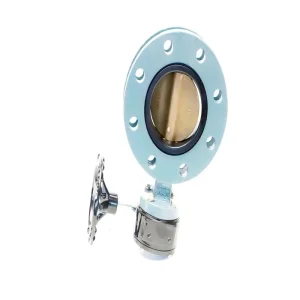
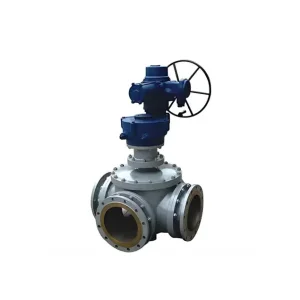
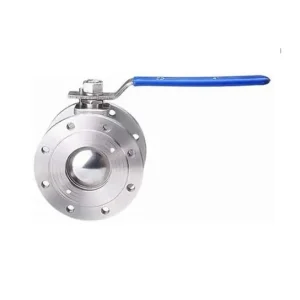
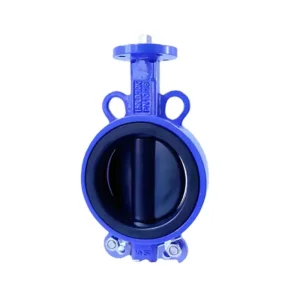
From DIN standard elastic seat gate units to fire-safe three-way emergency divert valves: each model is manufactured in our modern CNC machining centers and pressure-tested for reliable service.