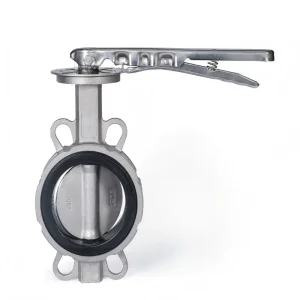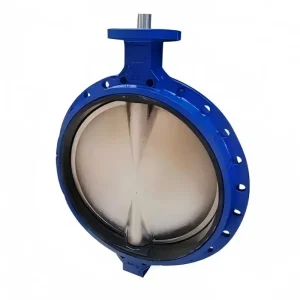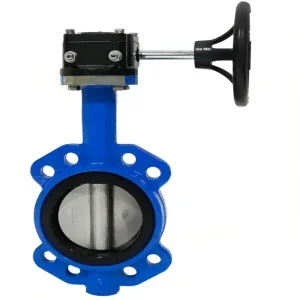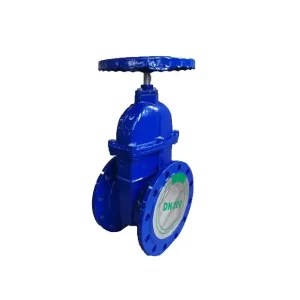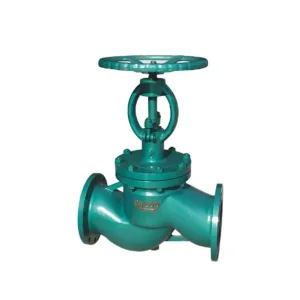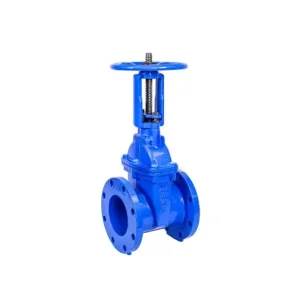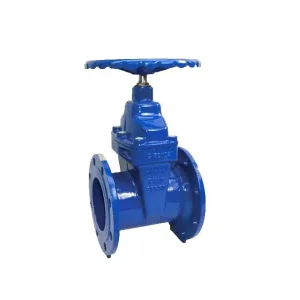
High-Quality Non-Rising Stem Elastic Seat Sealing Gate Valve Manufacturer, Factory
View Details
Explore our industrial range of precision valves, tested under rigorous hydrostatic and pneumatic parameters to guarantee bubble-tight zero leakage.
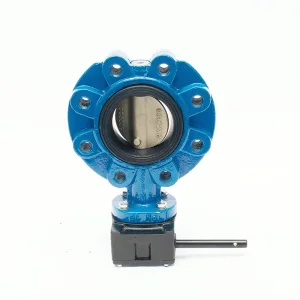
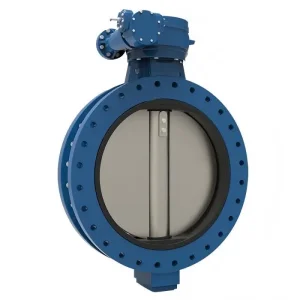
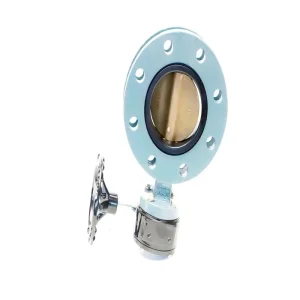
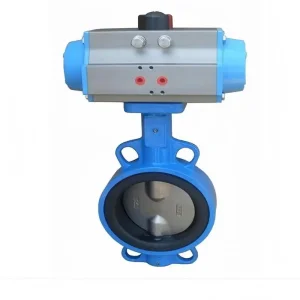
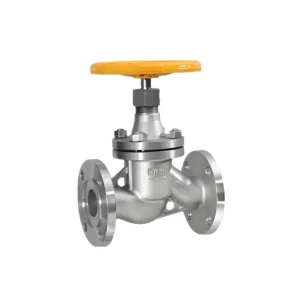
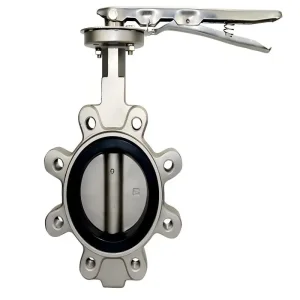
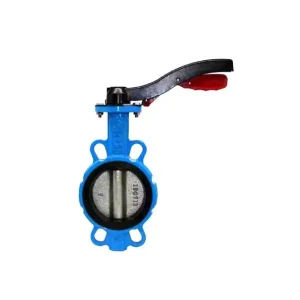
Analyzing high-cycle automation demand, severe service media, and fugitive emission mitigation across modernized process facilities.
In automated steam distribution, thermal power cycles, petrochemical cracking, and cryogenic natural gas management, quarter-turn valves often suffer from cavitation and trim erosion. Pneumatic globe valves remain the global gold standard due to their linear stem motion, contoured plug geometries, and customizable Cv characteristics (Equal Percentage, Linear, and Quick-Opening), ensuring ultra-precise modulation under differential pressures exceeding ANSI Class 2500.
Global procurement teams have transitioned from basic analog actuation to smart electropneumatic positioners utilizing HART, Foundation Fieldbus, and Profibus PA protocols. Modern globe valve assemblies function as diagnostic edge nodes, feeding valve stroke travel, friction profiles, response latency, and air consumption data into cloud-based DCS/SCADA architectures to facilitate predictive maintenance before unplanned shutdowns occur.
Global environmental mandates—including ISO 15848-1 Class AH/BH and TA-Luft compliance—have compelled industrial operators to prioritize leak-free gland designs. Modern pneumatic globe valve manufacturers integrate multi-stage live-loaded chevron PTFE/graphite packing, bellows-sealed bonnet extensions, and ultra-finished stem surfaces (Ra ≤ 0.2 μm) to eliminate hazardous VOC emissions and media slippage.
Vertical manufacturing integrity reduces lead times, eliminates middleman price overhead, and unifies metallurgical control.
Unlike assembly-only shops, our integrated group foundry pours WCB carbon steel, CF8M stainless steel, and bronze alloys under rigorous spectral analysis, eliminating porosity and micro-fractures prior to machining.
Originating from our dedicated rubber facility founded in 1987, we formulate and vulcanize custom EPDM, NBR, and PTFE seat blends in-house, optimizing elastic memory, tear strength, and compression set resistance.
Micro-finishing of parabolic plugs, balanced cage trims, and stem guide bushings guarantees concentric alignment, preventing premature packing wear, stem binding, and localized hydrodynamic scouring under high flow velocities.
Every pneumatic globe valve is accompanied by complete chemical composition documentation, mechanical yield reports, and individualized hydrostatic shell/seat inspection records conforming to API 598 and ANSI/FCI standards.
Situated within Dongli District's Wuxia Industrial Park in Tianjin, our facility operates in direct proximity to Tianjin Port—Northern China's largest comprehensive shipping hub. This logistical infrastructure enables streamlined containerization, reduced inland transit costs, rapid delivery schedules, and optimized export packaging protocols for multi-ton industrial consignments.
Standard design parameters for EPC contractors, engineering consultants, and procurement managers.
| Engineering Parameter | Standard Specification Options | High-Pressure / Cryogenic Variants | Governing International Standard |
|---|---|---|---|
| Nominal Diameter | DN15 to DN400 (1/2" to 16") | DN15 to DN200 (Custom Engineered Bores) | ASME B16.10, DIN EN 558-1 |
| Nominal Pressure | PN16, PN25, PN40, Class 150, Class 300 | Class 600, Class 900, Class 1500, Class 2500 | ASME B16.34, EN 1333 |
| Body & Bonnet Materials | WCB, WCC, CF8, CF8M (SS316), CF3M | Hastelloy C, Monel, Duplex SS (2205), Alloy 20 | ASTM A216, ASTM A351, ASTM A995 |
| Trim Configuration | Unbalanced Contoured Plug, Parabolic Quick-Opening | Pressure-Balanced Cage, Multi-Hole Anti-Cavitation | IEC 60534-4, ISA 75.01 |
| Pneumatic Actuator Type | Multi-Spring Diaphragm (Air-to-Open / Air-to-Close) | Double-Acting Pneumatic Piston Cylinder | NAMUR NE14, ISO 5211 |
| Leakage Classification | Class IV (Metal-to-Metal), Class VI (Soft Bubble-Tight) | Class V (High-Temp Water Cut-Off) | ANSI/FCI 70-2, IEC 60534-4 |
| Operating Temperature | -29°C to +200°C (Standard Bonnet) | -196°C to +450°C (Extended / Bellows Bonnet) | ASME B16.34, EN 12516 |
Engineered to mitigate harsh thermodynamic conditions, severe pressure gradients, and aggressive process chemicals.
Main boiler feedwater, turbine bypass, and superheated steam injection systems require continuous high-velocity modulation. Our Stellite-faced hard seals resist steam wire-drawing, flashing, and high-frequency acoustic cavitation while maintaining precise setpoint flow temperatures.
Straight-through globe topologies with extended bonnets and deep-well PTFE packing prevent hazardous ammonia gas escape and moisture freezing along the valve stem, guaranteeing dependable refrigeration cycle isolation and expansion control.
Coking plants, catalytic hydrocrackers, and sour gas transmission lines demand resistant metallurgy. Our multi-stage anti-cavitation trim sets dissipate kinetic fluid energy progressively, eliminating pipe vibration, noise, and localized internal trim erosion.
How global procurement specialists evaluate TCO (Total Cost of Ownership), automation compatibility, and sustainability metrics.
Operators demand top-entry quick-change trims. By selecting pneumatic globe valves where seat rings and plugs can be inspected and swapped without removing the valve body from the pipeline, facility down-time during scheduled turnarounds is drastically minimized.
Methane tracking and carbon tax implementations force refineries to upgrade old valves. Demand for ISO 15848 certified live-loaded packing sets and hermetic bellows bonnets has grown exponentially, positioning compliant factories at the forefront of multinational EPC tender approvals.
Buyers no longer accept non-traceable third-party brokers. The modern market seeks direct factory relationships with transparent quality assurance: Positive Material Identification (PMI), radiographic casting reports, dye penetrant testing, and documented torque testing.
Authoritative answers covering pneumatic globe valve sizing, actuation selection, trim design, and global certifications.
Globe valves feature a linear stem stroke where the distance between the plug and seat directly correlates with orifice area across the full travel stroke. This allows precise execution of tailored flow characteristics (Equal Percentage or Linear), preventing high-velocity flow separation, excessive hunting, and severe cavitation common to rotary valves throttled below 20% opening.
Unbalanced plugs require substantial actuator thrust to overcome high differential pressures pushing against the cross-sectional area of the plug. In sizes DN50 (2") and larger with high pressure drop, a balanced cage trim equalizes static fluid forces across the plug through vertical balance holes, allowing a much smaller, cost-effective pneumatic diaphragm actuator to operate smoothly.
Air-to-Open (Fail-Close / Reverse Acting) utilizes internal spring tension to seal the valve closed upon air supply failure—critical for fuel feedlines and hazardous chemicals. Air-to-Close (Fail-Open / Direct Acting) utilizes spring tension to push the valve completely open upon loss of air, standard in boiler blowdown and cooling water lines to prevent catastrophic thermal overpressure.
Our manufacturing workflow integrates raw material chemical spectral verification, ultrasonic wall thickness scanning, and 100% hydrostatic shell testing at 1.5x nominal rating. In addition, pneumatic seat testing is performed under clean dry air at 0.6 MPa to confirm ANSI/FCI 70-2 Class IV, V, or VI bubble-tight sealing prior to protective export packaging.
Yes. Our multi-axis CNC centers can precision-machine valve flange drillings, face-to-face dimensions, and gasket surface finishes (smooth or serrated spiral) according to ASME B16.5, DIN EN 1092-1, BS 4504, or JIS B2220 specifications based on the project EPC drawing.
Because we own our body foundry, rubber vulcanization workshops, and CNC machining centers in Tianjin, standard ductile iron and carbon steel valves ship within 15–20 days. Custom alloy configurations (Hastelloy, Duplex) or special pneumatic instrumentation setups typically finalize within 30–40 days.
High-durability butterfly, resilient gate, and severe-service globe valves engineered for worldwide municipal, chemical, and heavy industrial duties.