
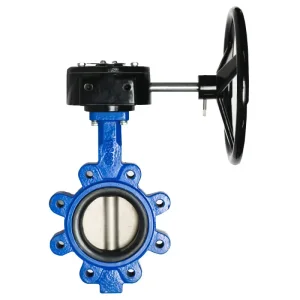
Product Exhibition Series I
Engineered Flow Solutions & Industrial Assemblies
Explore our foundational range of precision butterfly valves, wafer backflow units, and marine-spec flow controls, manufactured strictly under ISO 9001 and CE directives.
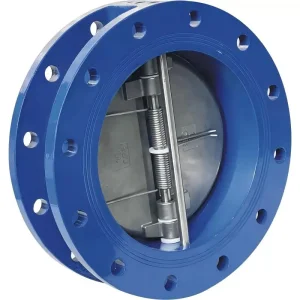
CE Certification Dual Plate Check Valve, Reliable Backflow Prevention Device Suppliers, Manufacturer
Explore Specifications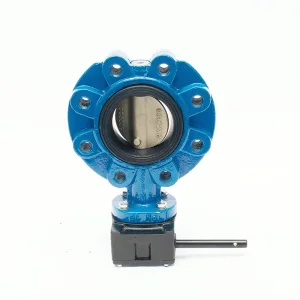
High-Quality Marine Centric Lug type manual operated butterfly valve Manufacturers, Factory
Explore Specifications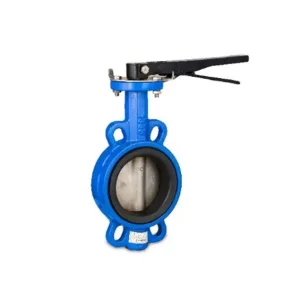
High-Quality Rubber Lined Pinless Butterfly Valve Supplier, Factories
Explore Specifications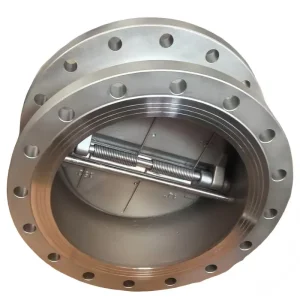
CE Certification Compact Low-Pressure Drop Wafer Lift Check Valve Supplier, Factories
Explore Specifications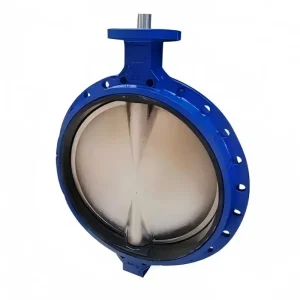
Wholesale Single Flange Butterfly Valve - Durable & Efficient Flow Control Supplier, Manufacturers
Explore Specifications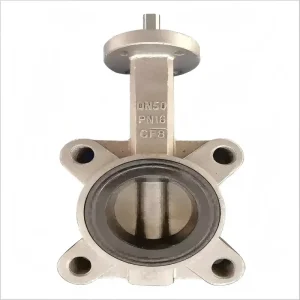
Wholesale Semi Lug Butterfly Valve - Durable & Versatile Flow Control Manufacturers, Manufacturer
Explore Specifications
Wholesale Wafer Butterfly Valve - Durable & Efficient Flow Control Solution Suppliers, Factory
Explore SpecificationsEngineering Authority · Whitepaper Analysis
Global Industrial Status: The Hydrodynamics of Ball Check Valves
Why modern water treatment facilities, industrial desulfurization units, and mine dewatering systems are actively replacing conventional swing flaps with sinking-and-rolling spherical check designs.
Zero-Lag Self-Cleaning Mechanism
Unlike traditional swing check valves that suffer from hinge pin accumulation and pivot binding in fibrous wastewater, ball check valves utilize an encapsulated NBR/EPDM spherical core. Fluid flow pushes the ball out of the hydraulic path into an offset cavity, leaving an uninhibited 100% full-port passage that virtually eliminates blockage risks.
Severe Water Hammer Mitigation
Upon reverse flow commencement, the internal ball tracks diagonally along hydrodynamic internal guide rails. With an ultra-short travel distance and gravity-assisted reverse velocity matching, closing occurs almost instantaneously prior to reverse wave velocity peaks, attenuating acoustic pressure shocks by up to 68% compared to counterweight flappers.
Total Sealing Under Micro-Pressure
The elastomer-coated sphere rotates randomly during every operating cycle, distributing wear uniformly over 360 degrees. Even when downstream pressures drop below 0.05 bar (0.5 m water column), the elastic deformation of our proprietary rubber compounding ensures Class A drop-tight isolation matching EN 12266-1 guidelines.
100%
Full Bore Unobstructed Flow
0.02 MPa
Ultra-Low Cracking Pressure
< 0.5 s
Dynamic Anti-Slam Closure
50+
Countries Deployed Worldwide
Foundry-to-Assembly Vertical Chain
Why China Valve Clusters Deliver Unmatched TCO
Integrated metallurgy, in-house elastomer vulcanization, and robotic CNC finishing in Tianjin eliminate multi-tier contractor markups and guarantee certified end-to-end traceability.
Dual Heritage: Foundry + Rubber Plant
Founded on our integrated roots originating with Tianjin Dongfang Rubber (1987) and Tianjin Donglian Valve (1996), every core ball casting and NBR/EPDM overmold is formulated in-house. This direct synthesis avoids elastomer debonding and hollow-core ball collapse, common failure modes in outsourced third-party assemblies.
Spectrometric Metallurgical Control
Our Tianjin Dongli casting units operate induction melting with on-site optical emission spectrometry. Ductile iron ASTM A536 65-45-12 / EN-GJS-450-10 achieves nodularity greater than 90%, preventing micro-porosity during continuous hydrostatic surges up to 2.4 MPa shell testing conditions.
CE PED & ISO 9001 Compliance
All pressure retainers undergo strict quality audits complying with EU Pressure Equipment Directive (PED 2014/68/EU), CE Marking, and ISO 14001/45001 standards. Material Test Reports (EN 10204 Type 3.1) are issued with heat lot identification for comprehensive audit safety.
Specification Matrix
CE Certified Ball Check Valve Engineering Datasheet
Review standard physical parameters, material compatibility matrix, and structural dimensions engineered for international municipal and utility projects.
| Parameter / Metric | Standard Specification | High-Corrosion / Chemical Option | Compliance Standards |
|---|---|---|---|
| Nominal Diameter (DN) | DN50 – DN600 (2" to 24") | DN50 – DN800 (Custom Engineered) | EN 558 Series 48 / DIN 3202 F6 |
| Pressure Rating | PN10, PN16, Class 125/150 | PN25 (High Head Lifting) | EN 12266-1, ISO 5208 Shell Test |
| Body Metallurgy | Ductile Iron GGG40/GGG50 / A536 | Stainless Steel CF8M (316) / WCB | EN 1563, ASTM A536, ASTM A351 |
| Ball Closure Assembly | Carbon Steel Core + Vulcanized NBR | Aluminum/Solid PTFE or EPDM/FKM | WRAS Compliant Elastomer Compound |
| Flange Connection | EN 1092-2 PN10/16, BS4504 | ASME B16.1 / B16.5, JIS 10K | Multi-standard Drilling Available |
| Internal/External Coating | Electrostatic Fusion Bonded Epoxy (FBE) ≥250μm | Ceramic Polymer or Halon Lining | DIN 30677-2, WRAS Drinking Water Standard |
| Certification Badges | CE Marking ISO 9001 | WRAS (Selected) 3.1 MTR | PED 2014/68/EU Directive |
Application · Strategic Sourcing
Industry Trends & Global Procurement Requirements
How international utility operators, EPC contractors, and global OEM supply chains adapt their procurement matrices to counteract surging energy overheads and aggressive media abrasion.
Wastewater & Sludge Pump Stations
Municipal lift stations face severe stringy solids and wet wipe entrapment. Sinking-ball check valves provide an open path where solids cannot wrap around stems or wedge between hinge disks, driving maintenance frequency down by up to 80% across North American and European municipal pumping networks.
Mining Tailings & Corrosive Desalination
Desalination brine discharge and mineral refining loops accelerate erosion-corrosion. Top Valve deploys fusion-bonded epoxy linings and duplex stainless steel or ceramic-disc check devices to isolate hypersaline loops, neutralizing cavitation pitting in Middle Eastern and Chilean mining corridors.
Procurement Trend: Factory Audits & Direct Sourcing
Modern supply chain directors bypass intermediate export traders. Demanding direct live factory walkthroughs, digital CMM inspection reports, and automated pressure testing validation, tier-1 EPC buyers partner directly with our Tianjin manufacturing plant for predictable delivery cycles and factory-gate pricing.
Product Exhibition Series II
Specialized Process Valves & Flanged Configurations
Complete your pipeline system layout with low-torque flanged assemblies, stainless single disc non-return devices, ceramic abrasive valves, and firefighting safety models.
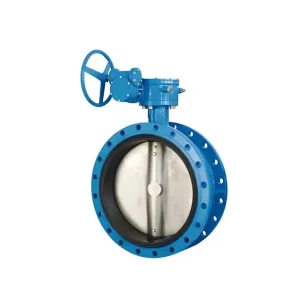
Wholesale Low - Torque Flange Type Butterfly Valve Supplier, Factory
Explore Specifications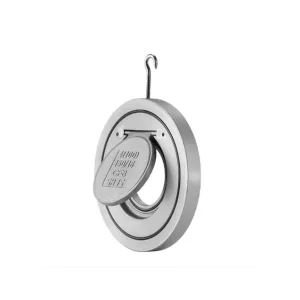
CE Certification Stainless Steel Single Disc Wafer Check Valve with Enhanced Corrosion Supplier, Manufacturers
Explore Specifications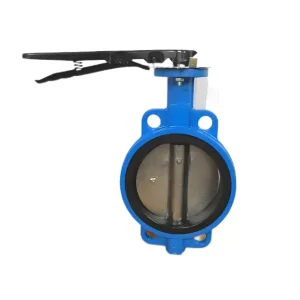
Wholesale Low - Pressure Wafer Type Butterfly Valve Supplier, Manufacturers
Explore Specifications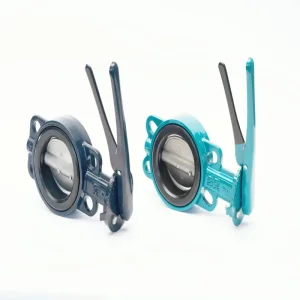
CE Certification Water-Safe Butterfly Valve for Efficient Flow Control Manufacturers, Manufacturer
Explore Specifications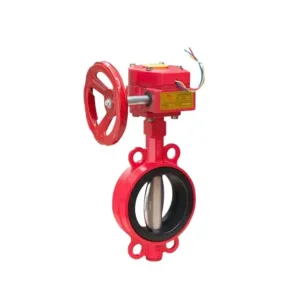
Wholesale Fire-Fighting Wafer Signal Butterfly Valve Supplier, Factory
Explore Specifications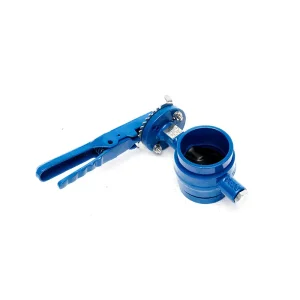
High-Quality Grooved Type Manual Butterfly Valve Suppliers, Manufacturers
Explore Specifications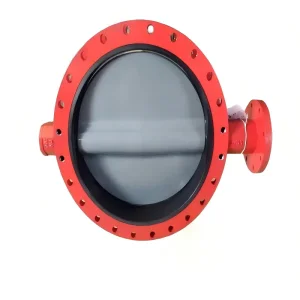
Wholesale Ceramic Disc Wafer Butterfly Valve - Durable & Efficient Design Supplier, Factories
Explore Specifications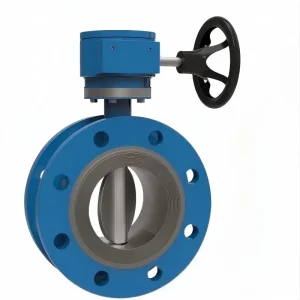
High-Quality Flange Type Butterfly Valve - Durable and Efficient Flow Control Supplier, Manufacturer
Explore SpecificationsProcurement & Technical Support
Frequently Asked Questions: Ball Check Valves & Engineering Standards
In-depth responses covering installation orientations, dynamic head calculations, rubber seat chemistry, and factory compliance protocols.
Can water support ball check valves be installed in both vertical and horizontal pipelines?
Yes. Water support ball check valves are fully operational in horizontal orientations and vertical installations with upward fluid flow. In vertical ascending setups, gravity pulls the internal ball directly downward onto the seat when the pump stops, ensuring instant reverse-flow sealing. In horizontal lines, our engineered internal sloping track guides the sinking ball back to the seating ring with minimal fluid back-pressure (≥ 0.03 bar). Vertical downward flow is non-advisable as gravity would prevent the ball from seating properly against backflow.
What core advantages does the CE Mark provide for European and international EPC deployments?
CE Certification affirms conformity with the European Union's Pressure Equipment Directive (PED 2014/68/EU). This assures international contractors that the valve pressure boundaries, material composition, welding, and pressure tests conform to stringent health, safety, and environmental standards. CE compliance also facilitates rapid customs clearance across EU member states and guarantees that EN 10204 3.1 inspection certificates, hydrostatic shell testing (≥ 1.5 × PN), and seat leakage criteria (≤ ISO 5208 Rate A) are meticulously maintained.
How does Top Valve solve rubber delamination on the sinking ball?
Elastomer peel or tearing under aggressive hydraulic impact is solved by our in-house rubber factory (Tianjin Dongfang Rubber Factory, established 1987). We cast ductile iron or cast steel ball cores featuring machined anchoring grooves and apply high-strength adhesive bonding agents prior to transfer-injection vulcanization. The outer NBR or EPDM elastomer sheath has a minimum tensile strength of 14 MPa and high abrasion resilience, preventing detachment even under turbulent 4 m/s water flow and repeated slamming cycles.
What is the minimum head loss and cracking pressure associated with full-bore ball check valves?
Because the internal sphere recesses fully out of the central bore axis during normal operational flow, our valves achieve an exceptionally low drag coefficient (zeta value ζ ≈ 0.5 – 0.8), closely approaching smooth straight-pipe resistance. Cracking pressure required to push the ball from the seat is typically as low as 0.015 to 0.025 MPa (1.5 to 2.5 meters of water head), drastically reducing operational electrical power load on municipal booster pumps.
Can customized flange drilling, face-to-face lengths, or special coatings be accommodated?
Absolutely. Operating our own independent foundry and CNC center in Tianjin enables us to configure flange templates according to EN 1092-2 (PN10/PN16), ANSI/ASME B16.1 Class 125, ASME B16.5 Class 150, AS 2129 Table D/E, or JIS 10K. For harsh abrasive conditions, internal body protection can be upgraded from standard electrostatic fusion-bonded epoxy (250μm min) to vulcanized hard rubber linings, chemical-grade Halar (ECTFE), or solid stainless steel construction.
How does direct procurement from Tianjin Top Valve lower total procurement costs?
Direct sourcing delivers substantial savings by eliminating intermediary trading margins and commercial distribution tiers. Our 23,000 m² production site houses raw iron casting, elastomer compounding, CNC lathe processing, and pressure verification within one unified physical plant. This vertical consolidation allows us to ship directly out of the deep-water Port of Tianjin, trimming logistical transit times and providing project contractors with genuine factory warranties and technical engineering support.
