
Featured Fluid Control Valves & Certified Assemblies
Discover our primary engineered valve offerings featuring high-integrity casting, custom seat vulcanization, and international compliance testing.
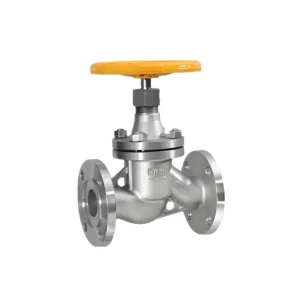
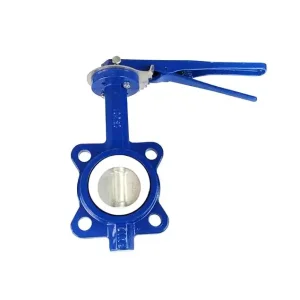
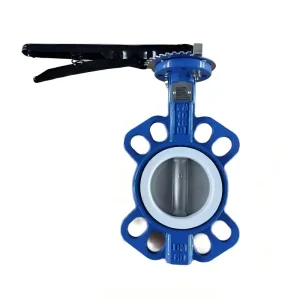
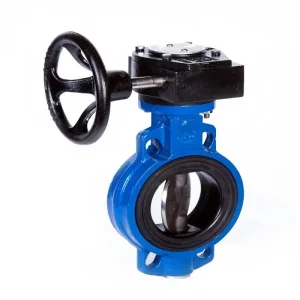
Global Industrial Landscape of PTFE Coated Ball Valves
Analyzing corrosive media containment, fugitive emission abatement, and the strategic positioning of fluoropolymer-lined isolation infrastructure.
Aggressive Chemical Handling
Modern chemical synthesis plants (utilizing chlorine, nitric acid, hydrochloric acid, and organic solvents) require valves that eliminate ion migration and metallic corrosion. Virgin PTFE and PFA liners provide an impervious chemical barrier up to 200°C, offering superior operational lifespans compared to costly Hastelloy or Titanium alloys.
Stringent CE PED & Emission Standards
Under the European Pressure Equipment Directive (PED 2014/68/EU), CE-marked ball valves must guarantee structural compliance under high cyclic pressure. When coupled with ISO 15848-1 and TA-Luft stem seal specifications, PTFE coated assemblies prevent catastrophic environmental leaching and toxic fugitive emissions.
Low Operating Friction & Actuation
Fluoropolymer coatings dramatically reduce break-away torque compared to unlined metal or rubber seat valves. This enables smaller pneumatic or electric actuators to operate the valves, shrinking energy consumption, minimizing physical installation space, and reducing capital expenditure for automated skid manufacturers.
Tianjin Manufacturing Efficiency: Engineering Edge
From metallurgical raw iron pouring to fluoropolymer lining sintering, our vertically integrated plant removes third-party markups and guarantees rigorous quality control.
Foundry & Chemical Lab
Ductile Iron (GGG40/50), WCB, and CF8M valve shells are cast in-house. Our physical and chemical lab conducts spectral optical emission analysis on every melt to prevent internal porosity before lining.
High-Density Isostatic Lining
We utilize transfer molding and isostatic pressing to achieve a uniform 3.0mm to 5.0mm PTFE/PFA coating thickness. Mechanical dovetail locking grooves lock the liner in place, resisting deep vacuum de-bonding.
20kV Spark & Shell Testing
Every lined ball valve undergoes a non-destructive 20,000V high-voltage spark test to verify pinhole-free fluoropolymer coverage, followed by EN 12266-1 Rate A hydrostatic testing (zero allowable bubble leakage).
Port Proximity & Packaging
Strategically based in Wuxia Industrial Park, Dongli District, Tianjin, we are minutes away from Tianjin Port. Export crates are sealed with custom desiccants and protective end caps for secure ocean freight dispatch.
Localized Industrial Operating Scenarios
Tailoring engineering parameters across diversified operating conditions to prevent downtime, reduce corrosion overhead, and enhance pipeline safety.
Pharmaceutical & Bio-processing
FDA 21 CFR 177.1550 compliant PTFE ball valves provide ultra-smooth contact surfaces (Ra ≤ 0.4 μm) that eliminate bacterial adhesion during CIP/SIP sanitization cycles, preserving batch purity in sterile production lines.
Semiconductor Wet Etching
High-purity electronic-grade chemicals such as hydrofluoric acid (HF) and sulfuric peroxide mixtures dissolve metal components. PFA/PTFE lined ball valves eliminate trace metal ion contamination in cleanroom delivery circuits.
Mining Acid Leaching & Slurry
Copper and gold hydrometallurgical operations employ high-temperature sulfuric acid extraction. PTFE coated ball valves provide abrasion resistance while withstanding localized cavitation erosion and particulate accumulation.
PTFE Coated Ball Valve Engineering Matrix
Standard parameters for CE marked and PED Module H compliant ball valve production.
| Component / Specification | Standard Option | Corrosion / Severe Duty Grade | Governing Engineering Norm |
|---|---|---|---|
| Nominal Diameter Range | DN15 to DN300 (1/2" to 12") | DN350 to DN600 (14" to 24") | EN 558 Series 1 / ASME B16.10 |
| Pressure Rating Class | PN10 / PN16 / Class 150 | PN25 / Class 300 | EN 1092-1 / ASME B16.5 |
| Body Structural Materials | Ductile Iron EN-GJS-400-15 (GGG40) | Cast Steel WCB (1.0619) / CF8M (1.4408) | ASTM A216 / ASTM A351 |
| Lining / Coating Resins | Virgin PTFE / Modified PTFE (TFM) | PFA (Perfluoroalkoxy) / FEP | ASTM D4894 / ISO 12086 |
| Lining Layer Thickness | 3.0 mm ± 0.5 mm | 3.5 mm to 5.0 mm (Vacuum Anchored) | HG/T 3704 / DIN EN 13397 |
| Spark Test Voltage | 15 kV High-Frequency DC | 20 kV Non-Destructive Spark Test | DIN 53781 / ASTM G62-B |
| Stem Seal Leakage Integrity | Chevron V-Ring PTFE Packing | Live-Loaded Spring Disc + TA-Luft Seal | ISO 15848-1 Class AH / VDI 2440 |
| Operational Temp. Envelope | -20°C to +150°C | -40°C to +200°C (Cryogenic to High Heat) | PED 2014/68/EU Annex I |
Global EPC Sourcing Checklist for Lined Valves
Key criteria international sourcing managers and instrumentation engineers use to qualify Chinese valve manufacturers.
Full EN 10204 3.1 Traceability
Quality-focused EPCs require material test reports (MTRs) detailing casting chemistry, tensile properties, and mechanical elongation, linked directly to unique serial and casting lot numbers stamped on valve tags.
Vacuum Resistance Engineering
Lining collapse during vacuum conditions is a frequent point of failure in chemical distillation columns. Sourcing teams prioritize bodies featuring dovetailed grooves and locked-in T-slots that mechanically secure the PTFE lining.
Actuator Automation Mounting
Modern installations demand streamlined digital control. Standard ISO 5211 top mounting pads simplify the installation of quarter-turn pneumatic rack-and-pinion or intelligent electric modulating actuators without bespoke brackets.
Engineered Isolation, Marine & Process Solutions
Explore high-pressure, vacuum-sealed, and drinking-water compliant models produced within our Tianjin industrial manufacturing hub.
Frequently Asked Technical Questions
Detailed answers regarding material compatibility, international certifications, and factory lead times for EPC project managers.
