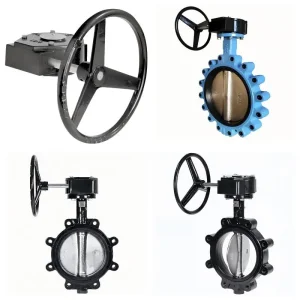
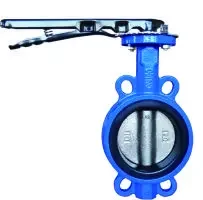
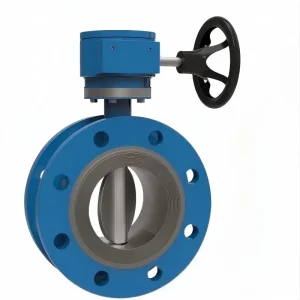
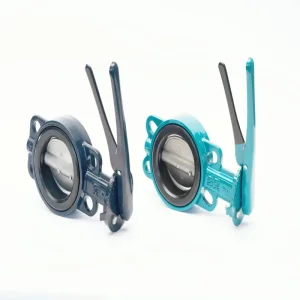
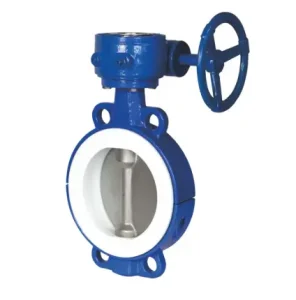
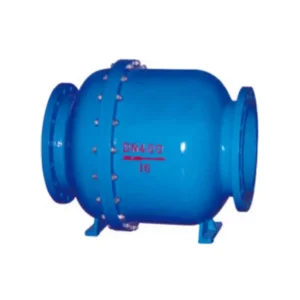
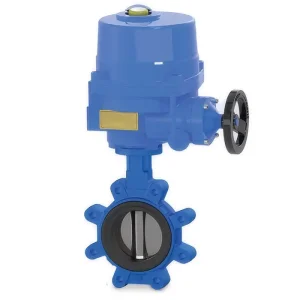
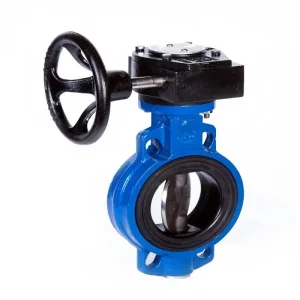
Industrial Valve Engineering Showcase (Batch 01)
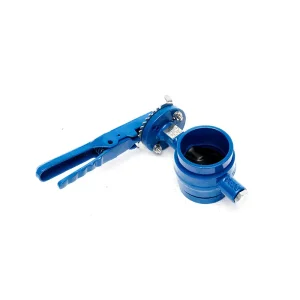
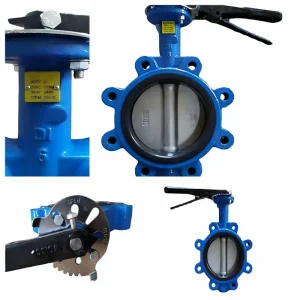
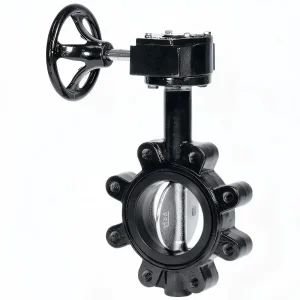
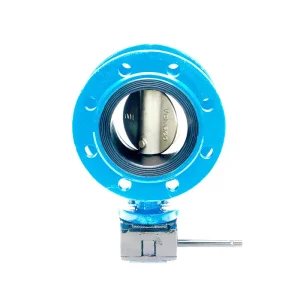
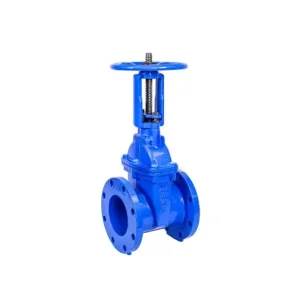
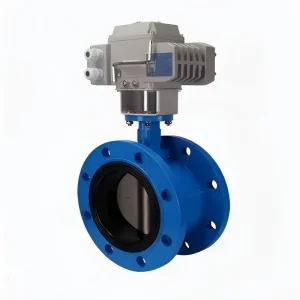
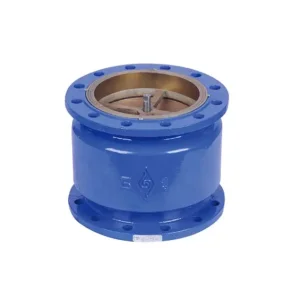
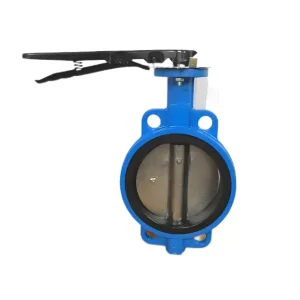
Featured resilient-seated and engineered valves manufactured under strict CE conformity, in-house foundry melt testing, and hydrostatic seat tightness parameters.
Industrial Status & Global Commercial Reality of Manual Ball Valves
A rigorous examination of fluid containment, high-cycle ergonomics, fugitive emission standards, and factory casting integration.
1. Global Market Overview: The Sustained Primacy of Manual Ball Valves
Across chemical processing plants, municipal water infrastructure, district energy systems, offshore platforms, and hydrocarbon storage depots, the manual type ball valve remains an irreplaceable linchpin of fluid handling. While motorized automation and IoT-enabled actuators dominate main process control loops, manual ball valves serve as the foundational bedrock for positive physical shut-off, emergency isolation, maintenance bypass manifolds, and instrument takeout lines.
The global industrial valve ecosystem has evolved toward stringent environmental and safety mandates. The European Union's Pressure Equipment Directive (PED 2014/68/EU), standard CE conformity, and international standards such as ISO 15848-1 (Fugitive Emissions) have fundamentally elevated the qualification baseline for manufacturers. A manual ball valve is no longer regarded as a commoditized piece of hardware; it is an engineered pressure vessel demanding absolute metallurgical integrity, anti-blowout stem design, verifiable anti-static continuity, and repeatable bi-directional bubble-tight shut-off.
2. Engineering Advantages: Why Manual Quarter-Turn Architecture Excels
The kinematic geometry of manual ball valves provides inherent engineering superiority in isolation critical services:
- Zero Tortuous Path & Minimal Head Loss: Full-bore manual ball valves exhibit virtually zero obstruction to the fluid streamline. The hydrodynamic coefficient (Cv/Kv) matches equivalent straight pipe sections, mitigating dynamic cavitation, turbulence, and pump energy depletion.
- Rapid 90-Degree Operation: Immediate quarter-turn rotation enables operators to isolate high-pressure systems in seconds during catastrophic failures or routine maintenance outages, avoiding multi-turn delays associated with conventional globe or gate valves.
- Self-Wiping Dynamic Seals: As the polished spherical ball rotates against elastomeric or virgin/reinforced fluoropolymer seats (PTFE, RPTFE, PEEK), it continuously shears through suspended solids and biological biofilm, preventing particulate settlement within sealing cavities.
- Inherent Bi-Directional Tightness: Modern floating and trunnion-mounted designs utilize line pressure or pre-stressed seat energizers to maintain uniform seal face loading irrespective of flow direction.
Industry Trends & Global Macro Solutions
Analyzing key structural shifts in industrial flow engineering: material longevity, regulatory compliance, and cross-sector asset decarbonization.
Low-Emission Fugitive Sealing
Global decarbonization initiatives and EPA Method 21 / ISO 15848-1 compliance require live-loaded packing glands and multi-layered chevron PTFE/graphite stem seals to eliminate atmospheric hydrocarbon and VOC fugitive release.
Severe-Duty Metallurgy
Expansion into desulfurization, marine ballast water, and geothermal brines accelerates demand for specialized metallurgies including Super Duplex (2507), Hastelloy C276, and Nickel-Aluminum Bronze alongside standard WCB/CF8M alloys.
Ergonomic Low-Torque Gearing
Manual operations on DN150+ ball valves feature precision planetary or worm gear reducers with integrated declutchable overrides, engineered mechanical stops, and IP67/IP68 weather-sealed enclosures to ensure operator safety.
Direct-Mount ISO 5211 Readiness
Standardized integrally cast top flanges allow seamless field conversion from manual hand lever/gearbox to electric or pneumatic actuators without breaking pipeline integrity or requiring custom adapter plates.
Localized Industrial Application Scenarios
Specific duty cycles, media behaviors, and environmental demands resolved through customized ball valve construction.
District HVAC & Chilled Water
High-volume commercial chiller loops and district cooling plantrooms require low-differential shut-off without seat binding. Ductile iron or carbon steel bodies fitted with EPDM/PTFE composite seats guarantee long-term tight isolation without sticking during seasonal stagnation.
Chemical & Solvent Manifolds
Aggressive organic solvents, acids, and aromatics necessitate virgin PTFE or PTFE-lined ball valves with Hastelloy or 316L internals. Full encapsulation prevents media leaching, cold flow deformation, and atmospheric emissions through blowout-proof stem geometries.
Marine & Offshore Systems
Ballast water, fire suppression, and bilge pumping on commercial cargo ships expose valves to chloride pitting. Utilizing nickel-aluminum bronze (C95800) or Duplex stainless steel ensures resistance to cavitation erosion and micro-biological induced corrosion (MIC).
Gas Distribution & Metering Skids
Natural gas, LPG, and compressed industrial gases require fire-safe certified valves (API 607 / ISO 10497). In the event of catastrophic fires burning away soft seats, a secondary precision-machined metal-to-metal seat prevents downstream combustible surges.
Technical Data Matrix: Manual Ball Valve Architecture
Comprehensive engineering parameters compliant with PED 2014/68/EU Module H, ASME B16.34, and EN 12516 standards.
| Parameter | Floating Ball Design (DN15 - DN150) | Trunnion Mounted Design (DN150 - DN600) | Direct CE / Regulatory Basis |
|---|---|---|---|
| Nominal Pressure | PN10, PN16, PN25, PN40 / ANSI Class 150 - 300 | PN16, PN25, PN40, PN64, PN100 / ANSI Class 150 - 900 | PED 2014/68/EU & EN 1333 |
| Body Metallurgy | WCB, CF8 (304), CF8M (316), CF3M (316L), Ductile Iron | WCB, LCC, CF8M, 4A Duplex, Monel, Inconel | EN 10213 / ASTM A216 / ASTM A351 |
| Seat Materials | Virgin PTFE, RPTFE (15% Glass/Carbon), Devlon, PEEK | RPTFE, Nylon, PEEK, Metal-to-Metal (Stellite overlay) | ISO 5208 Rate A / API 598 zero-leakage |
| Stem Safety Mechanism | Internally loaded blowout-proof stem with live-loaded disc springs | Heavy-duty independent trunnion bearings with secondary O-rings | ASME B16.34 Section 5.1.2 & EN 12516 |
| End Connections | Flanged (EN 1092-1 / ASME B16.5), Threaded (NPT/BSPT), Socket Weld | Flanged RF/RTJ, Butt-Weld (ASME B16.25) | EN 558 Face-to-Face Series 1/14/15 |
| Testing Protocols | 1.5x PN Shell Hydrostatic; 1.1x PN Seat Hydrostatic; 0.6 MPa Air | Double Block & Bleed (DBB) Cavity Relief, Hydro & Cryogenic optional | EN 12266-1 / ISO 5208 Leak Rate A |
Technical Roadmap & Future Engineering Outlook
How the convergence of material science, digital traceability, and low-friction polymer development shapes our production evolution.
Laser Cladding & Wear Coatings
Replacing traditional hard chrome plating with supersonic HVOF (High Velocity Oxygen Fuel) tungsten carbide and Stellite 6 coatings. This boosts ball surface hardness beyond 68 HRC for handling entrained sand and corrosive catalyst fines.
Pure Polymer & Hydrogen Sealing
Addressing the microscopic permeability of hydrogen (H2) and high-purity gases by integrating chemically inert PCTFE and modified fluoropolymers that eliminate decompression blowout under 200 bar cyclical duty.
RFID Traceability & Digital Identity
Embedding high-temperature RFID chips directly into valve body flanges, allowing field technicians to instantly retrieve melt heat numbers, EN 10204 3.1 inspection certificates, and assembly testing logs via handheld NFC scanners.
Technical & Procurement FAQ (Frequently Asked Questions)
Critical engineering considerations, QA testing criteria, and supply chain questions answered by our engineering team.
What specific standards govern CE Certification for manual type ball valves under European regulations?
How does in-house foundry casting and elastomer compounding impact manual ball valve reliability?
When should engineers specify a manual ball valve over a butterfly or gate valve?
What testing procedures are performed on each manual ball valve before export crating?
Industrial Valve Engineering Showcase (Batch 02)
Explore additional high-performance flow control solutions including WRAS-approved models, PTFE linings, and silent non-slam check designs.