
Standard & Custom Flow Control Series
Precision engineered industrial valves strictly tested for zero-leakage, thermal resilience, and high structural durability across critical media networks.
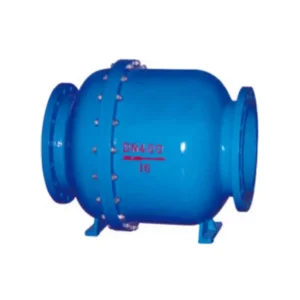
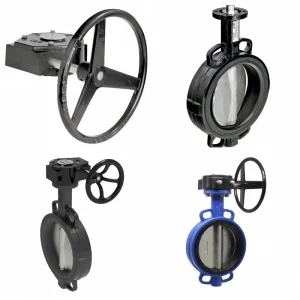
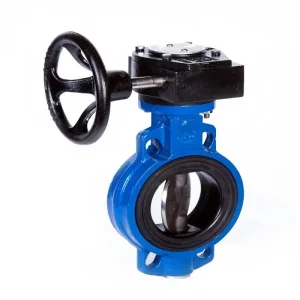
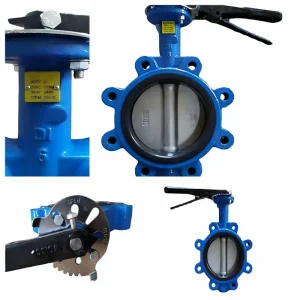
The Italian Thin Ball Valve: Structural Paradigm & Global Status
Originally conceptualized in Northern Italy's industrial hub, wafer thin ball valves revolutionized skid packaging and tight-tolerance fluid management. Here is an analytical dissection of their technical mechanics.
Ultra-Compact Face-to-Face Envelope
Traditional flanged ball valves require substantial axial space, increasing system mass and structural dead-weight. The Italian Thin Ball Valve (often classified as wafer or short-pattern ball valve) reduces face-to-face dimensions by up to 65% compared to ASME B16.10 standards, rendering it vital for modular plant designs, offshore skids, and tight maritime utility corridors.
CE PED 2014/68/EU Material Integrity
Compliance with the European Pressure Equipment Directive (PED) requires stringent pressure boundary integrity, full material traceability (EN 10204 3.1 certification), and finite element analysis (FEA) under dynamic cyclic loading. Each thin valve shell is cast without internal shrinkage voids, ensuring bubble-tight bidirectional shutoff across severe pressure differentials.
Low Operating Torque & Actuation Life
Engineered with pre-compressed PTFE/RPTFE/PEEK seats and mirror-polished AISI 316/304 spheres (Ra ≤ 0.2 µm), the Italian thin pattern minimizes breakaway torque by 30-40%. This enables smaller pneumatic or electric actuators to be mounted via direct ISO 5211 pads, dramatically diminishing electrical load and compressed air consumption.
China's Factory Efficiency: Elevating the Italian Valve Design
How Chinese high-precision manufacturing ecosystems combine European engineering blueprints with high-throughput metallurgy, vertical rubber vulcanization, and optimized production cost structures.
| Evaluation Parameter | Traditional European Fabricators | Generic Trading Intermediaries | Tianjin Top Valve Integrated Ecosystem |
|---|---|---|---|
| Casting & Foundry Autonomy | Outsourced to third-party foundries; fragmented traceability | Variable origins with unverified metallurgical pedigree | ✓ Proprietary group foundry operating with spectral alloy validation |
| Elastomer & Seat Compounding | Purchased from commercial rubber molders | Standard commercial grade; unpredictable longevity | ✓ Dedicated elastomer factory (since 1987); WRAS-grade EPDM/NBR/PTFE |
| Machining Precision & Tolerances | High precision but restricted production scale | Inconsistent secondary machining lines | ✓ Multi-axis high-speed CNC machining centers; micrometric finish |
| Lead Times & Procurement Velocity | 16 to 26 weeks standard dispatch cycle | Unpredictable lead times; zero operational control | ✓ 4 to 8 weeks through agile batch scheduling and port adjacency |
| Compliance Verification | CE / EN standards certified | Paper certificates without batch QA correlation | ✓ CE PED 2014/68/EU, ISO 9001/14001/45001 & full 3.1 MTR dossiers |
Vertical Production Chain
By housing raw metallurgical pouring, custom tooling, precision CNC grinding, and automated seat vulcanization within our 23,000 m² campus, we eradicate inter-plant logistics delays and third-party markup. Quality holds unbroken chain-of-custody from ingots to pressure test benches.
CAPEX & OPEX Optimization
Global EPC contractors and valve distributors achieve 30% to 45% reduction in procurement expenditure without sacrificing material grade or European dimensional conformance. Lower actuator sizing profiles subsequently deliver compounding savings across power distribution networks.
Strategic Export Logistical Hub
Positioned in Tianjin's primary industrial corridor, minutes from the Port of Tianjin, orders transition seamlessly into maritime shipping lanes across Europe, North America, Southeast Asia, and the Middle East, reinforced by multi-layer climate-sealed export crating.
Mission-Critical Deployments & Industry Trajectory
Analyzing the operational environments demanding ultra-thin wafer ball valves and the evolutionary macroeconomic currents shaping industrial valve procurement through 2030.
Chemical & Petrochemical Skids
Compact chemical dosing systems and skid packages enforce severe dimensional limits. Italian thin ball valves machined from SS304/SS316 or PTFE-lined alloys guarantee isolation of volatile chemicals while fitting inside condensed modular skids.
District HVAC & Energy Transfer Stations
Modern commercial hydronic complexes demand low-resistance shut-off with minimum envelope volume. Thin wafer ball valves eliminate hydraulic turbulence while providing bubble-tight shutoff against high differential pressures in thermal loops.
Food, Beverage & Pharma Processing
Sanitary utility corridors require cavity-minimized flow paths. Smooth spherical passages prevent media entrapment and stagnation, facilitating Clean-in-Place (CIP) and Steam-in-Place (SIP) thermal sanitation routines without body warping.
Marine Engineering & Ballast Systems
Naval architects require weight reduction to enhance cargo efficiency. Lightweight wafer construction paired with corrosion-resistant aluminum bronze or 316L trims delivers exceptional service life against aggressive seawater atmospheres.
Strategic Sourcing Trends: What Global Procurement Directors Require
Global supply chain realignments have led engineering firms to shift away from pure single-source procurement toward dual-track frameworks. Modern supply directors prioritize three non-negotiables: Traceable Material Verification (avoiding substandard castings prone to micro-porosity), Automated Testing Protocols (demanding digitally logged pressure charts), and Supply Agility. As industrial automation accelerates, valves must natively integrate ISO 5211 direct-mount platforms for smart IIoT positioners, facilitating predictive maintenance across digitized processing plants.
Specialized Fluid Diversion & Isolation Systems
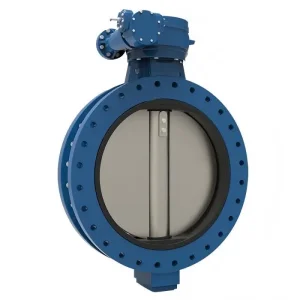
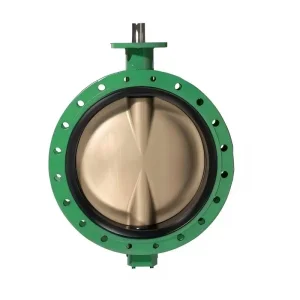
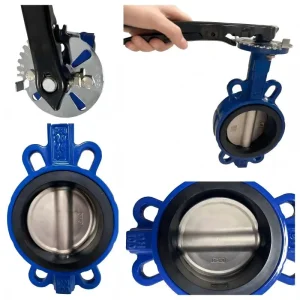
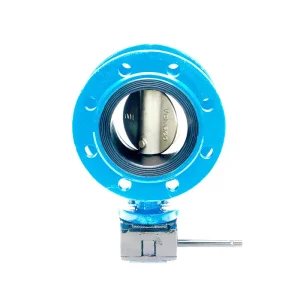
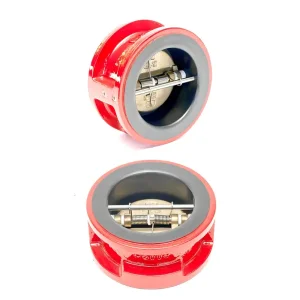
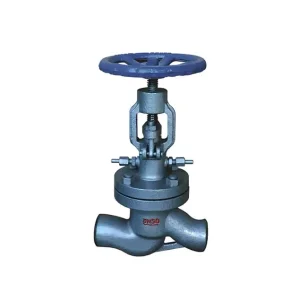
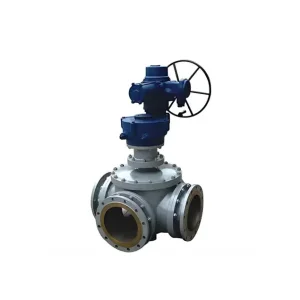
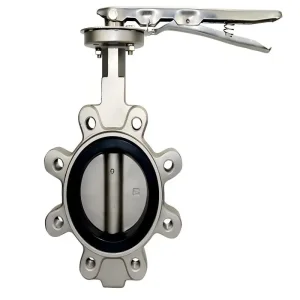
Explore our complementary range of marine valves, quick-diversion units, and elastomeric check valves trusted across 50+ national utility markets.
Frequently Asked Technical Questions
Direct answers to core specification, metallurgical, and certification queries posed by global purchasing directors.
What distinguishes an "Italian Thin Ball Valve" from standard flanged ball valves?
The Italian thin ball valve (wafer/short pattern) utilizes a shortened body envelope designed to clamp directly between pipeline flanges (PN10/16 or ANSI 150) using through-bolts. This structure drastically diminishes the structural weight, face-to-face distance, and manufacturing material volume while preserving full flow bore characteristics and zero-leakage capability.
How does CE Certification (PED 2014/68/EU) protect high-pressure industrial operators?
CE PED certification mandates that pressure-retaining components undergo rigorous design examinations (Module H or B+D audits), non-destructive testing (NDT), hydrostatic proof tests at a minimum of 1.5× the design pressure, and comprehensive material certification (EN 10204 Type 3.1). This assures engineering teams that catastrophic shell failure under sudden hydraulic spikes is prevented.
Can thin wafer ball valves be automated with standard industrial actuators?
Yes. Our thin ball valves are manufactured with integral ISO 5211 direct-mounting pads and standardized square stems. This enables electric, pneumatic, or electro-hydraulic actuators to be mounted without external brackets or couplers, eliminating mechanical backlash and enhancing throttling precision.
Why is in-house rubber compounding critical for resilient-seated industrial valves?
Elastomer degradation is the leading cause of premature seat leakage in industrial valves. Operating our own dedicated rubber plant (established 1987) enables us to control monomer formulation, vulcanization temperature, and curing time. Our EPDM, NBR, and specialty seals exhibit high memory retention, minimal compression set, and compliance with drinking water regulations such as WRAS.
What documentation accompanies factory shipments for international infrastructure tenders?
Every dispatch batch includes an EN 10204 3.1 Mill Test Certificate (MTR) covering chemical composition and mechanical tensile properties, Hydrostatic Pressure Test Records (shell and seat), CE Certificate of Conformity, Dimensional Inspection Reports, and operational maintenance manuals. Marine-class certifications can be furnished upon request.
