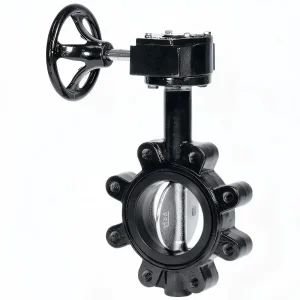
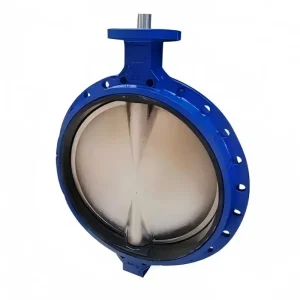
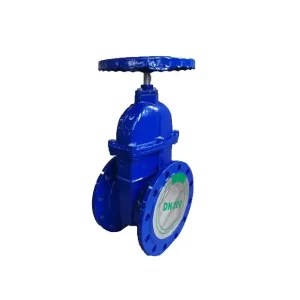
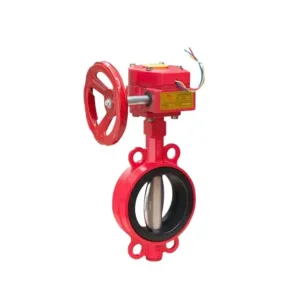
Standard & Actuated Industrial Fluid Control Solutions
Direct from our state-of-the-art foundry and elastomer processing hub in Tianjin, China. Explore certified industrial assemblies engineered for extreme hydraulic resilience.
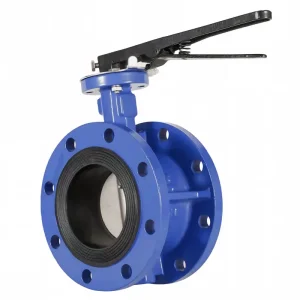
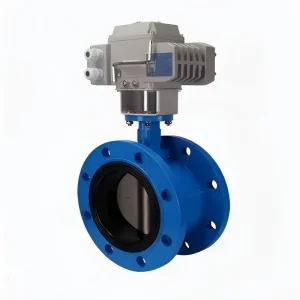
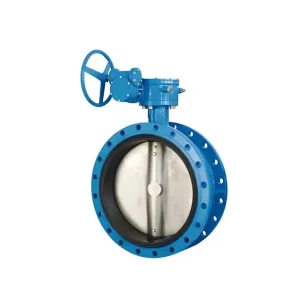
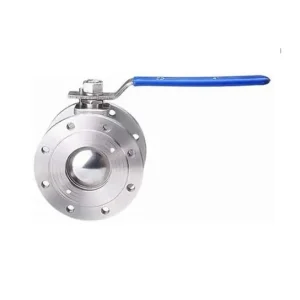
Global Commercial Dynamics of CE-Certified Hydraulic Check Valves
A comprehensive examination of how shifting industrial infrastructure demands, water management imperatives, and high-pressure fluid circuits drive standard-driven procurement worldwide.
Transient Surge Elimination
Hydraulic systems in petrochemical pipelines, municipal water networks, and marine vessels face continuous acoustic wave fronts caused by abrupt pump trips. Non-return check valves are no longer considered commodity hardware; modern engineering treats them as active hydraulic damping systems requiring rigorous hydrodynamic simulation and minimal inertia closure kinematics.
PED 2014/68/EU Mandates
Within the European Economic Area (EEA) and globally connected infrastructure, holding CE Certification is a non-negotiable threshold. The Pressure Equipment Directive (PED) strictly dictates traceability protocols from raw ingot chemistry to hydrostatic burst testing, ensuring that catastrophic mechanical rupture is statistically eradicated in operating zones above 0.5 bar.
Decarbonization & Low Cv Loss
Global plant operators are enforcing stringent pumping energy audits. Traditional swing check valves introduce excessive turbulence and friction loss, resulting in millions of kilowatt-hours in parasitic power consumption across a facility's lifecycle. Next-generation dual-plate and silent axial check valves reduce head loss by up to 28%.
Why Sourcing from Tianjin Top Valve Delivers Unrivaled Supply Chain Alpha
Combining legacy metallurgical foundry craft (since 1996) and custom polymer synthesis (since 1987) under a single consolidated quality management framework.
In-House Casting Foundry
Unlike trading intermediaries who outsource castings to dispersed workshops, Tianjin Donglian Valve Factory pours ductile iron (QT450-10, GGG40/50), WCB carbon steel, and CF8M stainless steel directly on site. Spectrometric chemical verification eliminates subcutaneous blowholes and porosity before parts ever enter precision CNC chucks.
Proprietary Elastomer Vulcanization
Through our dedicated Tianjin Dongfang Rubber plant (pioneering elastomeric formulation since 1987), we synthesize customized EPDM, NBR, Viton, and PTFE seals. Our elastomers maintain permanent resilience, zero plastic deformation under extended mechanical clamping, and full WRAS compliance for potable applications.
Closed-Loop Precision Machining
Our Tianjin campus utilizes multi-axis CNC horizontal centers and automated robotic induction grinders. Every check valve disc profile and seat angle is held within +/-0.015mm, enabling true zero-leakage sealing (EN 12266-1 Rate A) under low reverse differential pressure conditions.
Engineering Information Gain: Eliminating Inter-Factory Traceability Friction
In standard export models, valves fail when seat rubber batches separate from casting tolerances due to disparate subcontractor tolerances. Our 23,000 m² integrated campus eliminates cross-vendor variance by executing foundry, vulcanization, machining, and hydrostatic pressure testing under a unified ISO 9001, ISO 14001, and ISO 45001 infrastructure.
Mission-Critical Applications & System Schematics
Analyzing operating parameters, medium chemistries, and valve selection profiles across high-stress industrial environments.
High-Lift Municipal Pumping Stations
Dual-plate wafer check valves and non-slam silent check valves are positioned downstream of high-head booster pumps. The twin-disc spring loading ensures closing begins before forward flow velocity decays to zero, mitigating slamming transients and acoustic pressure spikes in large-diameter municipal distribution mains.
Marine Engine Rooms & Ballast Systems
Naval architecture demands components impervious to chloride pitting and cavitation attack. Our aluminum-bronze (C95800) and nickel-aluminum-bronze disc check valves prevent aggressive backflow in bilge extraction, ballast water exchange, and seawater cooling loops where conventional cast valves suffer rapid galvanic breakdown.
HVAC Energy & District Hydronic Loops
Modern building services rely on low-resistance lift check and silent check valves to safeguard multi-chiller parallel piping arrays. Preventing cross-loop reverse flow preserves strict thermal balancing, shields non-operational heat exchangers from pressure overshoots, and optimizes VFD pump performance.
| Check Valve Configuration | Nominal Diameter (DN) | Pressure Class (PN) | Disc / Trim Metallurgy | Seat Elastomer | CE/PED Harmonized Code |
|---|---|---|---|---|---|
| Dual Plate Wafer Non-Return | DN50 – DN1200 (2" – 48") | PN10, PN16, Class 150/300 | CF8M, CF3M, Duplex 2205 | Bonded EPDM / NBR / FKM | EN 12334 / PED Cat III |
| Axial Flow Silent Check Valve | DN50 – DN600 (2" – 24") | PN16, PN25, PN40 | Ductile Iron QT450 / 316 Trim | Micro-Lapped Metal-to-Metal | EN 16767 / CE Module H |
| Micro-Resistance Ball Non-Return | DN50 – DN400 (2" – 16") | PN10, PN16 | NBR/EPDM Encapsulated Ball | Integrated Body Liner | EN 12050-4 / CE Compliant |
| Compact Wafer Lift Non-Return | DN15 – DN200 (1/2" – 8") | PN16, PN40, Class 300 | SS316, Hastelloy C276 | Virgin PTFE / Metal Lapped | EN ISO 15761 / CE PED |
Emerging Technological Paradigms in Hydraulic Check Valve Manufacturing
How digital twins, advanced computational fluid dynamics (CFD), and specialized surface engineering are revolutionizing non-return safety hardware.
CFD Optimization of Internal Geometry
By simulating turbulent eddy generation and localized pressure vortices at fluid velocities exceeding 4.5 m/s, our design team profiles check valve passages for smooth laminar transitions. This geometry reduces the flow resistance coefficient (zeta), directly lowering total dynamic head requirements on upstream pumps.
Zero-Fugitive Anti-Corrosive Coatings
High-voltage holiday-free fusion bonded epoxy (FBE) powder coatings applied electrostatically at 250–300 microns ensure complete barrier protection against corrosive ground soils, sewage gases, and industrial effluent. Every valve body undergoes 15kV spark discharge pore testing to prevent pinhole corrosion.
Dual Independent Torsion Springs
Standard check valves rely on a single torsion spring susceptible to localized mechanical fatigue. Top Valve integrates dual independent Inconel X-750 or 316Ti stainless steel springs. If one spring encounters lifecycle degradation, the secondary unit guarantees non-slam disc closure without backflow slip.
What International EPC Contractors Verify Before Specifying a Valve Manufacturer
A technical guide for engineering procurement directors validating factory capability, metallurgical integrity, and regulatory compliance.
1. Material Test Reports (EN 10204 3.1)
Authentic Tier-1 suppliers provide 3.1 inspection certificates tracing each melt batch. This includes chemical composition (C, Si, Mn, P, S, Cr, Ni, Mo) confirmed via optical emission spectrometers, along with mechanical tensile strength, yield limits, and elongation percentage test bars.
2. Hydrostatic & Pneumatic Proof
Every single valve must pass shell testing at 1.5 times nominal design pressure, followed by low- and high-pressure seat leakage tests according to ISO 5208 or EN 12266-1. Sampling-only regimes are rejected by Tier-1 engineering consultants due to latent casting flaw risks.
3. Multi-Standard Flange Accommodations
Because major export equipment operates across varied pipeline codes, manufacturers must support dual-drilling or unified bolt patterns accommodating ASME B16.5 Class 150/300, EN 1092-2 PN10/PN16/PN25, AS 2129 Table E, and JIS B2239 standards without structural integrity loss.
Frequently Asked Questions on CE Hydraulic Check Valves
In-depth responses from our senior valve engineering staff on materials, standards, cracking pressures, and selection.
What specific CE/PED classification applies to hydraulic check valves?
How does a dual plate check valve mitigate water hammer better than a swing check valve?
What is standard cracking pressure, and can it be adjusted for low-head systems?
Why is in-house rubber vulcanization critical for check valve seat longevity?
Can check valves be mounted horizontally and vertically?
Engineered Assemblies for Industrial Fluid Integrity
Review additional certified valve solutions manufactured across our 23,000 m² campus for international EPC projects, municipal networks, and marine vessels.