Precision Process Valves & Isolation Systems
Explore our top tier of CE-compliant, pressure-tested industrial fluid controls directly originating from our integrated casting and vulcanization facilities.
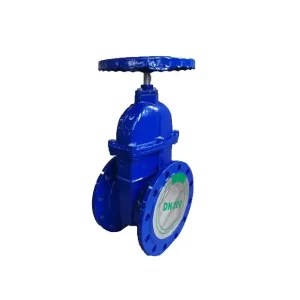
CE Certification German Standard Elastic Seat Gate Valve Manufacturers, Manufacturer
Inquire Technical Specs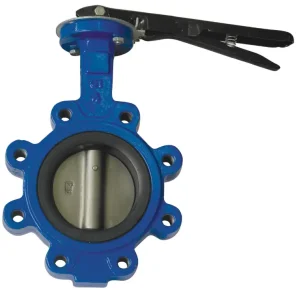
High-Quality Lug type manual operated butterfly valve Manufacturers, Factory
Inquire Technical Specs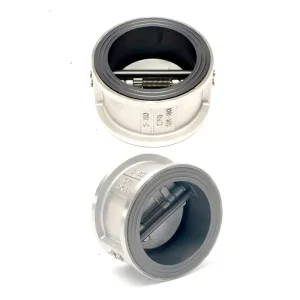
CE Certification Compact Wafer Lift Check Valve with Low - Pressure Drop Supplier, Manufacturers
Inquire Technical Specs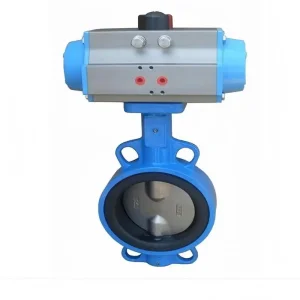
High-Quality Pneumatic Butterfly Valve - Efficient Flow Control Solution Suppliers, Factories
Inquire Technical Specs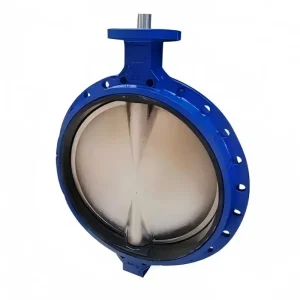
Wholesale Single Flange Butterfly Valve - Durable & Efficient Flow Control Supplier, Manufacturers
Inquire Technical Specs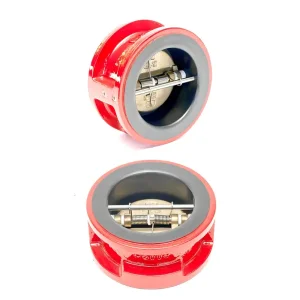
Wholesale Full Rubber Coated Check Valve Supplier, Factories
Inquire Technical Specs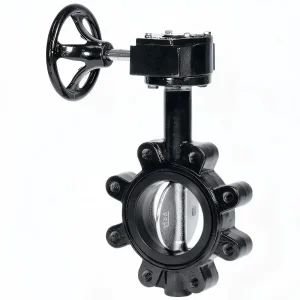
CE Certification Gear Operated Butterfly Valve - Durable & Reliable Supplier Supplier, Factory
Inquire Technical SpecsGlobal Commercial Architecture & Industrial Status
An engineering breakdown of modern elastomer-seated quarter-turn isolation valves under dynamic hydraulic loads and international statutory compliance.
1987
Rubber Compounding Heritage
100%
Hydrostatic Leak Testing
50+
Countries Integrated
Zero
Allowable Leakage (Class A)
In-House Elastomer Vulcanization
Unlike assembly-only plants that outsource rubber seating, Tianjin Top Valve operates dedicated polymer plants originating in 1987. Controlling the EPDM compounding process—optimizing ethylene content, carbon black dispersion, and peroxide cure systems—guarantees superior tensile strength (≥12 MPa) and ultra-low compression set (<18% after 70h at 100°C), eliminating premature seal relaxation and operational blowout under thermal cycling.
Stringent CE / PED 2014/68/EU Compliance
CE Certification across our butterfly valve range isn't merely an administrative marking; it serves as documented verification of structural safety according to the European Pressure Equipment Directive (PED). Every cast ductile iron body (EN-GJS-450-10 / ASTM A536 65-45-12) undergoes destructive tensile evaluation, elongation confirmation, and hydrostatic shell testing at 1.5× PN rating alongside bidirectional bubble-tight sealing at 1.1× PN.
Aerodynamic Disc Geometry & Dynamic Torque
The profile of the valve closure element plays a foundational role in minimizing cavitation indices and system pumping energy. Our precision-machined, spherically contoured discs in CF8M, Aluminum Bronze C95800, and epoxy-coated ductile iron produce smooth hydrodynamic transitions. This geometry reduces localized turbulence, lowers Cv loss factors, and significantly lowers break-away operating torque across the full 90-degree angular sweep.
Industry Trends & Next-Generation Engineering Directives
Evaluating the evolution from rudimentary manual isolation to smart-grid flow instrumentation, material traceability, and potable safety mandates.
WRAS, ACS & NSF/ANSI Compliance
Global specifications strictly differentiate between industrial-grade and potable-grade EPDM. Modern municipal projects mandate extraction-tested rubber liners to eliminate lead, toxic plasticizers, and microbiological growth. Selected Top Valve models (4020G, 4020L, 4325G, 4325L) incorporate WRAS-verified compositions, ensuring zero water contamination across civil networks.
Pinless Stem Technology
Traditional butterfly designs utilize taper pins penetrating through the disc body, creating localized crevice corrosion cells and potential leak paths. High-specification projects now require splined, square-drive, or double-D pinless stems. This isolates the stainless-steel shaft entirely from the wetted media, eliminating galvanic reactions and extending valve operational life.
IoT Integration & Actuation Readiness
Smart city pipeline telemetry demands real-time monitoring of valve opening angles, actuator operating current, and torque resistance spikes. Our valves are standardized with ISO 5211 top mounting flanges, allowing immediate coupling with intelligent pneumatic positioners, 4-20mA smart actuators, and HART/Modbus diagnostic field instruments.
High-Integrity Fusion-Bonded Epoxy
Corrosion mitigation on cast iron and ductile iron bodies has advanced from standard primer coats to electrostatically deposited fusion-bonded epoxy (FBE) with a minimum 250 μm dry film thickness. This barrier eliminates underfilm corrosion caused by condensation in HVAC risers or moisture exposure in subterranean vaults.
Localized Application Engineering & Operational Scenarios
Engineered elastomeric solutions targeted across high-demand thermal, municipal, coastal, and chemical processing facilities.
Municipal Water Treatment & Desalination
In municipal potable pipelines, water treatment plants, and reverse osmosis intake networks, resilient-seated butterfly valves serve as the standard isolation asset. Incorporating vulcanized EPDM liners prevents internal dezincification while aluminum-bronze (C95800) discs withstand saline aeration and chloramine disinfection dosing without micro-pitting.
HVAC, District Cooling & Energy Centers
Chilled water risers, cooling tower manifolds, and dual-temperature district heating plants subject valves to frequent thermal shifts between 4°C and 85°C. High-grade peroxide-cured EPDM prevents thermal hardening and maintains elasticity, ensuring zero droplet leakage past closed discs without actuator torque fatigue during off-peak shutoffs.
Industrial Effluent & FGD Scrubber Scrubbing
Flue gas desulfurization (FGD) systems and biological wastewater networks carry abrasive lime slurries and acidic effluents. For these duties, Top Valve implements hard-backed phenolic/aluminum cartridge-style EPDM seats paired with polished ceramic or CF8M discs to resist both mechanical abrasion and chemical erosion.
Technical Engineering Roadmap & Elastomer Boundary Matrix
Reference guide compiled by our metallurgical and polymer laboratories for pipeline design engineers selecting seal systems.
| Elastomer / Configuration | Continuous Temp Range | Primary Media Compatibility | Tensile / Rebound Properties | Standards Conformity |
|---|---|---|---|---|
| Standard Peroxide EPDM | -20°C to +120°C | Potable water, HVAC chilled/hot water, air, mild alkalis | Tensile ≥ 13.5 MPa, Elongation ≥ 380%, Set < 15% | EN 1092-2, EN 593, CE/PED, WRAS Compliant |
| High-Temperature EPDM (HT) | -10°C to +150°C | Low-pressure steam, solar thermal loops, hot condensation | Crosslinked vulcanizate, reduced plasticizer leaching | ISO 5752 Series 20, API 609 Cat A, PED Mod H |
| Food-Grade White EPDM | -15°C to +110°C | Dairy lines, brewing, potable distribution, food process | Zero pigment migration, non-tainting formulation | FDA 21 CFR 177.2600, WRAS, CE 1935/2004 |
| Nitrile / NBR (Comparative) | -10°C to +85°C | Hydrocarbons, oils, compressed oily air, fuel lines | High petroleum resistance, susceptible to ozone cracking | EN 558-1, ASME B16.42 / B16.5 |
| PTFE Lined over EPDM Core | -30°C to +180°C | Aggressive acids, pure chemicals, industrial solvents | Chemically inert virgin PTFE with EPDM energizing core | CE/PED Class 150, EN 12266-1 Rate A |
Macro-Engineering Solutions: From Foundry to Pipeline Deployment
How our integrated single-campus architecture removes third-party supply chain risks for major infrastructure projects worldwide.
Vertical Foundry Quality Control
Discrepancies in valve casting density, blowholes, or incorrect spheroidal graphite nodularity directly undermine pressure vessel safety. Operating our group foundry enables raw iron spectrometry verification prior to pouring, ensuring nodularity >90% in ductile iron valve bodies, followed by ultrasonic testing on critical pressure boundaries.
End-to-End Traceability (EN 10204 3.1)
Every valve component carries a heat-cast batch number correlating to documented Mill Test Certificates (MTC). Our quality lab records chemical spectrometry, tensile break tests, Charpy V-notch impact performance, and rubber vulcanization durometer readings, providing EPC contractors with uncompromised compliance dossiers.
Global Engineering & Export Logistics
With quick transit links to Tianjin Port and installations across 50+ countries, valves are individually wrapped in hermetic protective bubble sleeves, fitted with flange-face covers, and packed in reinforced seaworthy wooden crates to prevent seat deformation or spindle shock throughout ocean freight.
Frequently Asked Questions (Procurement & Engineering)
Direct answers regarding valve sizing, elastomer selection, testing certifications, and international standard inter-compatibility.
What is the functional difference between Wafer and Lug style butterfly valves?
Wafer valves are sandwiched between pipe flanges using long stud bolts spanning the valve body width. Lug valves feature threaded female lugs matching flange bolt patterns. This enables lug valves to be installed in dead-end downstream pipe isolation or pump disassembly scenarios without losing system containment pressure upstream.
How does peroxide curing improve EPDM performance over sulfur curing?
Sulfur curing yields flexible carbon-sulfur bonds that begin degrading at approximately 80°C to 90°C, causing hardening, loss of elasticity, and compression set failure. Peroxide vulcanization forms direct carbon-carbon crosslinks, boosting temperature endurance up to 130°C-150°C while drastically lowering permanent compression deformation.
Can your EPDM lined butterfly valves be used for natural gas or fuel lines?
No. EPDM rubber swells and rapidly deteriorates when exposed to petroleum hydrocarbons, aromatic solvents, natural gas, or oil-bearing fluids. Hydrocarbon service strictly requires NBR (Nitrile), FKM (Viton), or specialized PTFE linings. Top Valve manufactures dedicated NBR and PTFE configurations for fuel and gas duties.
What documentation accompanies every CE-marked valve order?
Shipments include an EU Declaration of Conformity referencing the PED 2014/68/EU directive, an EN 10204 3.1 Inspection Certificate detailing melt chemistry and mechanical tests, hydrostatic shell and seat pressure test logs, paint thickness verification reports, and operations and maintenance documentation.
Engineered Alloy, Marine & Critical Service Butterfly Valves
Complete line-up of specialty metallurgy, high-pressure, marine, and corrosion-resistant isolation valves ready for export dispatch.
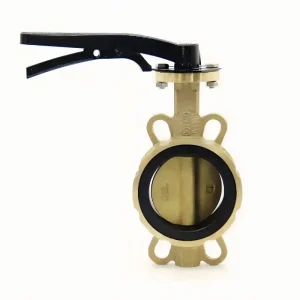
High-Quality Aluminum Bronze Butterfly Valve - Durable & Corrosion Resistant Suppliers, Manufacturer
Inquire Technical Specs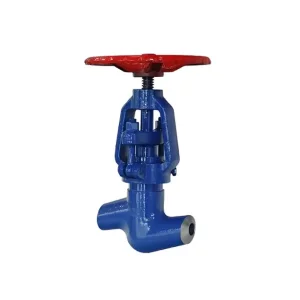
High-Quality High Temperature And High Pressure Power Station Globe Valve Manufacturers, Manufacturer
Inquire Technical Specs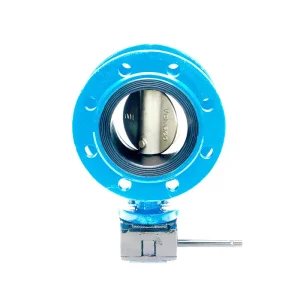
High-Quality Marine flange type manual operated butterfly valve Supplier, Manufacturers
Inquire Technical Specs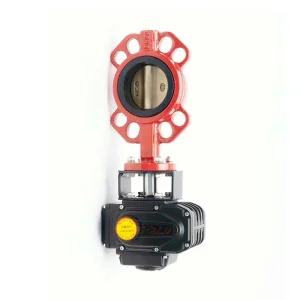
High-Quality Actuator Wafer Butterfly Valve Supplier, Manufacturers
Inquire Technical Specs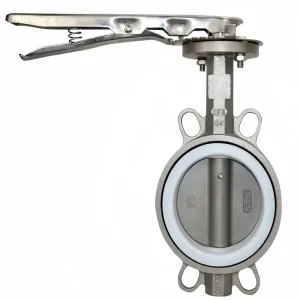
CE Certification PTFE Lined Stainless Steel Butterfly Valve Manufacturer, Factory
Inquire Technical Specs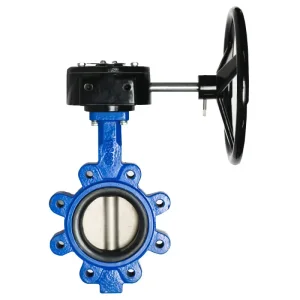
High-Quality Lug type Butterfly valve Suppliers, Manufacturers
Inquire Technical Specs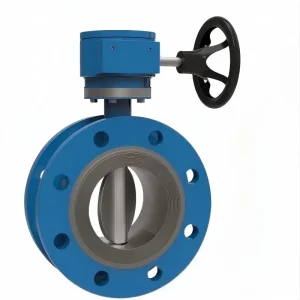
High-Quality Flange Type Butterfly Valve - Durable and Efficient Flow Control Supplier, Manufacturer
Inquire Technical Specs