
High-Integrity Lug Butterfly Valves for Japanese Industrial Infrastructure
Precision engineered for bi-directional isolation, dead-end piping networks, and automated plant processes conforming to JIS 10K/16K, ANSI Class 150, and EN 593 standards.
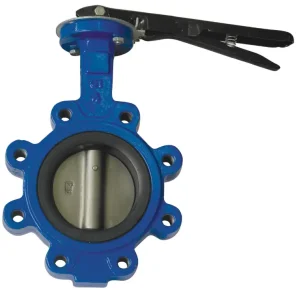
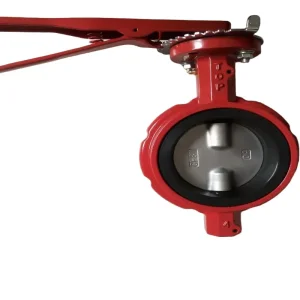
High-Quality Lug Type Manual Operated Butterfly Valve (JIS/ANSI Compatible)
Explore Technical Data →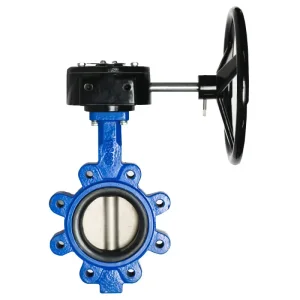
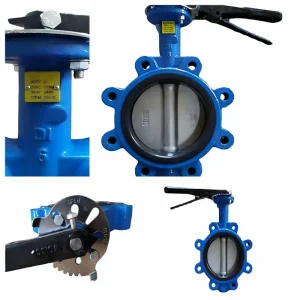
High-Quality Resilient Seated Lug Type Butterfly Valve for Industrial Water
Explore Technical Data →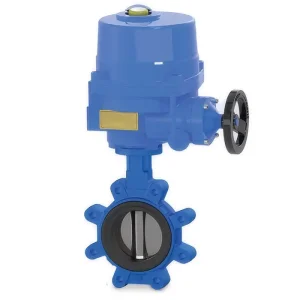
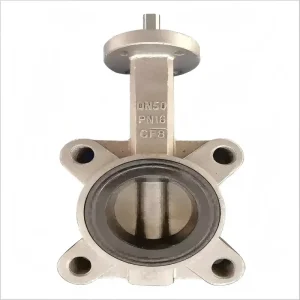
Lug Butterfly Valve Industrial Landscape in Japan
Japan’s modern manufacturing framework combines stringent domestic metallurgy requirements (JIS standards) with aggressive digital transformation across petrochemical, marine, and high-tech utility piping systems.
In core industrial clusters—such as the Keihin Industrial Region (Tokyo, Kanagawa), the Chukyo Industrial Belt (Aichi, Gifu), and the Hanshin Industrial Region (Osaka, Hyogo)—fluid control infrastructure faces unique operating criteria. Plants are transitioning from legacy gate valves to space-saving, tight-shutoff lug butterfly valves that permit downstream pipe dismantling under full differential pressure.
Simultaneously, Japan's revitalized semiconductor manufacturing hubs across Kyushu ("Silicon Island", Kumamoto) and Hokkaido (Chitose) require ultra-clean process water valves with specialized EPDM/PTFE liners capable of zero ionic leaching and bubble-tight sealing under cyclic pneumatic cycling.
Strategic Procurement Snapshot: Japan Plant Operations
Domestic engineering procurement divisions (EPCs) balance three critical imperatives when selecting international valve foundry partners:
- Dimensional Interchangeability: Direct retrofitting for JIS 5K, 10K, 16K, and ISO 5752 Series 20 face-to-face dimensions without pipeline modification.
- Elastomer Integrity: Zero degradation under rapid ozone exposure, chloramine water treatment, or coastal marine salinity.
- Full Pressure Dead-End Isolation: Mechanical threading lugs capable of retaining line integrity when downstream pipes are unbolted during maintenance.
Technical Anatomy: Why Lugged Valves Dominate Critical Japanese Piping
Unlike wafer valves that rely on through-bolts clamped between two external flanges, full-lug butterfly valves feature threaded female tapped lugs around the entire body perimeter matching JIS B 2220 or ASME B16.5.
Dead-End Isolation & Safe Pump Maintenance
In high-density commercial facilities like Roppongi Hills or Tokyo Station district cooling plants, shutdowns must be localized. Lug butterfly valves allow downstream pipework to be detached while maintaining full upstream line pressure (tested up to 16 bar / 232 psi).
This mechanical independence eliminates the hazard of wafer valve displacement during maintenance, ensuring pump replacement, strainer cleansing, and heat exchanger flushes proceed with zero process downtime.
Pinless Disc-Stem Hydrodynamics & Torque Minimization
Traditional cross-pinned discs introduce leakage pathways and create turbulent eddies that accelerate seat cavitation. Our modernized pinless lug valve geometry utilizes internal square-drive or splined stem connections.
The absence of external pin penetration preserves absolute disc face smoothness, dropping hydrodynamic drag by up to 18% and dramatically reducing operating torque for smaller, energy-saving electric actuators.
| Performance Parameter | Wafer Butterfly Valve | Semi-Lug Butterfly Valve | Full Lug Butterfly Valve (Top Valve Spec) |
|---|---|---|---|
| Dead-End Service Capability | Prohibited (Unsafe) | Limited (Reduced Differential) | Full Line Rating (Up to 16 Bar / Class 150) |
| Bolt Stress Distribution | Subject to thermal bolt stretch | Moderate centralization | Direct Flange-to-Body Threading (Zero Bolt Stretch) |
| Seismic & Thermal Shock Resistance | Prone to lateral displacement | Standard | Superior Rigidity for Seismic Zones (JIS Conforming) |
| Downstream Pipe Dismantling | Requires full line draining | Requires downstream blanking | Direct Unbolting with Upstream Pipeline Live |
| Flange Compatibility | Multi-drilled slip-on | Mixed | JIS 5K/10K/16K, ANSI 125/150, PN10/16 Tapped Lugs |
Industry 4.0 China Manufacturing: Supply Chain Resilience for Japanese Buyers
Demographic shifts and energy transition in Japan have constrained domestic foundries, resulting in extended delivery schedules exceeding 24–36 weeks for standard cast valves.
Tianjin Top Automation Equipment Co., Ltd. resolves this bottlenecks by combining three decades of specialized in-house elastomer vulcanization (Tianjin Dongfang Rubber Factory, est. 1987) and independent foundry metallurgy (Tianjin Donglian Valve Factory, est. 1996) with advanced digital manufacturing.
Operating from our 23,000 m² campus in Dongli District, Tianjin, we provide Japanese plant operators, trading houses (Sogo Shosha), and international EPC contractors with an agile, high-precision dual-sourcing corridor with 4-to-6 week delivery schedules.
- In-House Rubber Plant: Proprietary compounding of EPDM, NBR, Viton, and food-grade silicone
- Multi-Axis CNC Machining: Micro-inch stem bore tolerances ensuring bubble-tight shutoff
- Direct Maritime Shipping: Rapid transit from Tianjin Xingang Port to Yokohama, Tokyo, Kobe, and Osaka
In-House Elastomer Vulcanization Advantage
Over 85% of premature butterfly valve failures in district water and chemical lines originate from third-party rubber compound failure. We formulate our own elastomers:
Localized Application Scenarios Across Japanese Heavy Industry
Examine how Tianjin Top Valve's lug butterfly valve configurations address the micro-environments of Japan’s most demanding infrastructure installations.
Kyushu Silicon Belt Sub-Fab Systems
In advanced lithography fabs, clean utility lines must avoid trace metallic ion contamination. We supply precision Lug butterfly valves equipped with CF8M / 316L mirror-polished discs and virgin PTFE / high-purity peroxide-cured EPDM liners.
Tokyo Bay High-Rise Central Chiller Plants
Chilled water headers operate at 4°C to 12°C with high condensation risk. Our ductile iron GGG40 lug valves feature extended neck bodies allowing 50mm insulation clearance, coupled with worm gear operators for non-slam modulation.
Yokohama & Chiba Harbor Fuel Transfer
Harsh marine salt-spray combined with hydrocarbons requires double-integrity sealing. Heavy-duty WCB lug valves with 250 µm epoxy exterior coatings and Viton / NBR liners provide dead-end tank isolation during ship offloading.
Industrial Flow Solutions: Butterfly & Check Valve Systems
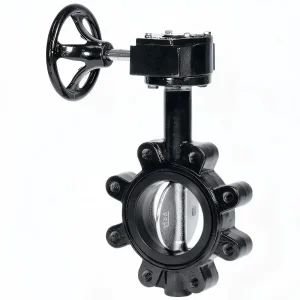
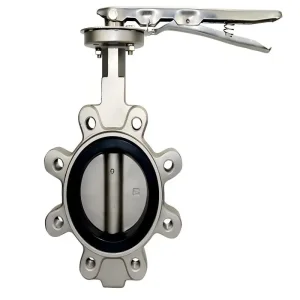
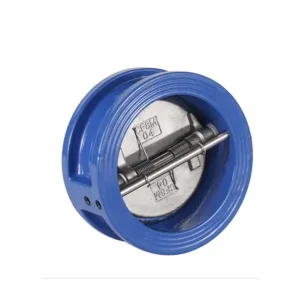
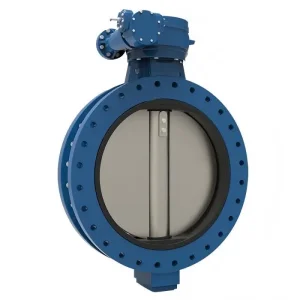
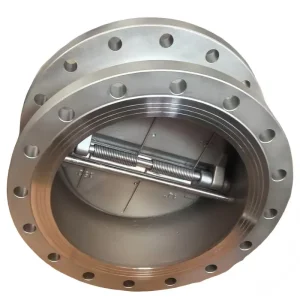
Discover our full line of gear-operated, stainless steel, flanged, and high-performance check valves engineered for global power, marine, and process pipeline distribution.
Technical FAQ: Lug Butterfly Valve Sizing, Standards & Operations
Precise technical guidance compiled by valve design engineers for plant managers, procurement specialists, and mechanical piping consultants.
What are the exact mechanical differences between JIS B 2032 and ASME B16.5 lug valve bolt drillings?
JIS (Japanese Industrial Standard) B 2032 specifies pitch circle diameters (PCD) and metric bolt hole threadings (such as M16, M20, M24 for JIS 10K/16K flanges), whereas ASME B16.5 utilizes UNC imperial threading (e.g., 5/8"-11, 3/4"-10 for Class 150). While wafer valves can often slip between either flange using clearance holes, lug valves feature internally threaded blind holes. Therefore, a valve drilled to ANSI Class 150 will not accept metric bolts used in domestic Japanese piping. Tianjin Top Valve manufactures dual-standard CNC-tapped lug patterns or dedicated JIS B 2220 tapped holes tailored to exact project submittals.
Can a resilient-seated lug butterfly valve safely operate in continuous dead-end service?
Yes, provided it is a Full Lug design with a mechanically retained or vulcanized seat. In dead-end service, the downstream piping is completely removed, leaving line pressure exerted exclusively on one side of the disc. While wafer valves blowout immediately under this condition, our lug valves are hydrostatically seat-tested to 1.1x maximum operating pressure with the downstream flange disconnected, ensuring Zero Leakage (ISO 5208 Rate A / API 598) under dead-end holding conditions.
How does in-house elastomer vulcanization extend butterfly valve operating life?
The elastomer seat determines the lifecycle of any resilient-seated valve. Third-party rubber suppliers often dilute EPDM or NBR formulations with excessive plasticizers to cut costs, leading to high compression set (permanent deformation) and liner extrusion under shear stress. Because our group operates Tianjin Dongfang Rubber Factory (founded in 1987), we compound our own polymers with strict carbon black dispersion, antioxidant ratios, and sulfur/peroxide curing cycles. This yields elastic recovery rates above 98% even after 50,000 continuous full-stroke operations.
What criteria determine whether to specify EPDM, NBR, or PTFE for Japanese plant projects?
EPDM is the standard for HVAC, district cooling, and municipal potable water (-20°C to +120°C); it demonstrates superior resistance to ozone, chloramines, and hot water, but fails rapidly in oil-bearing systems. NBR (Nitrile) is essential for fuel transfer, compressed air lines, and oily wastewater (-10°C to +82°C). PTFE / PFA Lined bodies and discs are required for semiconductor ultra-pure chemical distribution, sulfuric acid, and strong oxidizing alkalis where total non-reactivity and ultra-low friction are mandatory.
How is actuator sizing torque calculated for lug butterfly valves?
Operating torque ($T$) comprises three components: Breakaway Seat Friction Torque ($T_s$), Bearing/Bushing Friction Torque ($T_b$), and Dynamic Hydrodynamic Torque ($T_h$). For resilient seats, $T_s$ dominates and is governed by elastomer durometer hardness, disc interference fit, and differential pressure ($\Delta P$). When sizing quarter-turn electric or pneumatic actuators for automated lines, an engineering safety margin of 25% to 30% must be applied above the factory test torque to account for dry media buildup, valve idling stiction, and line pressure spikes.
What documentation and metallurgical trace certificates accompany factory export shipments?
Every export shipment is backed by comprehensive QA dossiers: EN 10204 3.1 Inspection Certificates confirming raw casting chemical spectrometry and mechanical tensile/elongation properties; 100% hydrostatic shell (1.5x PN) and seat (1.1x PN) leak-test charts; coating dry film thickness (DFT) reports; and WRAS/CE compliance certificates where applicable. Full heat number traceability is cast directly onto each valve body.
Initiate Your Japanese or Global Project Valve Submittal
Connect with our technical engineering group. Receive complete 2D CAD dimensional drawings, 3D STEP models, torque calculations, and competitive FOB/CIF quotation matrices within 24 hours.
