Factory-Direct Fluid Control Solutions & Assemblies
Direct supply to civil engineering contractors, industrial process plants, and municipal water authorities across 50+ countries.
Global Sourcing Criteria for German Standard Elastic Gate Valves
How leading EPC firms, municipal utilities, and water networks solve high-pressure conveyance, cavitation damage, and non-revenue water (NRW) losses.
DIN 3352 & EN 1171 Compliance
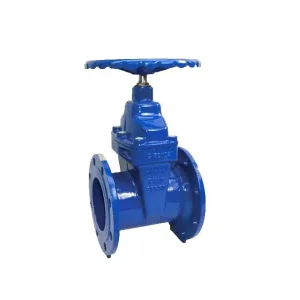
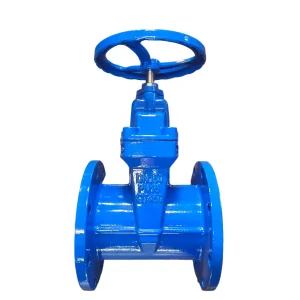
Global infrastructure tenders rigorously demand full compliance with European norms. Our German standard elastic gate valves are engineered precisely to DIN 3352 Part 4 and EN 1074-1/2, featuring exact face-to-face dimensions (EN 558 Series 14/15, formerly DIN 3202 F4/F5) to guarantee interchangeability without line stress.
In-House Vulcanized Wedge Integrity
Unlike assembled wedge coatings prone to tearing and delamination, our wedge cores (Ductile Iron GGG50 / EN-GJS-500-7) are encapsulated with EPDM/NBR using high-adhesion cross-linking agents from our dedicated rubber facility operating since 1987. Provides zero memory set and bubble-tight shut-off (EN 12266-1 Rate A).
Low Operational Torque & Wear Resistance
Rolling rolled-thread stems machined from SS420, 304, or 316 stainless steel combined with multi-O-ring sealing bushes reduce opening/closing torque by over 35%. Eliminates mechanical bind during manual handwheel operation or high-cycle electric actuation in underground chambers.
Material Chemistry & Mechanical Performance Benchmarks
Manufactured under strict ISO 9001 and CE Pressure Equipment Directive (PED 2014/68/EU) parameters.
| Component Name | Standard Specification | Material Variant Options | Operational Function & Advantage |
|---|---|---|---|
| Valve Body & Bonnet | EN 1563 / DIN 1693 | Ductile Iron EN-GJS-500-7 (GGG50) / GJS-400-15 | High tensile strength, impact absorption, and pressure envelope safety up to PN25. |
| Resilient Wedge | DIN EN 1074-2 | GGG50 fully encapsulated with Potable EPDM / NBR | Smooth waterway without sediment trap; bubble-tight sealing regardless of flow direction. |
| Operating Stem | DIN EN 10088-3 | Stainless Steel 1.4021 (2Cr13), 1.4401 (SS316) | Rolled external/internal threads for low friction, corrosion defense, and high tensile endurance. |
| Stem Nut & Thrust Collar | DIN EN 1982 | Brass CW617N / Aluminum Bronze CuAl10Fe3 | Self-lubricating, non-galling thread interaction with the stainless steel spindle under high thrust loads. |
| Protective Coating | DIN 3476 / EN 14901 | Fusion Bonded Epoxy (FBE) ≥250 μm (RAL 5005 / 5015) | Zero pinhole porosity tested to 3kV; certified resistant to cathodic disbondment and chemical soil erosion. |
| Pressure Rating | EN 12266-1 | PN10 / PN16 / PN25; Class 125/150 | 100% shell test at 1.5 x PN; seat test at 1.1 x PN with zero permissible acoustic or visible leakage. |
Engineering Roadmap: Smart Valves & Sustainable Infrastructure
Anticipating municipal and industrial modernization shifts from passive isolation units to dynamic, monitored flow control nodes.
Polymer & Anti-Biofouling Mastery
Integration of WRAS and DVGW compliant hygienic elastomer compounds preventing microbial growth and chlorine decay in metropolitan drinking networks.
Integrated Sensor Ready Castings
Factory-cast cavitation and ultrasonic pressure tapping ports enabling direct sensor integration for non-invasive condition monitoring in buried pipes.
LoRaWAN / NB-IoT Actuation
Low-power wireless position confirmation switches and predictive torque anomaly detection tailored for smart district water management networks.
Carbon-Neutral Life Cycle Valves
Closed-loop scrap recycling, electric induction foundry melting, and zero-VOC powder coating formulations cutting scope 1 and 2 emissions by 40%.
Localized Engineering Support & International Standards Verification
Comprehensive traceability protocols designed to satisfy third-party inspection agencies (SGS, TÜV, Bureau Veritas) and national utility frameworks.
Material Traceability (EN 10204 3.1)
Every melting charge in our group foundry undergoes spectrometer analysis to confirm carbon, silicon, and nodularity percentages (≥90%). Complete chemical and mechanical test certs are archived with individual heat batch stamping on each cast body.
EPC Tendering & Project Documentation
Full engineering submittal packages supplied within 24 hours: 2D general assembly CAD drawings, 3D STEP models, calculation sheets for pressure drops (ζ values), flow coefficient (Kv) tables, and factory acceptance test (FAT) inspection checklists.
Seamless Global Logistics
Convenient road access to Tianjin International Port enables expedited oceanic shipping. Valves receive internal bore moisture protection, individual bubble cushioning, and custom reinforced plywood crating compliant with ISPM 15 phytosanitary requirements.
Frequently Asked Questions on German Standard Elastic Gate Valves
Direct technical answers addressing engineering parameters, approvals, coatings, and field operation.
What is the functional difference between DIN 3202 F4 and F5 elastic gate valves?
Why is a non-rising stem (NRS) design standard for German resilient seated valves?
How does Tianjin Top Valve ensure zero delamination of the vulcanized wedge?
What certifications are provided for drinking water and potable networks?
What pressure tests are conducted before dispatch?
Can German standard gate valves be retrofitted with electric or pneumatic actuators?
Comprehensive Industrial Valve Solutions
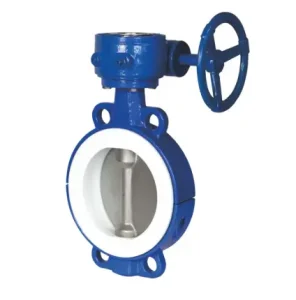
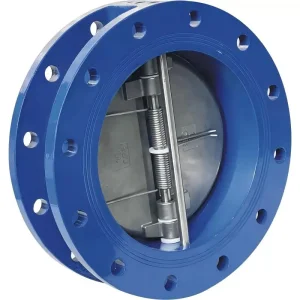
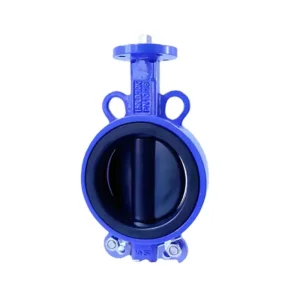
Heavy-duty gate, check, and specialized flow control units engineered for rigorous marine, industrial chemical, and water utility networks.