
Featured Seattle Project Series
Precision Lug Butterfly Valve Core Offerings
Pre-engineered quarter-turn valve solutions rated for bi-directional dead-end isolation, Class 150/PN16 flange matching, and tight shutoff across Seattle municipal, industrial, and commercial marine installations.
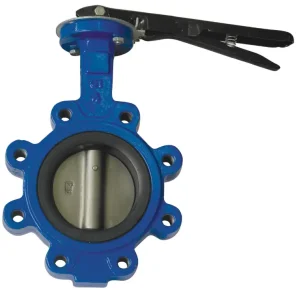
Puget Sound Water System Lug Type Resilient Seated Butterfly Valve
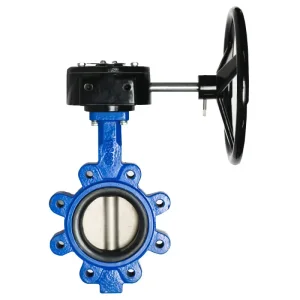
High-Quality Lug type Butterfly valve Suppliers, Manufacturers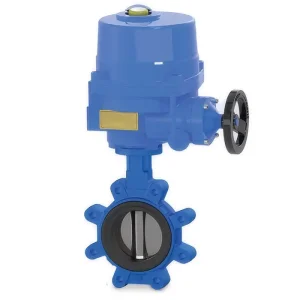
Seattle Smart Building Automation Intelligent Electrical Actuated Lug Valve
High-Quality Electrical butterfly valve Supplier, Manufacturer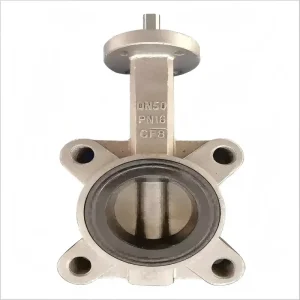
King County Industrial Utility Versatile Semi-Lug Centric Butterfly Valve
Wholesale Semi Lug Butterfly Valve - Durable & Versatile Flow Control Manufacturers, Manufacturer
Puget Sound Commercial Ecosystem
Seattle's Industrial Landscape: The Demands on Valve Engineering
From maritime engineering along Elliott Bay to high-density chilled water hydronics in South Lake Union and aerospace manufacturing in the Renton-Everett corridor, Seattle requires valve hardware with zero tolerance for downtime or environmental leakage.
Maritime & Shipbuilding at The Northwest Seaport Alliance
The Port of Seattle and Port of Tacoma form one of North America's premier container and commercial fishing vessel gateways. Vessel retrofits, dry-dock overhauls, and naval architecture firms demand lug butterfly valves with tapped lugs that permit dead-end downline maintenance without draining seawater ballast, bilge lines, or onboard brine cooling systems.
Hyperscale Tech Campuses & District Hydronic Cooling
Seattle's urban core features massive computing infrastructures and LEED-Platinum corporate campuses (South Lake Union, Bellevue). These mega-complexes utilize multi-cell cooling towers, chilled water distribution circuits, and thermal energy storage networks operating under continuous 24/7 cycles where elastomer memory, low operational torque, and automated modulating control are mission critical.
King County Wastewater & Stormwater CSO Programs
With stringent Puget Sound clean water regulations and ongoing Combined Sewer Overflow (CSO) abatement mandates, Seattle Public Utilities and King County Wastewater Treatment Division mandate corrosion-resistant ductile iron (ASTM A536) and stainless steel disc valves capable of handling gritty runoff, variable salinity, and anaerobic sewer digestion gases.
Technical Whitepaper Depth
Engineering Architecture: Lugged Style vs. Wafer in Mission-Critical Systems
Understanding the mechanical advantages of threaded lug body design for isolation integrity, safety regulations, and long-term piping system modularity.
In mechanical piping systems throughout Washington State, specifying mechanical piping components requires a clear distinction between wafer-type and full-lug butterfly valves. While wafer valves are clamped between two companion flanges with long, continuous tie-rods, Lug Butterfly Valves incorporate individual threaded bolt holes (tapped lugs) matching standard flange bolt circles (ASME B16.1 Class 125, ASME B16.5 Class 150, or EN 1092-2 PN10/PN16). Each flange is bolted directly to the valve body with separate sets of cap screws from both sides.
This anatomical configuration creates several paramount mechanical advantages for Pacific Northwest facilities:
- True Dead-End Service Capability: When a pump, heat exchanger, filtration skids, or tank requires inspection, overhaul, or seasonal isolation, downstream piping can be completely disassembled while the lug butterfly valve remains bolted to the upstream live line holding back full design pressure (typically rated up to 150 PSI / 200 PSI bi-directional shutoff without a downstream blind flange).
- Elimination of Thermal Piping Strain Cracking: In long runs of hydronic or chilled piping exposed to ambient Pacific Northwest seasonal swings (from sub-freezing Cascade down-drafts to summer peak heat), thermal expansion along long through-bolts can relax gasket compression on wafer valves, causing catastrophic seat bypass. Individual lug bolting maintains localized compressive pre-load on the resilient elastomer seat independently on both sides.
- Seismic and Vibration Resistance: The Puget Sound Basin sits in an active seismic subduction zone (Cascadia). Rigidly bolted lug assemblies offer vastly superior shear-stress resistance and axial anchor retention under vibration or earth movement compared to floating wafer bodies.
| Feature Parameter | Full Lug Butterfly Valve | Standard Wafer Butterfly Valve | Double Flanged Butterfly Valve |
|---|---|---|---|
| Dead-End Service Rating | Full Rated Pressure (Bi-Directional) | Not Permitted (Requires Blind Flange) | Full Rated Pressure (Bi-Directional) |
| Face-to-Face Standard | API 609 Category A / ISO 5752 Series 20 | API 609 Category A / MSS SP-67 | ISO 5752 Series 13 / 14 (Short/Long) |
| Weight & Footprint | Compact, Light • ~15% heavier than wafer | Most Compact • Lowest weight | Heavy Cast Body • Expanded envelope |
| Installation Complexity | Fast align via threaded lug pilot holes | Requires centering lugs/bolts | Standard multi-bolt flange alignment |
| Seattle Marine / HVAC Suitability | Preferred for plant pumps & ship piping | Restricted to non-critical midpoint runs | Large diameter trunk mains (>24") |
Technological Foresight
Next-Generation Valve Technologies: 2026 and Beyond
How automation, digital diagnostics, advanced metallurgy, and zero-emission gland packing are transforming industrial valve lifecycle economics.
IoT-Enabled Actuation & Smart Diagnostics
Modern building management systems (BMS) in Seattle's data-driven facilities demand Modbus-RTU, BACnet/IP, and HART-enabled electric/pneumatic actuators. Our direct-mount ISO 5211 actuator flanges accommodate multi-turn and quarter-turn intelligent controls that monitor valve seating torque degradation, cycle frequency, and partial-stroke testing (PST) in real time.
Low-Emission Fugitive Stem Sealing (ISO 15848-1)
Driven by EPA clean air initiatives and progressive Washington State environmental legislation, modern lug valves incorporate multi-stage stem packing with self-adjusting Belleville springs, PTFE chevron V-rings, and secondary O-ring barriers preventing VOC or refrigerant emissions during millions of micro-modulations.
Pinless Disc Architecture & Molded-In Liners
Through-disc drive pins introduce leak paths and create galvanic stress points under heavy seawater or corrosive fluid service. Our advanced lug butterfly lines feature high-torque spline or square drive pinless stem-to-disc engagement, paired with vulcanized bonded or phenolic-backed seats that eliminate liner stretch under vacuum service.
Factory 4.0 Vertical Integration
China Smart Manufacturing: Group Synergy From Foundry to Seattle Port
Direct from our 23,000 m² production campus in Tianjin, China: total quality sovereignty that eliminates tier-2 trading middlemen and provides unassailable supply chain resilience.
Uncompromising In-House Metallurgy & Elastomer Compounding
Most international valve brands function merely as assembly workshops, outsourcing casting bodies and purchasing rubber seats on spot markets. At Tianjin Top Valve, our core manufacturing heritage traces directly to Tianjin Dongfang Rubber Factory (founded in 1987) and Tianjin Donglian Valve Factory (operating since 1996).
By controlling our own specialized iron foundry, high-precision automated CNC horizontal machining centers, and internal rubber vulcanization plant, we compound custom EPDM, NBR, Viton, and food-grade PTFE in-house. We formulate the exact polymer density, shore hardness, and anti-aging agents to guarantee high resilience, low friction co-efficient, and long operational cycle lives in harsh Pacific Northwest water chemistry.
Factory 4.0 Quality Verification Pipeline
- Optical Emission Spectrometry: 100% heat-by-heat chemical analysis of cast iron, ductile iron, CF8M stainless steel, and aluminum bronze.
- Multi-Axis CNC Machining: Micron-level precision on disc sealing contours and stem broaching to eliminate seat pinching and excessive torque.
- 100% Dual Hydrostatic & Air Seat Testing: API 598 shell test at 1.5x PN rating and low-pressure pneumatic air seat test at 80 PSI for zero bubble leakage.
- Direct Express Sea Shipping: Smooth containerized freight from Tianjin Port straight to Terminal 18 / Terminal 46 at Port of Seattle in 18-24 days.
Field Engineering Case Depth
Localized Pacific Northwest Engineering Applications
Proven reliability engineered specifically for the regional micro-climates, fluid chemistry, and demanding industrial installations of Western Washington.
Case 1: South Lake Union Hyperscale Data Center Hydronics
Challenge: An 8-story data center complex required 14" and 18" lug butterfly valves on chilled water header loops (42°F - 54°F) capable of operating with zero condensation leakage and zero bypass during emergency chiller transitions.
Solution: Tianjin Top Valve supplied Ductile Iron (ASTM A536) lug valves with 316 Stainless Steel discs and vulcanized EPDM liners, equipped with high-speed modulating electric actuators and ISO 5211 direct-mount pedestals. Over 4 years of continuous service: 0 psi pressure drop variation, zero seat degradation.
Case 2: Puget Sound Commercial Tugboat Sea Chest Retrofit
Challenge: Marine mechanics in Ballard shipyard required rapid replacement of failed bronze gate valves on main seawater intake manifolds prone to heavy marine bio-fouling and galvanic corrosion.
Solution: Delivered Nickel Aluminum Bronze (C95800) disc lug butterfly valves with Monel 400 stems and sea-water grade NBR vulcanized liners. Threaded lug construction permitted clean isolation of sea strainers during dockside servicing without vessel dry-docking, reducing overhaul costs by 62%.
Case 3: Woodinville & Ballard Craft Brewery CIP Clean Utilities
Challenge: Craft beverage processing plants faced frequent elastomer hardening and caustic pitting from 185°F (85°C) clean-in-place (CIP) hot lye wash cycles on standard resilient seated valves.
Solution: Implemented pinless 316L SS disc lug valves encapsulated in virgin FDA-compliant PTFE seats with reinforced silicone energizers. The seamless, cavity-free profile eliminated microbial entrapment and withstood over 1,800 thermal wash cycles without seal creep.
Procurement Specification Matrix
Engineering Material Selection Guide for Pacific Northwest Engineers
Matching body metallurgy, disc coatings, and seat elastomer formulations precisely to application chemical and temperature profiles.
| Component | Standard Material Grade | Optional High-Performance Grade | Recommended Service Duty |
|---|---|---|---|
| Valve Body | Ductile Iron (ASTM A536 65-45-12) | Cast Steel (WCB) / SS316 (CF8M) / Bronze C95800 | High mechanical strength for general HVAC, marine, or corrosive coastal air. |
| Disc | Stainless Steel 304 / 316 (CF8 / CF8M) | Aluminum Bronze (C95800) / PTFE Lined / Hastelloy | Abrasion resistance, seawater cavitation resistance, chemical passivity. |
| Stem / Shaft | Stainless Steel 416 / 420 | 17-4PH / 316 Stainless / Monel K-500 | High torsional strength; pinless splined design for non-slip actuator drive. |
| Seat Elastomer | EPDM (Temperature: -20°C to +120°C) | NBR (Buna-N) / FKM (Viton) / High-Temp PTFE | EPDM for potable water & HVAC; NBR for oily bilge & fuel; PTFE for harsh chemicals. |
| Protective Coating | Electrostatic Fusion-Bonded Epoxy (250μm) | Thermal Spray Aluminum / Rilsan Polyamide 11 | Protection against external salt-spray mist in coastal Seattle & Puget Sound. |
Technical Clarifications
Frequently Asked Questions: Industrial Lug Butterfly Valves
Authoritative answers addressing mechanical engineering, dead-end pressure ratings, compliance standards, and logistics for Western Washington buyers.
What is the true dead-end pressure rating of your lug butterfly valves?
Our lug butterfly valves feature bi-directional dead-end isolation capability rated up to the full working pressure of the valve (up to 200 PSI / 16 Bar for sizes 2" to 12", and 150 PSI / 10 Bar for sizes 14" to 24") without downstream companion flange support. This satisfies OSHA lockout/tagout isolation requirements and simplifies pump or strainer overhaul procedures across Seattle commercial facilities.
How do your valves comply with North American ASME/ANSI and AWWA standards?
Every lug butterfly valve supplied for the US and Washington market complies strictly with ASME B16.34 (wall thickness & pressure ratings), ASME B16.1 / B16.5 (Class 125/150 drilling and bolt pattern), API 609 Category A (face-to-face dimensions), and MSS SP-67. Potable water models feature WRAS and NSF/ANSI 61 compliant elastomer formulations for municipal tap lines.
Why is in-house rubber compounding critical for butterfly valve lifespan?
Over 85% of butterfly valve field failures stem from elastomer degradation, including compression set fatigue, swelling, or liner detachment under vacuum. Because our enterprise owns and operates Tianjin Dongfang Rubber Factory (operating continuously since 1987), we formulate, vulcanize, and laboratory-test our own EPDM, NBR, and Viton compounds. This guarantees strict tensile strength, elasticity retention, and zero delamination.
What are the lead times and shipping routes to Seattle, Tacoma, and Everett?
Standard manual and gear-operated lug valves in sizes 2" to 12" maintain rapid factory stock. Custom engineered configurations (actuator automation, exotic bronze/duplex discs) ship within 3 to 4 weeks. Direct ocean container lines transit from Tianjin Xingang Port directly to the Port of Seattle or Port of Tacoma with typical maritime transit times of 18 to 22 days.
Can you provide factory direct automation packages (Electric / Pneumatic)?
Yes. All valves are manufactured with integral ISO 5211 top mounting pads and standardized double-D or keyed shaft profiles. We integrate, calibrate, and bench-test high-performance quarter-turn electric actuators (24VDC, 110VAC, 220VAC, 460VAC with 4-20mA positioning) or rack-and-pinion pneumatic actuators with limit switches, NAMUR solenoid valves, and electro-pneumatic positioners prior to export.
What quality documentation and traceability accompanies every shipment?
Each production lot ships with complete EN 10204 Type 3.1 Material Test Reports (MTRs), including spectrometer chemical breakdown, tensile and elongation mechanical tests, Charpy V-notch impact values when requested, hydrostatic test certificates (API 598 shell and seat leakage data), and coating dry-film thickness (DFT) verification records.
Extended Seattle Product Portfolio
Comprehensive Flow Control Hardware Catalog
Engineered butterfly, gate, and marine specialty valves manufactured for commercial contractors, municipal utility districts, and process engineers throughout the Pacific Northwest.
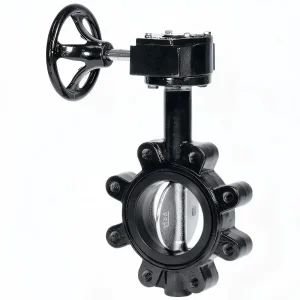
Seattle Municipal CE Certified Heavy-Duty Gear Operated Butterfly Valve
CE Certification Gear Operated Butterfly Valve - Durable & Reliable Supplier Supplier, Factory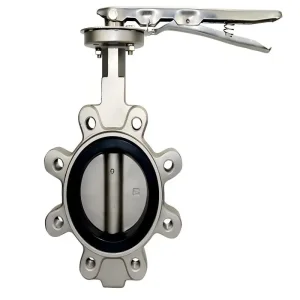
Puget Sound Process Industry High-Grade CF8M Stainless Steel Lug Valve
High-Quality LUG Stainless Steel Butterfly Valve - Durable & Reliable Supplier, Manufacturer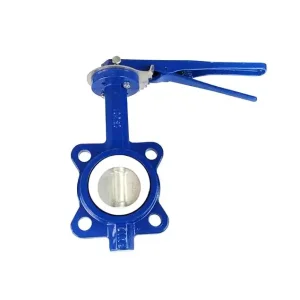
Pacific Northwest Chemical & BioTech PTFE-Lined Pinless Sanitary Valve
High-Quality PTFE Lined Pinless Butterfly Valve Supplier, Factories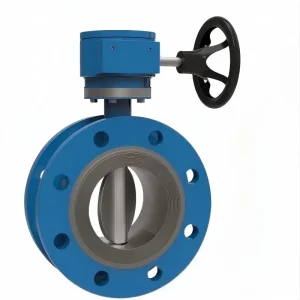
Seattle Regional Water Network Resilient Seated Flanged Butterfly Valve
High-Quality Flange Type Butterfly Valve - Durable and Efficient Flow Control Supplier, Manufacturer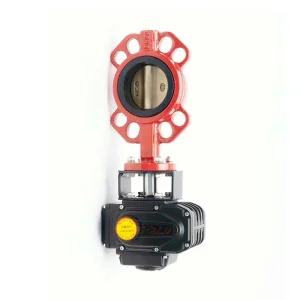
Seattle HVAC Automated High-Speed Pneumatic/Electric Wafer Valve
High-Quality Actuator Wafer Butterfly Valve Supplier, Manufacturers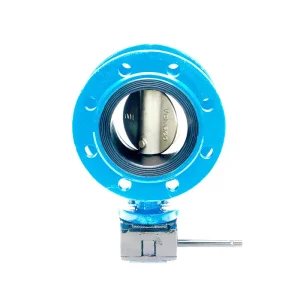
Puget Sound Maritime Seawater Ballast Flanged Marine Butterfly Valve
High-Quality Marine flange type manual operated butterfly valve Supplier, Manufacturers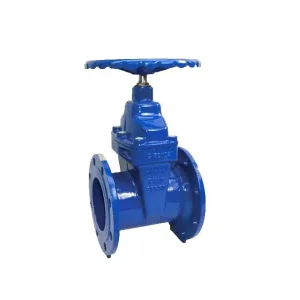
Seattle Municipal Water Infrastructure Non-Rising Stem Resilient Gate Valve
High-Quality Non-Rising Stem Elastic Seat Sealing Gate Valve Manufacturer, Factory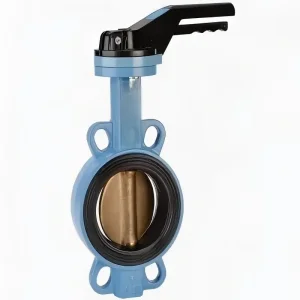
Pacific Northwest Shipbuilding Anti-Corrosion Aluminum Bronze Disc Valve
CE Certification Bronze Disc Wafer Butterfly Valve - Durable & Efficient Manufacturers, FactoryAccelerate Your Seattle Flow Control Procurement
Consult directly with our Tianjin valve engineering specialists. Receive full dimensional CAD drawings, detailed material specification datasheets, and direct factory container pricing customized for Pacific Northwest delivery.
