Direct Foundry & Classification Certified OEM

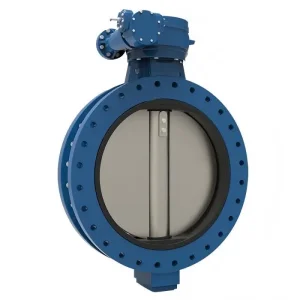
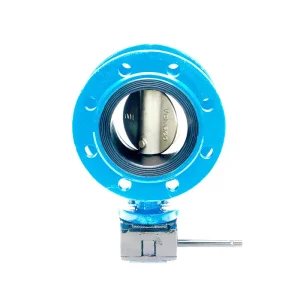
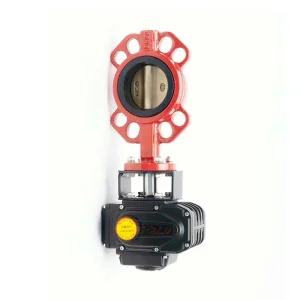
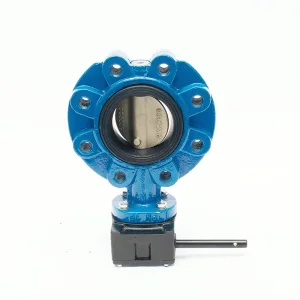
CE Certification Marine Butterfly Valve Manufacturers & Factory for Turkey

Industrial-grade European Class Seawater Handling Solutions: Pressure Equipment Directive (PED 2014/68/EU) Compliant Flow Systems Optimized for Turkish Shipyards in Tuzla, Yalova, and Mediterranean Maritime Hubs.

Send Inquiry Now

Marine Certified Butterfly Valves for Turkish Fleet Engineering

Configured with high-integrity nickel-aluminum bronze discs, vulcanized resilient liners, and type-approval test certifications for ballast water management, bilge systems, and scrubbers.

Turkish Maritime Ecosystem & Valve Engineering Landscape

An authoritative assessment of Turkey’s shipbuilding expansion across the Tuzla-Yalova corridor and the critical valve qualification protocols mandated by IMO regulations.

The Tuzla & Yalova Hub Evolution

Turkey stands as a premier global destination for specialized vessel construction, chemical tankers, tugboats, fishing vessels, and complex megayachts. The concentrated yards of Yalova and Tuzla require rapid turnaround times and rigorous component reliability. Butterfly valves installed here must endure severe galvanic stress from high-salinity Marmara, Aegean, and Black Sea waters while operating under intense duty cycles.
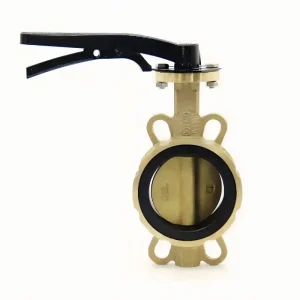
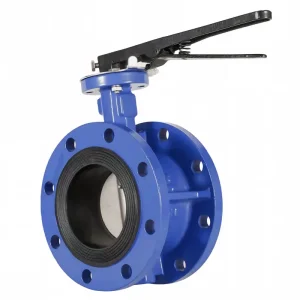
CE PED (2014/68/EU) Harmonization

Export vessels built in Turkey for European shipowners require full CE marking under the Pressure Equipment Directive (PED 2014/68/EU). From Category I up to Module H certification, our manufacturing pipeline guarantees casting non-destructive testing (NDT), hydrostatic boundary containment, EN 10204 3.1 chemical/mechanical mill traceability, and unified flange compatibility conforming to EN 1092-1 / DIN standards.

BWTS & Exhaust Decarbonization

Stricter MEPC 300(72) Ballast Water Management Convention rules and IMO 2020 sulfur limits drive massive retrofitting throughout Turkish drydocks. Marine butterfly valves act as core regulators within UV and electro-chlorination Ballast Water Treatment Systems (BWTS) and exhaust gas cleaning system (EGCS) scrubbers, requiring premium elastomers and anti-corrosive alloys capable of handling caustic environments.

100%
Shell & Seat Tested
38+
Years In-House Elastomer R&D
50+
Countries Export Experience
ISO/CE
PED 2014/68/EU Standardized

Marine Valve Material Matrix for Harsh Naval Environments

Selecting valve construction materials requires a precise balance among cavitation resistance, tensile strength, pitting resistance equivalent numbers (PREN), and galvanic isolation.

Component Standard Specification High-End Naval Marine Grade Key Operational Advantages in Seawater
Valve Body Ductile Iron GGG40 / EN-GJS-400-15 Nickel Aluminum Bronze (C95800 / Cu3) Ductile iron with fusion-bonded epoxy offers robust structural integrity; NAB eliminates pitting in continuous marine immersion.
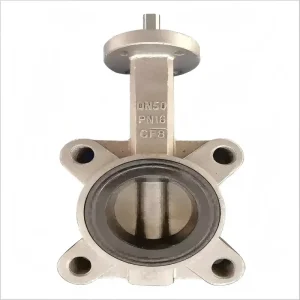
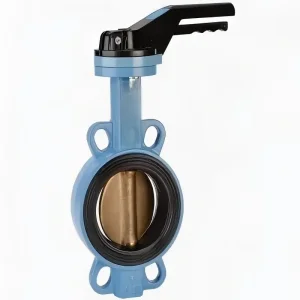
Closure Disc CF8M (316 Stainless Steel) C95800 Nickel-Aluminum Bronze / 254SMO Imparts high cavitation-erosion tolerance, preventing biological biofouling and crevice corrosion across ballast manifold runs.
Stem / Shaft SS410 / SS416 Martensitic Steel SS316 / Duplex 2205 / Monel K-500 High torsional yield threshold prevents stem-shearing during high-differential dynamic hydrodynamic opening moments.
Resilient Seat Standard Commercial EPDM Seawater Optimized EPDM / NBR / FKM In-house compounding ensures compression set recovery under repetitive deep cyclic throttling in sea temperatures up to 80°C.
Shaft Sealing O-Ring Packing rings PTFE V-Packings with Secondary Backup Eliminates atmospheric marine ingress, securing the upper bearing journal against salt aerosol crystallization.
Send Inquiry Now For Custom Material Specifications

Technological Pathways: Marine Valve Architecture 2025–2035

From smart diagnostic integration to ultra-low emissions certifications, our production engineering is calibrated to keep Turkish shipbuilding yards at the frontier of smart naval architecture.

2025 - 2026

Digital IO-Link Feedback

Direct integration of intelligent proximity transmitters, contactless angle sensors, and bus systems (Modbus/CANopen) within automated ship ballast arrays.

2027 - 2029

Predictive Elastomer Telemetry

Embedded stress and wear micro-sensors integrated into EPDM liner matrixes to detect localized elastomer fatigue prior to any system leakage.

2030 - 2032

Alternative Fuel Marine Duty

Advanced polymeric and ceramic coatings certified for zero-carbon vessels, including green methanol, liquid ammonia transfer, and cryogenic bunker lines.

2033 - 2035

Hydrodynamic Topology Tuning

Computational fluid dynamic (CFD) algorithmic disc refinement yielding ultra-low drag coefficients (Kv values), slashing auxiliary pump fuel consumption.

Procuring Marine Butterfly Valves for Turkish Shipbuilding Programs?

Collaborate directly with our engineering division. Receive full 2D/3D CAD models, CE/PED documentation, mill test certificates, and factory-direct pricing for rapid port delivery across Istanbul, Izmir, and Mersin.

Send Inquiry Now

Naval Architecture Inquiries for Valve Procurement in Turkey

Clear answers to frequent engineering, regulatory, and logistics queries raised by shipyard buyers and marine design consultants.

What specific European Directives apply to marine butterfly valves shipped to Turkey?
Marine butterfly valves installed on vessels under European flags or drydocked in Turkey must comply with the Pressure Equipment Directive (PED 2014/68/EU), categorized based on nominal bore (DN) and maximum allowable pressure (PS). For fire-safety duty, valves comply with EN ISO 10497 / API 607 fire-test standards. Furthermore, flanged drillings match EN 1092-1 / ISO 7005 PN10/PN16 or JIS 5K/10K/16K according to vessel piping system standards.
Why is Aluminum Bronze preferred over CF8M Stainless Steel in Turkish shipyards?
While CF8M (316 SS) performs admirably in general fluids, raw seawater in quiescent areas (such as closed valves in ballast systems) induces severe pitting and crevice corrosion underneath deposits. Nickel Aluminum Bronze (NAB - ASTM B148 C95800 / EN 1982 CC333G) naturally develops an adherent cuprous oxide/aluminum oxide protective film that quickly self-heals, preventing biofouling and providing exceptional resistance to high-velocity turbulent flow.
How does your factory control rubber seat vulcanization for cyclic marine operation?
Unlike valve assemblers who outsource elastomers, our parent group operates Tianjin Dongfang Rubber Factory (operating since 1987). We compound and mould our own EPDM, NBR, and FKM seats in-house. This gives us total control over cross-linking density, tensile strength, and Shore A hardness, ensuring zero elastomer detachment or compression fatigue after tens of thousands of dynamic cycles.
What are the lead times and logistical pathways for valve shipments into Tuzla and Yalova?
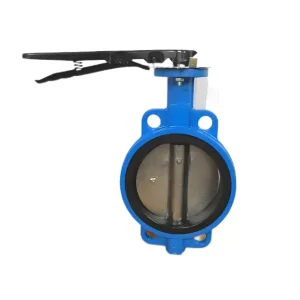
Standard production runs for wafer, lug, and flanged marine butterfly valves range from 20 to 35 days, supported by rapid ocean freight out of Tianjin Port directly to Ambarlı Port (Istanbul), Gebze, or Izmit. For critical drydock emergencies where a vessel is waiting on slipping, accelerated air freight is coordinated directly to Istanbul Airport (IST) or Sabiha Gökçen Airport (SAW) within 5 business days.
Can valves be supplied with third-party classification societies (BV, DNV, RINA, Lloyd's)?
Yes. We regularly supply marine valves accompanied by 3.2 material certificates verified by third-party surveyors including Bureau Veritas (BV), DNV, RINA, Türk Loydu, and Lloyd's Register (LR). Tests encompass witness hydrostatic body shell testing at 1.5× PN, bi-directional bubble-tight seat tests at 1.1× PN, and chemical/tensile verification per charge.

Complete Portfolio of Marine Valves for Industrial Ship Outfitting

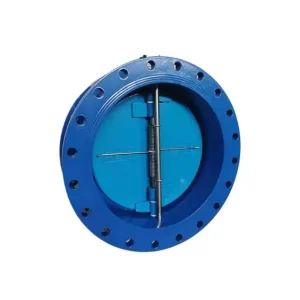
From non-return dual plate check valves to bronze disc wafer units, explore factory-direct solutions tailored to Turkish commercial maritime standards.