
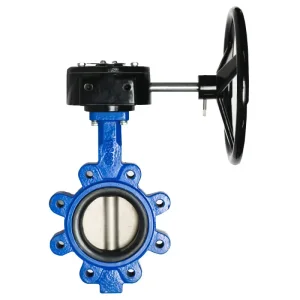
Mission-Critical Butterfly Valves for Ghana Projects
Field-proven wafer, lug, and resilient seated flow control assemblies certified to EN 593, AWWA C504, and API 609 engineering standards.
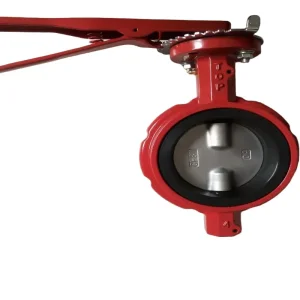
Wholesale Lugless Semi-Shaft Wafer Butterfly Valve - Durable & Reliable Factory
View Valve Specs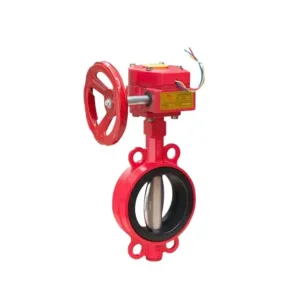
Fire-Fighting Wafer Signal Butterfly Valve Supplier & Factory Ghana
View Valve Specs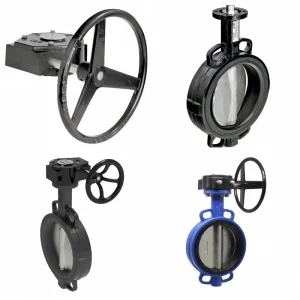
CE Certification WRAS Approved Butterfly Valve 4020G Manufacturers
View Valve SpecsIndustrial Transformation & Fluid Dynamic Realities in Ghana
Strategic analysis of valve performance requirements across the Greater Accra corridor, Western goldfields, and the Tema petrochemical belt.
Severe Operating Dynamics in West Africa
The industrial landscape of Ghana presents distinct environmental and operating conditions that challenge standard fluid machinery. Across the Western and Ashanti regions, extensive gold extraction operations (including Obuasi, Tarkwa, and Ahafo) circulate abrasive slurries laden with quartz particles, cyanidation chemicals, and corrosive mine dewatering streams.
Standard cast-iron valves rapidly degrade when exposed to such abrasive cavitation. Engineering specifications necessitate ductile iron (ASTM A536 65-45-12) or duplex stainless steel (2205/2507) discs paired with high-tensile vulcanized rubber linings (such as abrasion-resistant EPDM or virgin PTFE). Furthermore, tropical ambient temperatures reaching 38°C paired with relative humidity exceeding 85% accelerate galvanic corrosion along coastal facilities in Takoradi and Tema, mandating electrostatic high-build coatings tested to ISO 12944 C5-M marine exposure parameters.
Ghana Water Company (GWCL) & Urban Modernization
Rapid urban growth across Accra, Kumasi, and Tamale has placed unprecedented demands on water distribution infrastructure managed by the Ghana Water Company Limited (GWCL). High non-revenue water (NRW) rates and intermittent pumping schedules result in devastating transient pressures (water hammer) across main headers.
Our WRAS-certified and AWWA-compliant concentric and double-offset butterfly valves integrate low head-loss hydrofoil disc designs. By minimizing flow turbulence and utilizing pinless shaft attachments, these valves eliminate localized stress concentration and shaft leak paths. Resilient seats engineered with custom-formulated EPDM provide 100% bi-directional bubble-tight shutoff under nominal ratings up to PN16 and PN25, securing drinking water safety while reducing municipal energy overhead.
Global Manufacturing Standards & Engineering Architecture
Bridging Chinese foundry manufacturing excellence with strict Ghanaian regulatory and project compliance.
Full Metallurgical Traceability
Our in-house group foundries pour ductile iron, cast steel, and nickel-aluminum bronze under rigorous spectroscopic controls. Every valve casting features heat-number batch traceability, complete with EN 10204 3.1 chemical analysis and tensile yield certification.
Proprietary Elastomer Compounding
Operating dedicated rubber compounding assets since 1987, we control the vulcanization, compression set, and tensile elasticity of EPDM, NBR, and FKM seats. This prevents premature deformation in demanding Ghanaian mineral separation circuits.
GSA & Petroleum Commission Readiness
Valves shipped to Ghana are fully packaged to clear Ghana Standards Authority (GSA) guidelines and the Petroleum Commission's Local Content Regulations (L.I. 2204), supported by verified CE, ISO 9001, ISO 14001, and WRAS documentation.
Engineering Solutions across Ghanaian Strategic Sectors
Custom-trimmed configurations matching specific operating pressures, fluid types, and environmental constraints.
Gold Mining Leaching & Tailings
Region: Tarkwa, Obuasi, Bibiani
Application: Carbon-in-Leach (CIL) slurry lines, sodium cyanide transfer, and acid-mine tailings.
Configuration: Lug or U-section butterfly valves fitted with solid 316L/Hastelloy discs, ceramic disc linings, and reinforced anti-abrasion EPDM boots for extended cycle life.
Offshore Oil & Gas Terminals
Region: Jubilee Field, TEN Basin, Saltpond
Application: FPSO cooling seawater loops, ballast transfer, topside fire water systems.
Configuration: Nickel Aluminum Bronze (C95800) and super duplex wafer valves complying with API 609 Cat B / NACE MR0175, resistant to pitting corrosion and marine bio-fouling.
Agro-Industrial & Food Processing
Region: Greater Accra, Eastern Region, Volta
Application: Cocoa processing facilities, shea butter purification, palm oil refining, and industrial breweries.
Configuration: Mirror-polished stainless steel (SS304/SS316) discs, food-grade white EPDM or PTFE liners meeting FDA potable and edible oil sanitation protocols.
Technology Roadmap: Smart Automation & African Industrial 4.0
How modern actuation and digital telemetry are transforming valve operations across Ghana's industrial networks.
Phase 1: Precision Electrification
Intelligent Modulating Actuation
Replacing manual lever units in remote booster stations across Ghana with 4-20mA smart modulating electric actuators featuring fail-safe supercapacitors, IP68 submersion sealing, and local solar battery pairing.
Phase 2: Predictive Maintenance
SCADA & IIoT Torque Telemetry
Deploying digital stem transducers that report dynamic torque profiles in real time. Anomalies caused by slurry scale build-up or cavitation wear are flagged before catastrophic line shut-offs occur.
Phase 3: Material Science Advances
Nano-Polymeric Barrier Liners
Implementing next-generation carbon-nanotube reinforced fluoroelastomers and thermal-spray carbide disc coatings, pushing mean time between maintenance (MTBM) in gold tailings beyond 48 operational months.
Complete Heavy-Duty Flow Control Product Matrix for Ghana
Comprehensive portfolio of butterfly, gate, and check valves engineered for the hardest mining and municipal conditions.
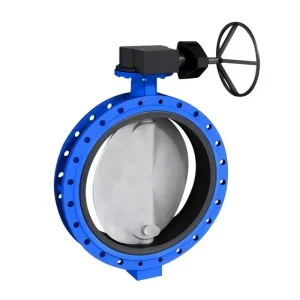
Wholesale High-Quality U Section Butterfly Valve Suppliers
View Valve Specs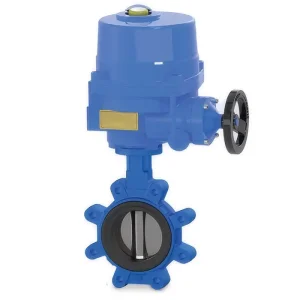
High-Quality Electrical Butterfly Valve Manufacturer
View Valve Specs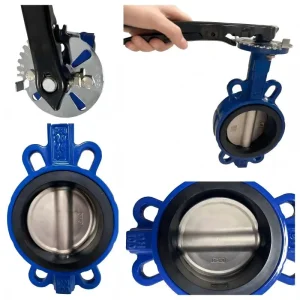
WRAS Approved Butterfly Valve 4020L Suppliers
View Valve Specs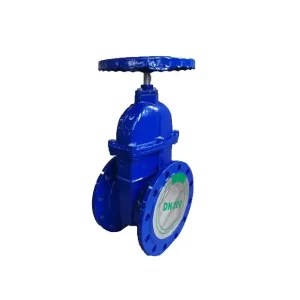
CE Certification German Standard Elastic Seat Gate Valve
View Valve Specs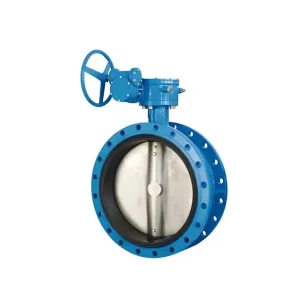
Wholesale Low - Torque Flange Type Butterfly Valve Factory
View Valve Specs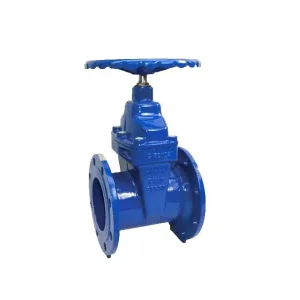
Non-Rising Stem Elastic Seat Sealing Gate Valve Factory
View Valve Specs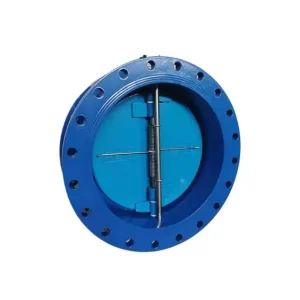
Dual Plate Flange Type Check Valve Factories
View Valve Specs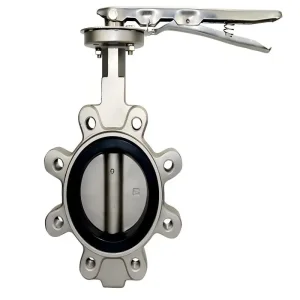
LUG Stainless Steel Butterfly Valve Supplier
View Valve SpecsFrequently Asked Technical & Procurement Questions
Authoritative engineering answers for consulting engineers, procurement directors, and EPC contractors operating in Ghana.
How do butterfly valves compare to resilient gate valves for Ghana municipal water transmission?
For pipeline diameters of DN200 and above, double-flanged or wafer butterfly valves offer significant advantages over gate valves in terms of structural weight, face-to-face dimensions, and operating efficiency. A DN500 resilient seated gate valve can exceed 700 kg, necessitating heavy foundation pads and expensive overhead cranes for maintenance. In contrast, a high-performance double-flanged butterfly valve weighs approximately 60% less, dramatically simplifying logistics across Ghanaian terrain.
Additionally, quarter-turn (90°) rotation enables faster emergency isolation and easier actuation with smaller, lower-power electric motors, which is critical for remote substations operating under erratic grid stability.
Which disc and seat materials are best suited for gold mining slurry applications in the Western Region?
For high-abrasion gold slurry handling (such as carbon-in-pulp and carbon-in-leach lines), standard 304 stainless steel and standard cast iron discs quickly scour and pit. We specify Ductile Iron coated with heavy-build Nylon 11, or solid Duplex Stainless Steel (2205) discs polished to minimize drag. For severe wear zones, ceramic discs provide ultimate resistance.
The seat elastomer must be compounded with premium Natural Rubber (NR) for high mechanical tear resistance, or abrasion-resistant formulated EPDM compounded in-house to maintain flexibility and seal integrity against high solids fractions.
How does your factory ensure anti-corrosion protection for maritime installations around Takoradi and Tema Port?
Marine environments require adherence to ISO 12944 standard category C5-M (Very High Marine). Our valve bodies receive SA 2.5 blast cleaning followed by an electrostatically applied, fusion-bonded epoxy (FBE) coating with a minimum dry film thickness (DFT) of 250 µm to 300 µm. Every production lot undergoes high-voltage spark testing (holiday detection at 3 kV) to ensure pore-free surface integrity. For wetted seawater service, we provide bodies and discs cast from Nickel Aluminum Bronze (ASTM B148 C95800), which forms a natural, self-healing cuprous oxide passivation layer against marine bio-corrosion.
What is the standard lead time and sea freight schedule from Tianjin Port to Tema Port?
Our Tianjin campus is located minutes from Tianjin Port, enabling rapid containerization. Standard batch fabrication for customized project orders (e.g., DN50 to DN1200) requires approximately 20 to 30 manufacturing days. Direct ocean carrier transit from Tianjin to Tema Port or Takoradi Port typically spans 35 to 42 days. All export valves are individually wrapped in vapor-corrosion-inhibiting (VCI) film, enclosed in custom-molded bubble bags, and bolted in fumigated solid plywood crates complying with ISPM 15 standards.
Can you provide flange drilling compliant with both British Standard (BS 4504) and ANSI B16.5 for retrofitting old installations in Ghana?
Yes. Historical pipelines across Ghana frequently mix British Standards (BS 10 Table D/E, BS 4504 PN10/PN16) with American Standards (ASME/ANSI Class 150) in mining and oil terminals. Our wafer and lug butterfly valves feature multi-standard universal alignment holes or can be custom CNC-drilled to match legacy pipeline dimensions without onsite modification, maintaining full bolt circle concentricity.
