
Featured Flow Control Assemblies (Series I)
Explore factory-direct CE-certified butterfly valves, high-pressure isolation globe units, and firefighting control packages tested 100% under hydrostatic shell and seat pressure standards.
-
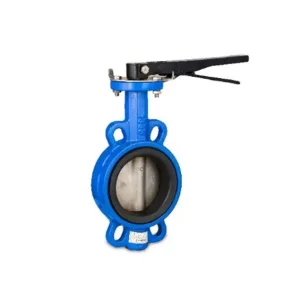
Rubber Lined Pinless Butterfly Valve
-
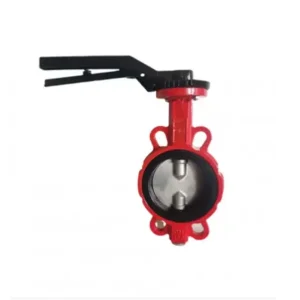
Double Half Shaft Wafer Butterfly Valve
-
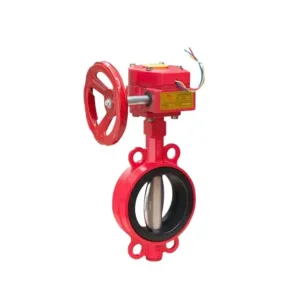
Fire-Fighting Wafer Signal Butterfly Valve
-
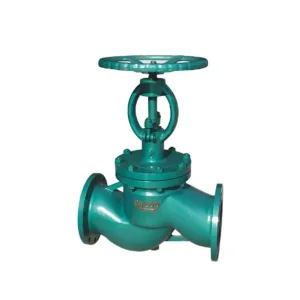
High-Temperature Vacuum Isolation Globe Valve
-
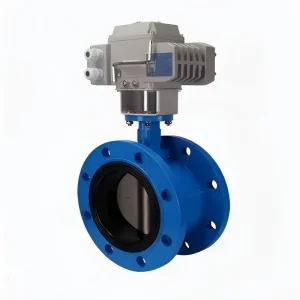
High-Performance Electrical Butterfly Valve
-
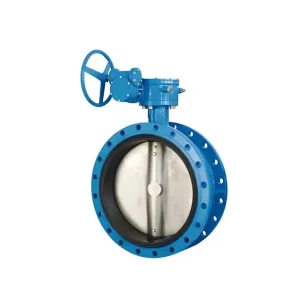
Low-Torque Flange Type Butterfly Valve
-
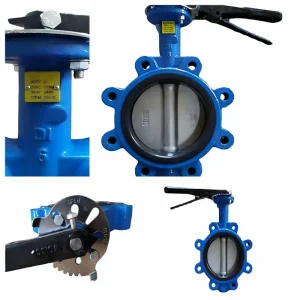
WRAS Approved Lug Type 4325L Butterfly Valve
-
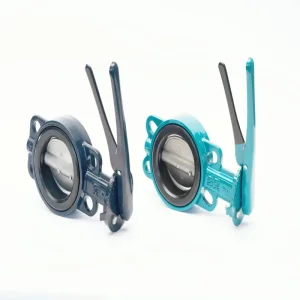
CE Certified Water-Safe Butterfly Valve
Global Commercial Landscape: The Evolution of Industrial Flow Modulation
The global industrial valve market is accelerating past $90 billion, with quarter-turn butterfly valve architectures capturing the highest growth trajectory within municipal water transmission, clean power generation, semiconductor pure water infrastructure, and offshore desalination. Driven by global decarbonization mandates and stringent fugitive emission regulations, pipeline designers have systematically moved away from legacy, heavy gate valves in favor of high-efficiency, hydrodynamic butterfly valve profiles.
Weight & Envelope Optimization
In modern EPC infrastructure projects, structural footprint is paramount. A DN600 resilient-seated butterfly valve weighs roughly 65% to 75% less than an equivalent DN600 wedge gate valve, dramatically reducing structural hanging load, seismic anchorage stress, and freight carbon emissions across transoceanic delivery routes.
Actuation Dynamic Energy Savings
With low-torque pinless discs and optimized half-shaft configurations, modern butterfly valves require significantly smaller electric multi-turn or quarter-turn pneumatic actuators. Operating at torque reductions exceeding 25%, massive processing plants register notable drops in kilowatt-hour energy consumption over tens of thousands of cycles.
Rigorous European CE Compliance
Entering the European single market demands adherence to the Pressure Equipment Directive (PED) 2014/68/EU Module H. Our engineering incorporates full traceability: from raw molten chemistry spectrograms to finite element analysis (FEA) verifying body wall safety factors at 1.5 times the nominal working pressure (PN10/PN16/PN25).
Vertical Manufacturing Mastery: Foundry to Custom Elastomer Vulcanization
Unlike pure assembly workshops or trading intermediaries, our group possesses genuine vertical manufacturing integration rooted in Tianjin Donglian Valve Factory (established 1996) and Tianjin Dongfang Rubber Factory (established 1987). Controlling the chemical formulation of the rubber seat and the metallurgical casting of the ductile iron body ensures long-term sealing integrity that third-party sourced assemblies cannot replicate.
| Component Group | Material Specification Options | Compliance Standards | Technical Functionality |
|---|---|---|---|
| Valve Body | Ductile Iron GGG40 / GGG50, WCB, CF8M Stainless | EN 1563, ASTM A536, PED 2014/68/EU | High tensile endurance resisting pipe flexure and water hammer shocks. |
| Closure Disc | SS316, SS304, Aluminum Bronze C95800, PTFE Coated | EN 593, DIN 3840, AWWA C504 | Streamlined hydrodynamic cross-section generating minimum $C_v$ drag. |
| Elastomer Seat | Potable EPDM, High-Oil NBR, FKM (Viton), Pure PTFE | WRAS BS 6920, FDA CFR 21 177.2600 | In-house vulcanization offering zero permanent compression set & bubble-tight seal. |
| Drive Shaft / Stem | 17-4PH, SS410, SS420, Duplex 2205 (Pinless Design) | EN 10088-3, ISO 5211 Standard Top Flange | Blow-out proof dual half-shaft assembly maximizing internal flow bore area. |
| Protective Coating | Fusion Bonded Epoxy (FBE) 250μm – 300μm thickness | DIN 30677-2, GSK Certified | Zero pinhole dielectric barrier safeguarding against underground soil corrosion. |
In-House Rubber Compound Engineering
The rubber seat is the single point of failure in resilient-seated valves. Since 1987, our dedicated rubber compound division has engineered custom ethylene propylene diene monomer (EPDM) and nitrile (NBR) formulations with specific antioxidant inhibitors. This stops micro-cracking caused by chloramine disinfection in municipal lines and prevents seat blowout under 16 bar bi-directional shut-off differentials.
High-Precision CNC Machining Center
Every valve casting is machined on multi-axis horizontal CNC centers. Disc perimeter profiles are micro-spherical polished to a mirror finish ($Ra < 0.4\ \mu m$), drastically reducing rubber abrasive friction during disc entry and seating. This precision machining prolongs operating life to well beyond 20,000 cycles while lowering breakaway operating torque.
Turnkey Fluid Control Solutions across Mission-Critical Verticals
Industrial piping schemes operate under diverse conditions, from cryogenic chillers to high-salinity seawater intake networks. Tianjin Top Valve manufactures application-tuned variants designed to overcome harsh regional operating realities.
Municipal Potable Water & Desalination
Certified under the United Kingdom WRAS (Water Regulations Advisory Scheme) and European CE directives, our WRAS Lug models (4325L/4020G) feature non-toxic, anti-microbial EPDM liners. Paired with Aluminum Bronze (C95800) or Duplex discs, they provide robust resistance against pitting in Reverse Osmosis (SWRO) desalination plants.
Commercial HVAC & District Cooling
Large chiller loops and central chilled water plants face dynamic thermal expansion and condensation. Our wafer and lug butterfly valves feature extended neck designs, allowing for complete 50mm+ pipe lagging without obstructing the ISO 5211 direct-mount actuation flange or manual worm gear handwheel.
Marine Ballast & Shipbuilding
Engineered to fulfill DNV-GL, Lloyd’s Register, and CCS marine classification standards, our Marine Centric butterfly series features compact wafer and flange castings. These assemblies resist the cavitation stresses and aggressive salt-spray corrosion typical of modern Ballast Water Treatment Systems (BWTS).
Fire Protection & Sprinkler Systems
Our grooved-end butterfly valves and wafer signal valves are engineered for NFPA fire protection riser networks. Fitted with factory-calibrated internal supervisory dual switches, they provide tamper-proof electrical position telemetry back to building life-safety central monitoring panels.
Next-Generation Technology: Smart Valve Telemetry & Advanced Hydrodynamics
Flow control technology is transitioning from static mechanical assets into intelligent, data-driven nodes in smart industrial networks. Tianjin Top Valve's engineering roadmap incorporates cutting-edge design methodologies and sensor integration to minimize maintenance lifecycles and eliminate unexpected downtime.
CFD-Guided Disc Profiles
Utilizing high-order computational fluid dynamics (CFD), our latest disc geometry reduces turbulent eddy shedding along downstream piping. By optimizing the disc curvature, the localized pressure drop ($\Delta P$) is reduced by up to 14%, increasing the valve's flow coefficient ($K_v$ / $C_v$) and cutting pumping power consumption across primary distribution networks.
Predictive IIoT Actuation Integration
Partnering with electric and electro-hydraulic actuator manufacturers, our ISO 5211 top-flange architecture seamlessly mounts smart control pods supporting Modbus, Profibus DP, and WirelessHART protocols. Built-in sensors measure motor current draw, dynamic seating torque, and stroke cycle counts to forecast elastomer wear before any physical leakage can manifest.
Fugitive Emissions Standard ISO 15848-1
With intensifying international pressure on industrial greenhouse gases and volatile organic compounds (VOCs), our triple-offset and high-performance pinless assemblies feature multiple redundant shaft o-rings and spring-loaded PTFE chevron stem packing. These components are rigorously certified to meet Class A & B leakage rates under thermal cycling from -29°C to +200°C.
Frequently Asked Questions (FAQ) for Engineering Specialists
Technical specifications, certification guidelines, and selection criteria answered directly by our senior valve engineering staff.
What exact criteria govern CE certification for industrial butterfly valves under PED 2014/68/EU?
What are the key technical advantages of a pinless shaft design compared to a pinned disc?
Why is having in-house elastomer vulcanization (Tianjin Dongfang Rubber) critical to valve reliability?
How does the WRAS certification impact material selection for potable drinking water applications?
How do you calculate required actuator sizing torque, and what safety factor is recommended?
What are the differences between Wafer, Lug, and Flanged butterfly valve mounting styles?
Can resilient-seated butterfly valves be used for throttling, or are they exclusively on/off devices?
Featured Flow Control Assemblies (Series II)
Explore our heavy-duty gate valves, grooved mechanical couplings, marine centric packages, and high-pressure hard seal valve models ready for worldwide container export.
-
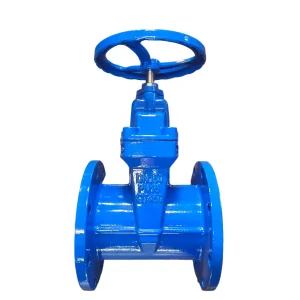
Resilient Gate Valve for Reliable Flow Control
-
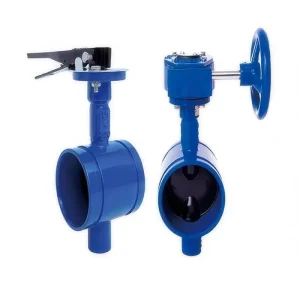
Grooved End Durable Flow Control Butterfly Valve
-
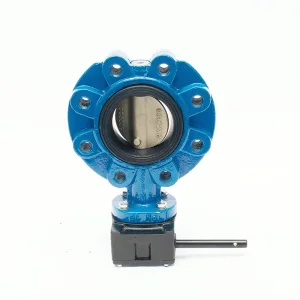
Marine Centric Lug Manual Butterfly Valve
-
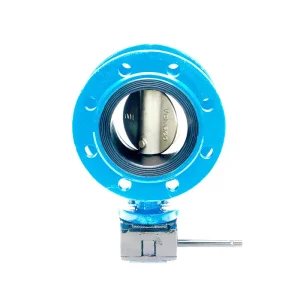
Marine Flange Type Manual Butterfly Valve
-
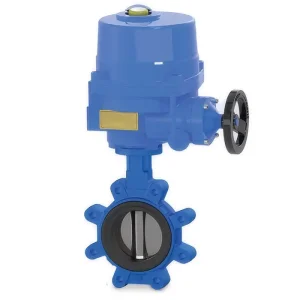
High-Efficiency Electrical Butterfly Valve
-
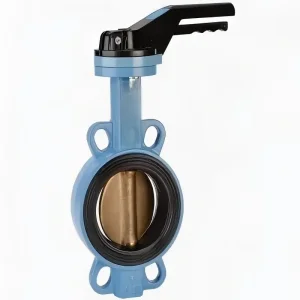
CE Certified Bronze Disc Wafer Butterfly Valve
-
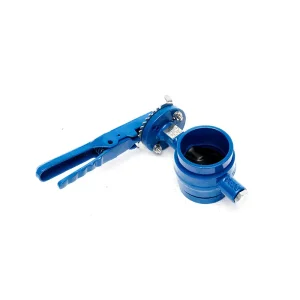
Grooved Type Manual Butterfly Valve
-
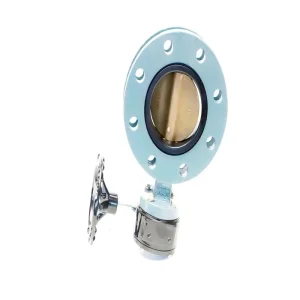
High Pressure Metal Hard Seal Butterfly Valve
Partner Directly with an Established Valve Foundry
Eliminate trading markups and ensure end-to-end metallurgical quality control. Our engineering team provides comprehensive valve sizing calculations, 3D CAD/STEP files, material certificates (EN 10204 3.1), and competitive factory-direct quotations for major global tenders.
