
Critical Throttling & Vacuum Isolation Valves for Norway Offshore & Power Sectors
Factory-direct flow control units engineered for severe pressure drop scenarios, cryogenics, and superheated steam applications.
-
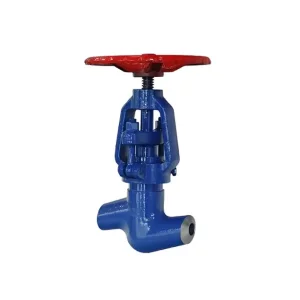
High-Quality High Temperature And High Pressure Power Station Globe Valve - Norway Spec
-
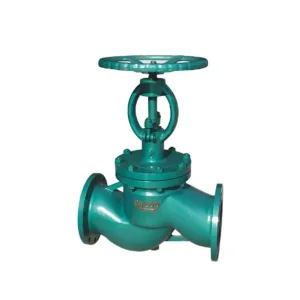
High-Quality High - Temperature - Vacuum Isolation Globe Valve for Norway Industrial Systems
-
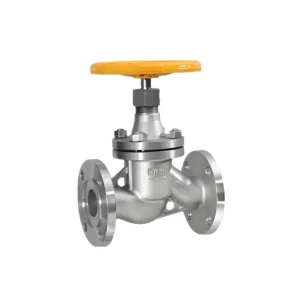
Straight-Through Ammonia Globe Valve for Nordic Aquaculture & Cold Storage
-
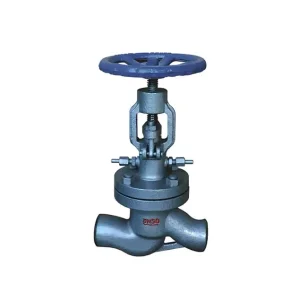
High-Quality Water Seal Globe Valve with Quick-Closing Feature for Norway Marine
Industrial Dynamics & Severe Duty Operating Conditions in Norway
Analyzing cryogenic margins, North Sea saline corrosion resistance, and precision throttling mechanics required across Scandinavian energy infrastructures.
The industrial landscape in Norway represents one of the world's most rigorous testing grounds for severe service globe valves. Dominated by deepwater exploration on the Norwegian Continental Shelf (NCS), offshore floating production storage and offloading (FPSO) units, land-based LNG processing facilities (such as Snøhvit at Melkøya), and carbon capture and storage (CCS) installations like the Longship project, process equipment is subject to extreme mechanical and atmospheric stress.
Globe valves utilized in these operations must surpass baseline ASME and EN standards. Norwegian offshore operators systematically mandate compliance with NORSOK Standard M-630 (material data sheets for piping) and NORSOK Standard M-650 (qualification of manufacturers of special materials). Valve pressure-containing parts routinely require high-alloy cast metallurgy, including 22Cr Duplex (ASTM A995 Gr. 4A), 25Cr Super Duplex (ASTM A995 Gr. 5A), and Nickel Alloys (Inconel 625, Hastelloy C276), ensuring uncompromised resilience against pitting and crevice corrosion in chloride-dense North Sea brine.
Moreover, Norway's aggressive transition toward clean tech, hydrogen carriers, and subsea geological CO2 sequestration drives specialized valve engineering requirements. Supercritical CO2 throttling produces massive Joule-Thomson cooling effects, driving internal pipeline temperatures down to -78.5°C in brief pressure transitions. Top Valve engineers utilize extended bonnets, multi-stage cavitation-elimination trims (labyrinth cages), and Stellite hard-faced seats to eliminate acoustic-induced vibration (AIV) and cavitational erosion under severe differential pressures (Delta-P).
NORSOK & Low-Temp Metallurgy
Full traceability down to raw pig iron and alloying ingots. Castings undergo Charpy V-notch impact validation at -46°C to -196°C to prevent brittle fracture in Arctic offshore service.
Cavitation-Proof Multi-Stage Trims
Engineered contoured plugs and micro-drilled cages manage high velocity fluid kinetic energy, mitigating turbulence, noise, and wire-drawing wear in North Sea injection pipelines.
ISO 15848-1 Fugitive Emission Control
Equipped with precision live-loaded chevron PTFE or die-formed flexible graphite packing rings to guarantee Class AH hermetic containment for ammonia and hydrogen handling.
| Norway Sector Application | Operating Challenges | Globe Valve Configuration | Typical Metallurgy & Trim |
|---|---|---|---|
| FPSO Water Injection & Topsides | Extreme Delta-P, high salinity, flow turbulence | Angle-Pattern Globe / Pressure Seal Bonnet | Super Duplex UNS S32750 / Stellite Gr. 6 Trim |
| District Heating (Oslo, Bergen, Trondheim) | Continuous thermal cycling, water hammer risk | Straight-Through Bellows Seal Globe Valve | WCB / 1.4408 / Austenitic SS with Hardened Disc |
| Subsea CCS / Liquid CO2 Transport | Cryogenic temperatures, explosive decompression | Extended Bonnet Cryogenic Globe Valve | ASTM A351 CF8M / PCTFE or Silver-Plated Metal Seal |
| Commercial Aquaculture Processing Plants | Anhydrous ammonia (NH3) refrigerants, toxic leaks | Hermetic Inverted Seal Ammonia Globe Valve | Low Temp Carbon Steel (LCC/LCB) / PTFE Insert Disc |
China Factory 4.0: Supply Chain Resiliency & Cost Leadership for Nordic EPCs
How vertical integration—from group-owned foundries to digitalized test bays—insulates European buyers from volatile lead times and inflated intermediary margins.
The contemporary procurement paradigm for European EPC contractors operating within the North Sea has shifted decisively. Global inflation, foundry consolidations in Western Europe, and extended delivery cycles (often stretching past 40 to 60 weeks for exotic alloy globe valves) have made supply chain agility paramount. Our group, originating from valve casting foundations since 1996 and proprietary elastomer compounding since 1987 in Tianjin, provides an industrialized alternative built on Industry 4.0 vertical cohesion.
Unlike contract assemblers who outsource critical components across fragmented subcontractor networks, Tianjin Top Valve retains end-to-end sovereignty over the entire production cycle. Direct ownership of casting facilities allows direct optical emission spectrometry (OES) analysis of every ladle melt, guaranteeing that ferrite content, molybdenum equivalents, and PREN ratings (Pitting Resistance Equivalent Number > 40 for Super Duplex) comply precisely with project design criteria before metal enters the mold.
Integrated Factory 4.0 Capabilities
Designed specifically to satisfy high-scrutiny technical audits from international operators.
- In-House Foundry & Chemical Labs: Real-time material test reports (EN 10204 3.1 & 3.2 certs available on request).
- Multi-Axis CNC Precision Boring: Micron-level concentricity between bonnet neck, stem guide, and seat pocket.
- 100% Automated Pressure Testing: Shell, high-pressure closure, and low-pressure air testing logged by digital transducers.
- Fast Lead Time to Norway Ports: Standard delivery compressed to 6-12 weeks with sea-freight links from Tianjin Port directly to Oslo, Stavanger, and Bergen.
Fragmented Outsourced Procurement
Common failure points identified by Western European engineering procurement audits.
- ✕ Uncertain Casting Origins: Raw valve bodies sourced across third-party non-audited foundries prone to internal shrinkage and porosity.
- ✕ Markups & Commercial Overhead: Multiple trader tiers adding 30-50% markups without contributing technical validation.
- ✕ Inconsistent Traceability: Heat treatment charts and NDE radiographs frequently mismatched with final delivered assemblies.
- ✕ Prolonged Lead Times: Western lead times often exceed 36-52 weeks for custom pressure-seal or cryogenic trim valves.
Engineering a Pipeline System for the Norway Market?
Collaborate directly with our valve design engineers. Access complete 3D CAD step files, EN 10204 3.1 material records, and project-specific flow coefficient (Cv) data within 24 hours.
Worldwide Sourcing Trends: The Strategic Role of Industrial Globe Valves
Evaluating why leading EPC organizations continue to specify linear motion globe valves over rotary alternatives for throttling accuracy and Zero-Leakage isolation.
In modern pipeline design, the selection between rotary valves (such as high-performance butterfly and ball valves) and linear globe valves is strictly dictated by process dynamics. While quarter-turn butterfly valves represent an exceptional solution for large-diameter bulk isolation, the global market continues to experience a massive resurgence in demand for industrial globe valves in mission-critical loops.
The fundamental hydraulic advantage of the globe valve lies in its disc movement perpendicular to the fluid flow path. This proportional annular orifice delivers linear and equal-percentage flow control curves that rotary valves cannot match when subjected to continuous throttling under extreme differential pressure. Where high velocity fluid causes rapid seat scouring and fluttering in partially open gate or ball valves, a properly contoured globe valve plug manages erosion forces efficiently across its hardened seating surfaces.
Worldwide, procurement departments across the North Sea, the Arabian Gulf, and the Gulf of Mexico are consolidating their valve supply chains around certified manufacturers who combine broad catalog breadth (gate, globe, check, and butterfly valves) under a single audited quality management umbrella. This multi-valve capability dramatically streamlines plant engineering, vendor qualification, and lifecycle spare part inventories.
Precise Throttling Control
Short disc travel with parabolic or needle plugs ensures fine-tuned fluid throttling, preventing hydraulic surges in high-pressure distribution bypass loops.
Online In-Line Serviceability
Bolted and pressure-seal bonnet architectures allow maintenance engineers to redress or swap seats and discs directly without cutting the valve body from the pipe spool.
Positive Bubble-Tight Sealing
Direct downward axial thrust ensures complete compressive contact between disc face and body ring, reliably meeting API 598 zero-leakage standards.
Essential Flow Control Assemblies for Norway Marine & Industrial Networks
Complementary check valves, marine butterfly valves, and specialized power generation solutions engineered to international standards.
-
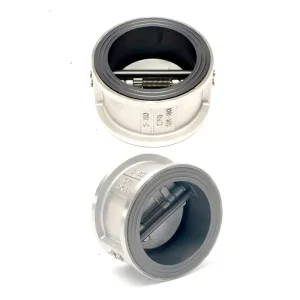
CE Certification Compact Wafer Lift Check Valve for Norway District Heating
-
Wholesale Straight-Through Ammonia Globe Valve - Nordic HVAC Certified
-
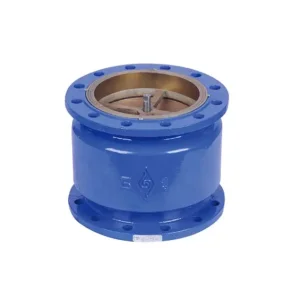
CE Certification Energy-Saving Silencer Check Valve for Norway Pump Stations
-
High-Temperature Power Station Globe Valve - Severe Service Certified
-
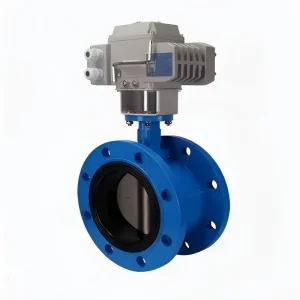
High-Performance Electrical Butterfly Valve for Norwegian Automated Topsides
-
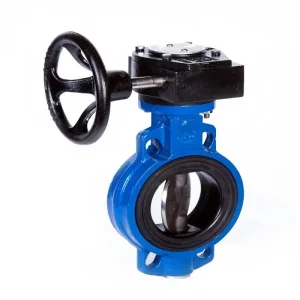
Rubber Lined Wafer Butterfly Valve with Worm Gear for Seawater Intake
-
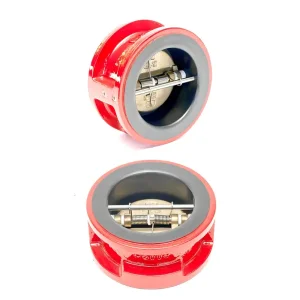
Full Rubber Coated Non-Return Check Valve for Municipal Wastewater
-
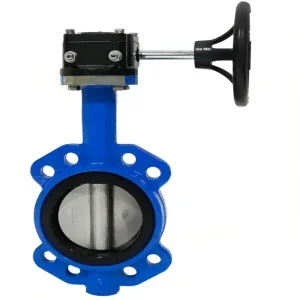
CE Certification Potable Water Wafer Butterfly Valve for Nordic Utilities
Frequently Asked Questions by Scandinavian Valve Buyers
Addressing technical parameters, cryogenic testing, export documentation, and compliance protocols for Norway projects.
How does your factory ensure compliance with NORSOK M-630 and M-650 standards?
What type of globe valve trim is recommended for high Delta-P steam in district energy networks?
What are typical freight routes, customs documentation, and shipping lead times from Tianjin to Norway?
Can your globe valves be supplied with automated actuators calibrated for Arctic low-ambient temperatures?
What guarantees zero-leakage shutoff in high-pressure vacuum or anhydrous ammonia services?
Direct Factory Procurement for Norway Projects
Eliminate intermediate markups and secure factory-direct pricing backed by four decades of valve manufacturing, custom metallurgy, and rigorous European standards compliance.
