
China Top Globe Valve Manufacturers and Suppliers?

Time:2026-10-24 Author:Liam
0%

China’s top globe valve manufacturers and suppliers serve demanding industries, including power generation, oil and gas, chemical processing, and water treatment. Their products regulate flow through a movable plug and seat, making precise throttling possible. A well-designed Globe Valve can reduce pressure shocks, control steam lines, and support stable plant operations.

R. W. Zappe, author of Valve Selection Handbook, offered a practical industry reminder: “Valve selection begins with the process, not the catalog.” That principle remains relevant. Buyers should examine pressure class, temperature, media composition, end connections, trim materials, and actuator requirements. They should also request material certificates, pressure-test records, and traceable quality documents. Small details matter. A stainless-steel trim may resist corrosive service, while a hard-faced seat can improve wear resistance under repeated throttling.

Chinese manufacturers vary considerably in engineering depth, testing capability, and export experience. Some operate modern CNC workshops, automated welding equipment, and hydrostatic test benches. Others may depend heavily on standard designs. This difference deserves careful review. Certifications such as ISO 9001, API 623, ASME B16.34, or relevant project approvals can support supplier evaluation, but certificates alone prove little. Factory audits, sample testing, and clear technical communication remain essential.

The strongest suppliers provide drawings before production, explain limitations honestly, and maintain consistent inspection records. Still, no manufacturer is perfect. Delivery promises can change. Specifications may be misunderstood. A careful comparison of China’s Globe Valve manufacturers should therefore balance price, performance, documentation, after-sales support, and proven application experience. The lowest quotation is not always the safest choice.
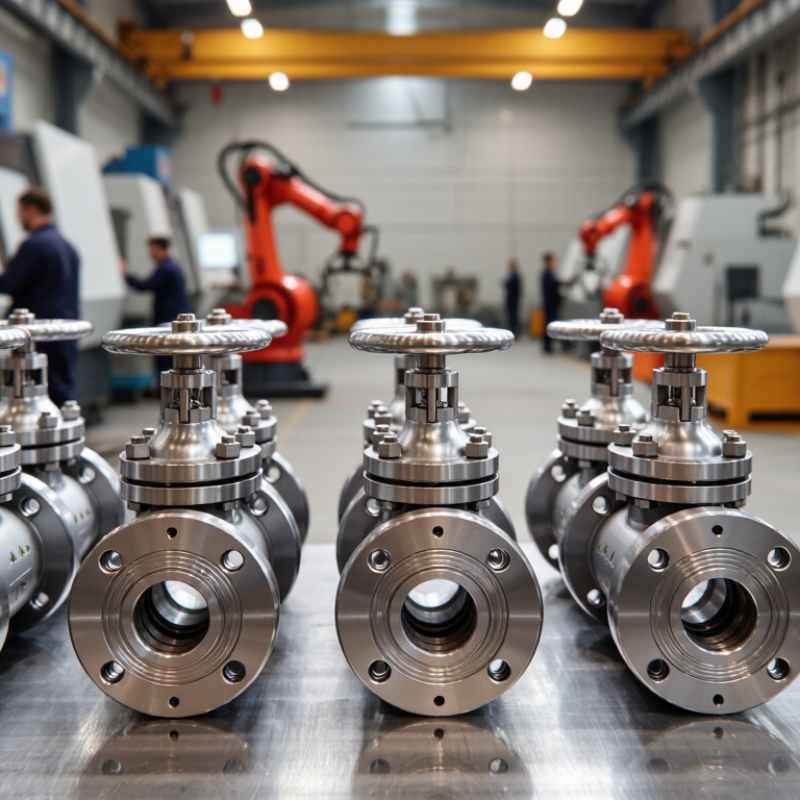
China Top Globe Valve Manufacturers and Suppliers?

What Is a Globe Valve and How Does It Work?

A globe valve controls fluid by moving a disc toward or away from a fixed seat. Its handwheel turns a stem, raising or lowering the disc through a threaded mechanism. The disc moves across the flow path.

That motion matters. When the disc approaches the seat, the opening narrows and flow decreases. Unlike a gate valve, a globe valve is designed for regular throttling. Its curved internal passage improves control but creates greater pressure loss. The International Energy Agency and U.S. Department of Energy both identify steam distribution losses as a practical efficiency concern. The U.S. Department of Energy reports that targeted steam-system improvements can often reduce energy consumption by 10–15%.

Globe valves commonly serve steam, cooling water, fuel, and chemical-service lines. Body materials, trim selection, pressure class, and seat design must match the medium and temperature. ASME B16.34 provides widely used requirements for valve pressure-temperature ratings and testing. A 2024 MarketsandMarkets report estimated the global industrial valves market at more than USD 78 billion, with continued demand from energy, water, and process industries. Market size does not guarantee valve quality. Procurement teams should review test certificates, leakage results, cycle testing, and supplier traceability. In practice, even a correctly sized valve can perform poorly if installed backward or operated continuously near its seat. That detail is easy to underestimate.

Main Types of Globe Valves Produced in China

China Top Globe Valve Manufacturers and Suppliers: Main Types of Globe Valves Produced in China

Chinese valve factories commonly produce straight-pattern, angle-pattern, and Y-pattern globe valves.

Straight-Pattern

Straight-pattern designs suit general pipeline throttling. Their internal passage changes direction less sharply than many users expect.

Angle-Pattern

Angle-pattern valves turn flow by 90 degrees, saving space near elbows. They are useful around boilers, drains, and compact process lines.

Y-Pattern

Y-pattern valves reduce pressure loss through a more direct flow path. They often serve steam, water, and higher-flow systems.

Stem construction also separates these valves into rising-stem and non-rising-stem types. Rising-stem valves provide visible position feedback during inspection. Non-rising-stem versions need less vertical clearance.

Cast globe valves support many industrial sizes and pressure classes. Forged valves are often selected for smaller, high-pressure connections. Bellows-sealed designs help limit external leakage in demanding service.

Material choices may include carbon steel, stainless steel, alloy steel, and special corrosion-resistant grades. Selection should follow pressure, temperature, fluid chemistry, and operating frequency.

Tips

Ask for pressure-temperature ratings, material certificates, seat leakage results, and dimensional drawings. Inspect the stem finish and packing area closely. A smooth stem usually supports steadier sealing.

Do not choose by body material alone. The seat design matters too. I have found that a technically suitable valve can still perform poorly after incorrect installation.

Flow direction, actuator sizing, and flange alignment deserve equal attention. No selection chart is perfect. Field conditions sometimes reveal details that the specification missed.

Key Manufacturing Regions and Supplier Capabilities

China’s globe valve industry is concentrated in several manufacturing regions, each with different strengths. Zhejiang, especially the Wenzhou area, is known for dense valve workshops and flexible production. Many suppliers there handle stainless steel, forged steel, and cast valve orders. Jiangsu and Shanghai often serve chemical, power, and industrial equipment projects with stronger engineering support. Hebei manufacturers commonly focus on large-diameter valves, standard designs, and cost-sensitive applications.

Supplier capability should be checked beyond catalog size. Reliable factories can provide material certificates, dimensional drawings, pressure-test records, and traceable inspection reports. Look for testing equipment that measures shell strength, seat leakage, and actuator performance. Some suppliers offer CNC machining, welding, coating, and assembly under one roof. That can reduce transport between workshops, but it does not guarantee better quality. I have seen polished product pages hide weak document control. Ask for recent sample reports, not templates. Response speed also matters. A capable technical team should explain pressure class, trim selection, temperature limits, and installation direction clearly. Customization is useful, yet frequent design changes may affect delivery and consistency. Small sample orders reveal more than confident promises. Check packing details, marking accuracy, spare-part access, and how the supplier handles a rejected test result. Even experienced buyers can miss these practical gaps.

The chart compares major Chinese valve-manufacturing regions by commonly documented industrial strengths. The scores are comparative capability indicators rather than company sales, market share, or brand rankings. Zhejiang is widely associated with general industrial valve production, Jiangsu with petrochemical and power applications, Shanghai with engineered and process valves, Sichuan with energy-related equipment, and Hebei with water, HVAC, and general industrial supply.

How to Evaluate China’s Globe Valve Manufacturers

Evaluating China’s globe valve manufacturers requires evidence beyond attractive catalogs. Research and Markets reported that the global industrial valve market exceeded USD 75 billion in 2023, with energy, water, and chemical projects driving demand. This scale creates capable factories, but also uneven quality. Ask for material certificates, pressure-test records, and traceability from casting to final assembly. A reliable supplier should explain body materials, trim selection, packing design, and seat leakage limits clearly. Vague answers deserve caution.

Check whether production follows recognized requirements, including ISO 5208 for pressure testing and relevant API or ASME specifications. Request recent third-party inspection reports, not only factory-generated documents. Review machining photographs, calibration records, and sample valve measurements. The China Association of International Engineering Consultants has repeatedly highlighted quality control and supply-chain verification as important risks in overseas procurement. That risk is practical: a small stem misalignment may cause difficult handwheel operation after installation. A polished catalog is not proof.

Tips: Compare three suppliers using the same technical checklist. Inspect one finished valve, if possible. Confirm hydrostatic and seat tests under defined pressure, temperature, and duration. Ask how rejected castings are controlled. Also examine warranty response times and spare-part availability. Some buyers focus too heavily on purchase price; I have found that this can hide testing gaps and expensive downtime. Do not assume a certificate proves every production batch. Verify its scope, date, issuer, and connection to the quoted valve.

Quality Standards, Customization, and Export Services

China’s globe valve manufacturers serve oil, gas, water, power, and chemical projects worldwide. Grand View Research estimated the global industrial valves market at about USD 78 billion in 2023, with continued growth through 2030. That expansion increases pressure on suppliers to prove quality, not merely promise it.

Quality begins with material traceability, dimensional checks, pressure testing, and documented inspection. Relevant references include ISO 5208 for pressure testing and API 598 for valve inspection. Buyers should request test records, heat numbers, coating details, and leakage results.

Small details matter. A missing certificate can delay site approval. Customization may include forged or cast bodies, stainless steel trim, extended stems, special end connections, and pneumatic or electric actuation. However, customization can introduce risk. Each drawing should confirm pressure class, temperature range, media compatibility, face-to-face dimensions, and operating torque.

Export service requires more than a wooden crate. Experienced suppliers normally coordinate packing, marking, certificates of origin, inspection files, and shipment documentation. UN Comtrade data for HS 848180 shows substantial global trade in other valves and similar equipment, reflecting strong cross-border demand.

Still, trade statistics combine many valve types, so they cannot prove one supplier’s performance. Independent inspection remains valuable. A practical purchasing team may witness hydrostatic testing before shipment, photograph nameplates, and verify crate moisture protection. Mistakes happen. Reliable communication makes them visible early.

FAQS

What is a globe valve?

A globe valve controls fluid by moving a disc toward or away from a fixed seat. It supports regular flow adjustment.

How does a globe valve control flow?

Turning the handwheel moves a threaded stem. The stem raises or lowers the disc across the flow path. A smaller opening reduces flow.

How does a globe valve differ from a gate valve?

A globe valve suits frequent throttling better than a gate valve. Its curved passage improves control but causes greater pressure loss. That trade-off matters.

Where are globe valves commonly used?

Common services include steam, cooling water, fuel, and chemical-process lines. The fluid, temperature, and pressure determine the suitable design.

What materials and specifications should buyers check?

Check body material, trim, pressure class, seat design, and temperature limits. These choices must match the operating medium. A correct size is not enough.

What testing documents should a supplier provide?

Request material certificates, dimensional drawings, shell-test records, and seat-leakage results. Cycle testing and traceable inspection reports add useful evidence. Templates are not proof.

Which manufacturing regions offer different valve capabilities?

Zhejiang, especially Wenzhou, has many flexible valve workshops. Jiangsu and Shanghai often provide stronger engineering support for industrial projects. Hebei commonly handles large-diameter and standard valves.

What installation and operating mistakes can reduce performance?

Installing the valve backward can cause poor operation. Continuous use near the seat may also increase wear. Small details matter. Review flow direction, packing, markings, and spare-part access before acceptance.

Conclusion

A Globe Valve is a linear-motion valve designed to regulate, start, or stop fluid flow through a pipeline. Its movable disc works against a stationary seat, allowing precise throttling and reliable shutoff. Chinese manufacturers produce several common types, including standard pattern, angle, and Y-pattern globe valves, with options for different pressure ratings, body materials, connection methods, and operating conditions.

China’s major manufacturing regions support diverse supplier capabilities, from precision casting and machining to assembly, testing, and large-scale export services. When evaluating a manufacturer, buyers should review production experience, technical resources, quality control procedures, certifications, material traceability, and testing capacity. Reliable suppliers should also provide customization, accurate documentation, responsive communication, secure packaging, and dependable delivery. By comparing these factors, international purchasers can select suitable globe valves that meet project specifications, applicable standards, and long-term performance requirements.


Liam

Liam

Liam is a dedicated marketing professional with a profound expertise in the industry, where he excels at highlighting the unique advantages of our core products. With a keen understanding of market trends and consumer needs, Liam frequently updates our company’s professional blog, providing......