
Buying a Ball Valve for an international project involves more than comparing prices and catalog photos. Service conditions, documentation, testing, and supplier reliability can determine whether the valve performs safely for years. A small mistake in material selection may cause leakage, corrosion, or unexpected downtime.
R. W. Zappe, a recognized valve specialist and author of Valve Selection Handbook, offered a practical reminder: “Select the valve for the service, not merely for the line size.” This principle remains valuable for global buyers. Before requesting quotations, record the medium, pressure, temperature, pipe size, flow direction, and operating frequency. Then verify body materials, seat compatibility, pressure ratings, end connections, and actuator requirements. Do not assume stainless steel always solves corrosion problems. Process chemistry matters.
Reliable purchasing also requires evidence. Request dimensional drawings, material certificates, pressure-test reports, inspection records, and applicable conformity documents. Check whether the supplier can trace each valve to a production batch. Review factory experience with similar applications. A polished website proves little.
Total cost deserves attention. Include freight, packaging, spare parts, installation, maintenance, and possible import delays. A cheaper Ball Valve may become expensive after repeated replacements. Ask about lead time and after-sales support in writing. Keep communication clear.
No checklist is flawless. Real projects change.
A thoughtful buyer should revisit the specification before approval. Field experience may reveal an overlooked temperature peak or an unsuitable seat material. These ten buying tips provide a practical framework, but professional engineering review remains essential for critical systems.
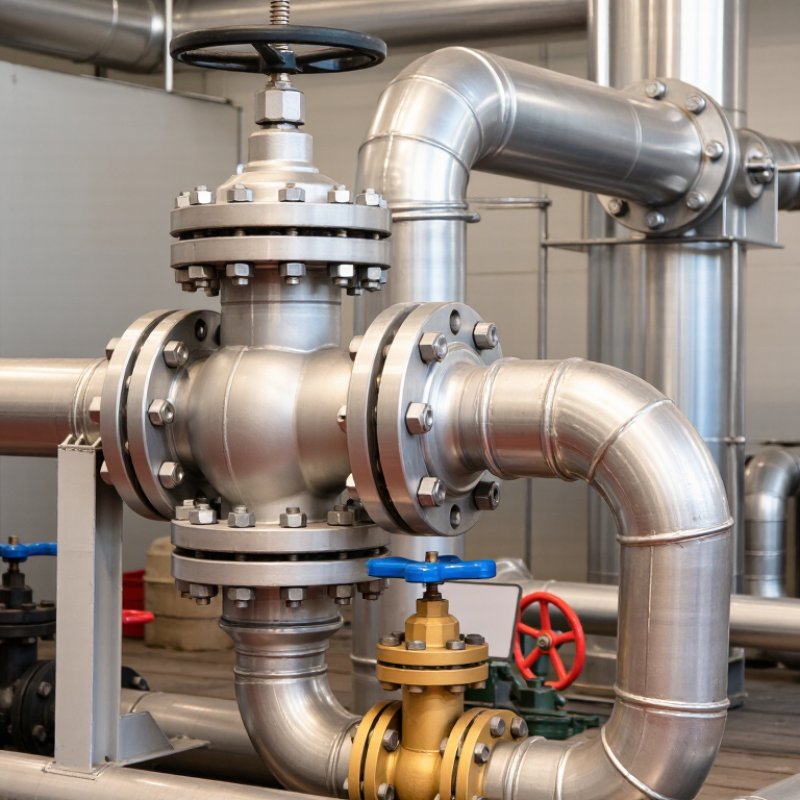
A ball valve should match the real service, not only the pipeline size. Identify the medium, pressure, temperature, flow direction, and operating frequency before requesting quotations. Water, compressed air, fuel, and aggressive chemicals can demand very different materials and sealing designs.
Check whether the valve will provide isolation, throttling, or emergency shutoff. Standard full-port designs reduce pressure loss, while reduced-port designs may fit tighter budgets. For frequent cycling, inspect the actuator torque, cycle rating, and response time. Manual operation may work on a small indoor line, but it can become unsafe or impractical in a remote installation.
Material compatibility deserves careful attention. Compare the body, ball, stem, and seat materials against the medium and temperature range. Do not rely on a generic “corrosion-resistant” description. Ask for pressure-temperature charts, leakage ratings, test records, and dimensional drawings. These documents help engineers verify fit before shipment.
Environmental conditions also matter. Outdoor valves may face rain, dust, salt air, freezing temperatures, or strong sunlight. Specify enclosure protection and suitable coatings where needed. A valve that performs well in a clean workshop may fail early beside a coastal process line. This point is easy to overlook.
Leave room for doubt. Actual site conditions sometimes differ from design data. Confirm the highest expected pressure, not just the normal reading, and review unusual startup or shutdown events with a qualified engineer.
Global buyers should match ball valve design with operating pressure, temperature, media, and cycling frequency. A floating ball valve suits many moderate-pressure lines because upstream pressure helps seal the ball. A trunnion-mounted design reduces operating torque in larger, high-pressure pipelines. It may cost more, but lower actuator demand can improve long-term efficiency. According to a 2024 MarketsandMarkets report, the industrial valves market is projected to grow from about USD 78 billion in 2024 to over USD 100 billion by 2029. That expansion increases selection pressure. Bigger is not automatically better.
Port configuration directly affects flow, pressure loss, and maintenance. Full-port valves keep the bore close to the pipe diameter, supporting pigging and reducing turbulence. Reduced-port valves are usually lighter and less expensive, but they create greater velocity changes. For branching systems, choose a three-way valve with either an L-port or T-port. An L-port supports diversion; a T-port can support mixing or multiple flow paths. The wrong pattern can create an unsafe flow route.
Check pressure ratings against applicable standards, such as ISO 17292 or API 6D, rather than relying only on catalog size. The American Petroleum Institute reports that pipeline valve requirements include design, testing, and documentation controls. Verify fire-safe, anti-static, and fugitive-emission requirements for the service. I have seen specifications copied between projects without checking the actual fluid. That shortcut needs reconsideration. A clear datasheet should state bore size, seat material, body material, end connection, pressure class, and operating temperature.
10 Ball Valve Buying Tips for Global Buyers
Verify materials before comparing prices. For corrosive fluids, confirm the body, ball, stem, and seat materials separately. Stainless steel is not automatically suitable for every chloride service. Check the fluid composition, concentration, velocity, and expected corrosion rate. For sour gas, request compliance evidence for NACE MR0175/ISO 15156. For general process service, ASME B16.34 helps define pressure-temperature requirements.
Pressure ratings require careful interpretation. A valve marked Class 600 may not tolerate the same pressure at 200°C as it does at room temperature. Ask for the pressure-temperature chart, not only the nominal class. ISO 5208 or API 598 test records can verify shell and seat integrity. The International Energy Agency’s Global Methane Tracker 2024 estimated around 120 million tonnes of methane emissions from fossil fuel operations in 2023. That figure makes low-leakage stem sealing more than a paperwork detail.
Temperature limits also depend on seals, packing, and thermal cycling. PTFE may perform well in moderate service, while high-temperature applications often require different seat materials. Check minimum startup temperature too. It is frequently overlooked. Compatibility testing should include pressure, temperature, media, and cleaning chemicals. Request certificates, batch traceability, and independent test results. A spreadsheet can still lie. I have seen “compatible” materials fail after repeated heating and cooling, so allow a safety margin and review the assumptions before ordering.
Compare typical published service-temperature ranges for common ball-valve seat and sealing materials. Actual limits depend on the specific compound, pressure, media, valve design, and applicable standard. Always verify the manufacturer’s pressure-temperature table, material certificate, and chemical-compatibility data before ordering.
Buying checklist: Confirm body and trim materials, seat and seal compatibility, pressure class, temperature limits, media composition, end connections, applicable standards, testing certificates, installation conditions, and required documentation.
Global buyers should treat actuation as a process decision, not an accessory choice. Pneumatic actuators suit frequent cycling and hazardous areas, while electric units simplify control wiring. Check required torque, cycle time, ambient temperature, and failure position. A spring-return actuator can close a valve during air loss. Oversizing seems safer, but it may increase wear and energy use. I still see buyers selecting by pipe diameter alone.
Actuation Pneumatic actuators suit frequent cycling and hazardous areas, while electric units simplify control wiring.
Connection standards can prevent expensive site modifications. Confirm flange rating, bore size, face type, and bolt dimensions before ordering.
ASME B16.5 covers many flanges up to NPS 24, while ASME B16.47 addresses larger sizes. Threaded ends also need careful review, because NPT and ISO 7-1 threads are not interchangeable.
Request dimensional drawings.
A millimeter matters.
Certifications should match the service and destination market. Ask for material certificates, pressure-test records, and traceability documents.
API 6D supports pipeline valve requirements, while ISO 5211 helps align valve and actuator mounting. For emissions-sensitive service, ISO 15848 testing deserves attention.
The IEA’s Global Methane Tracker 2024 estimates that fossil-fuel operations released about 120 million tonnes of methane in 2023. Fugitive emissions are not a minor detail.
Maintenance planning should include seal inspection, stem lubrication, actuator calibration, and accessible isolation points.
Record torque trends and leakage findings after each shutdown.
My checklist is useful, but field conditions can expose gaps.
Buying ball valves for global projects requires more than comparing unit prices. Experienced purchasers examine supplier capability, total cost, quality controls, and delivery terms before placing an order. Request evidence of material traceability, pressure testing, inspection procedures, and export experience. A polished catalog is not proof. Ask for recent test reports, production photographs, and references from similar applications. Compare at least three suppliers using the same specification sheet. Check body material, pressure class, connection standard, seat material, actuator interface, and required certificates. Small differences matter.
Calculate landed cost, not just the quoted valve price. Include tooling, samples, inspection, packaging, freight, insurance, duties, bank charges, spare parts, and possible rework. Ask whether prices are fixed and how currency changes are handled. Clarify payment milestones and late-change fees. Prices can mislead. I once saw a shipment delayed because its packing list used vague descriptions. That mistake was avoidable, but it still affected installation planning. Use a cost table with identical quantities and delivery assumptions.
Quality control should cover incoming materials, machining, assembly, pressure testing, marking, and final inspection. Define acceptance criteria before production starts. Consider independent inspection for critical orders. Confirm sampling levels, nonconformance handling, and replacement timing. Delivery terms need equal attention. State the Incoterm, shipment point, production lead time, dispatch window, documents, and responsibility for transport damage. Request a realistic schedule, not an optimistic promise. Document every assumption. Review the plan when one detail changes.
| No. | Buying Tip | Supplier Comparison Dimension | Indicative Market Data | Total Cost Consideration | Quality Control Evidence | Typical Delivery Terms | Recommended Buyer Action |
|---|---|---|---|---|---|---|---|
| 1 | Confirm the complete valve specification | Size, pressure class, body material, trim, seat, end connection, bore, and operating temperature | Common industrial sizes: DN15–DN300; common pressure classes: PN16–PN40 or Class 150–300 | An incomplete specification can cause 5%–20% additional cost through redesign, rework, or replacement | Approved technical datasheet, dimensional drawing, material grade, and applicable design standard | Engineering confirmation usually requires 1–3 working days before production | Issue one standardized RFQ so every supplier prices the same configuration |
| 2 | Compare like-for-like supplier quotations | Included accessories, testing, certificates, packaging, spare parts, and documentation | A quotation may exclude actuators, mounting kits, inspection charges, export packing, or certificates | Documentation and inspection extras commonly add 2%–8%; actuators may add 30%–100% to valve cost | Line-by-line commercial offer with a clearly stated scope of supply | Quotation validity is commonly 15–30 days because metal and freight prices can change | Use a comparison sheet showing unit price, options, exclusions, and one-time charges |
| 3 | Evaluate the total landed cost | Product price, inland transport, export fees, freight, insurance, duties, taxes, and destination handling | For small international shipments, logistics and import charges can represent approximately 15%–40% of product value | Lowest unit price is not always lowest landed cost; model all charges in the destination currency | Commercial invoice, packing list, certificate of origin, HS classification, and freight quotation | Air freight is usually faster; sea freight is generally more economical for palletized or bulk orders | Compare suppliers using the same Incoterm and the same delivery destination |
| 4 | Check material traceability | Body, ball, stem, seat, and gasket materials matched to the purchase specification | Typical material records include heat number, chemical composition, mechanical properties, and supplier identification | Traceability reduces the risk of premature failure, warranty claims, and unplanned shutdowns | Material Test Certificate, heat-number marking, inspection records, and positive material identification when required | Material certification may add 1–5 working days if testing is performed after production | Make traceability documents a contractual requirement, not an optional request |
| 5 | Verify pressure and leakage testing | Shell test, seat test, test medium, pressure level, hold time, and acceptance criteria | Industrial ball valves are commonly tested according to recognized valve testing standards such as ISO 5208 or API 598 | Testing is a small percentage of purchase price but can prevent costly leakage and field replacement | Signed test certificate identifying valve serial number, test pressure, duration, and result | Routine testing is normally completed before final packing; witnessed testing can extend the schedule by 1–3 days | Define the test standard and acceptance class directly in the purchase order |
| 6 | Assess manufacturing and inspection capacity | Production capacity, inspection equipment, subcontracted processes, and quality management system | Capacity should be evaluated against order quantity, required delivery date, and repeat-order requirements | A supplier without capacity control may create expediting costs, split shipments, or project delays | Quality manual, process flow, calibration records, inspection plan, and nonconformance procedure | Standard production often takes 3–8 weeks; custom or large orders may require longer | Request a realistic production schedule with inspection and dispatch milestones |
| 7 | Review inspection options before ordering | Supplier inspection, third-party inspection, document review, dimensional checks, and witness points | Pre-shipment inspection commonly includes quantity, dimensions, visual condition, marking, packaging, and test-document review | Third-party inspection may add approximately 1%–5% of order value, depending on scope and location | Inspection and Test Plan, release note, photographic record, and signed final inspection report | Allow at least 3–7 working days for inspection booking and report completion | Set hold points for critical valves and prohibit shipment before release approval |
| 8 | Select suitable Incoterms | Allocation of transport, insurance, export clearance, import clearance, and risk transfer | Common options include EXW, FOB, FCA, CFR, and CIF; responsibilities differ materially between terms | CIF can simplify main-carriage planning; EXW may expose buyers to more origin-side coordination and charges | Quotation must state the named place or port, freight scope, insurance coverage, and customs responsibilities | International transit may range from approximately 5–45 days depending on route and transport mode | Use the latest applicable Incoterms rules and identify the exact named destination |
| 9 | Negotiate payment and commercial protection | Deposit, balance payment, letter of credit, documentary release, warranty, and delay provisions | A common structure for made-to-order goods is a deposit at order placement and balance after inspection or before shipment | Payment risk should be balanced against supplier credibility, order size, lead time, and inspection rights | Signed contract, approved drawings, inspection release condition, warranty period, and documented claims process | Payment milestones should align with design approval, production completion, inspection, and dispatch | Avoid paying the final balance before required inspections and documents are complete |
| 10 | Protect delivery and after-sales performance | On-time delivery history, spare-part availability, response time, warranty, and corrective-action process | Critical spare seats, seals, gaskets, and stems should be identified before commissioning or installation | Keeping critical spares can reduce downtime; emergency air freight can cost several times more than planned sea freight | Reference order records, packing verification, serial-number register, warranty terms, and corrective-action reports | Include a promised ship date, latest acceptable delivery date, and notification procedure for delays | Score suppliers on price, quality, delivery, documentation, responsiveness, and lifecycle support |
Note: Cost percentages and lead times are indicative purchasing benchmarks for industrial ball valves. Actual results vary by valve size, materials, pressure rating, order quantity, inspection scope, origin, destination, customs requirements, and transport mode.
Choose a floating design for many moderate-pressure lines. Upstream pressure helps seal the ball. A trunnion-mounted design suits larger, high-pressure pipelines. It can reduce operating torque and actuator demand. Bigger is not always better.
A full-port valve keeps the opening close to the pipe diameter. This supports cleaning tools and reduces turbulence. A reduced-port valve is often lighter and less expensive. However, it can increase velocity changes and pressure loss. The cheaper option may create hidden costs.
An L-port design generally supports flow diversion. A T-port design can support mixing or multiple flow paths. Check the actual route before ordering. The wrong pattern may send fluid in an unsafe direction.
The datasheet should state bore size, body material, and seat material. It should also list pressure class and operating temperature. Include end connection and actuator interface details. Do not rely on catalog size alone. Details matter.
Request a pressure-temperature chart for the exact valve materials. A pressure class may change at elevated temperature. Check shell and seat test records. Review minimum startup temperature as well. It is often overlooked.
Review the fluid composition, concentration, velocity, and corrosion rate. Check the body, ball, stem, and seats separately. One stainless material may not suit every chloride service. Include cleaning chemicals in compatibility testing. Allow a safety margin.
Request material traceability, pressure tests, inspection procedures, and production photographs. Ask for references from similar applications. Compare suppliers with one identical specification sheet. A polished catalog proves very little. I have trusted catalogs too much before.
Calculate landed cost, not only the quoted valve price. Include samples, inspection, packaging, freight, insurance, duties, and bank charges. Add spare parts and possible rework. Clarify payment stages, currency changes, and late-change fees. Prices can mislead.
Selecting the right Ball Valve begins with a clear understanding of its intended application and operating conditions. Buyers should consider the type of media, flow requirements, pressure, temperature, installation environment, and expected operating frequency. These factors help determine whether a floating or trunnion-mounted design is more suitable, as well as whether a full-port or reduced-port configuration will provide the desired flow performance. Material selection is equally important, since the valve body, seats, and seals must be compatible with the process fluid and resistant to corrosion, wear, and thermal stress.
A complete evaluation should also cover pressure ratings, temperature limits, actuation methods, connection standards, certifications, and long-term maintenance needs. When comparing suppliers, look beyond the purchase price and assess total ownership costs, manufacturing quality controls, inspection procedures, documentation, warranty support, and delivery terms. By reviewing these elements together, global buyers can choose a reliable, compliant, and cost-effective Ball Valve that performs consistently throughout its service life.

